

NEW YORK — The Justice Department released a new indictment Saturday charging Venezuelan President Nicolás Maduro and his wife, First Lady Cilia Flores, with narco-terrorism conspiracy, alleging they led a corrupt government that for decades leveraged state power to protect and promote drug trafficking operations that enriched Venezuela’s political and military elite.
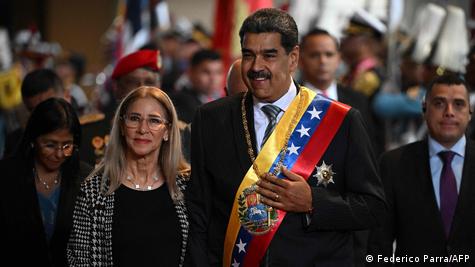
U.S. Attorney General Pam Bondi announced the charges following Maduro’s capture by American forces, vowing in a social media post that the couple would “soon face the full wrath of American justice on American soil in American courts.” The indictment expands previous 2020 charges against Maduro to include his wife, marking the first time the U.S. has formally charged a sitting first lady alongside a head of state in a narco-terrorism prosecution.
The indictment accuses Maduro of leading “a corrupt, illegitimate government that, for decades, has leveraged government power to protect and promote illegal activity, including drug trafficking.” According to charging documents, the drug trafficking efforts “enriched and entrenched Venezuela’s political and military elite,” transforming the Venezuelan state apparatus into what prosecutors characterize as a criminal enterprise.
U.S. authorities allege that Maduro partnered with “some of the most violent and prolific drug traffickers and narco-terrorists in the world” to bring tons of cocaine into the United States, according to the indictment filed in the Southern District of New York. The charges detail systematic collaboration between Venezuelan government officials and Colombian guerrilla groups, Mexican cartels, and other transnational criminal organizations to move narcotics through Venezuelan territory.
Authorities estimate that as much as 250 tons of cocaine were trafficked through Venezuela by 2020, according to the indictment obtained by the Associated Press. The staggering volume of drugs moved through Venezuelan territory represented a significant percentage of total cocaine reaching the United States during that period, prosecutors allege, with Venezuelan government protection enabling trafficking operations at industrial scale.
The drugs were transported on go-fast vessels, fishing boats, and container ships or via planes departing from clandestine airstrips, authorities charge in the indictment. The variety of smuggling methods described suggests sophisticated logistics networks coordinating maritime, aerial, and commercial shipping routes to move cocaine from Colombian production areas through Venezuelan territory to markets in the United States, Europe, and elsewhere.
According to Politico, Bondi stated in her social media announcement that Maduro and Flores had been charged by the Manhattan U.S. attorney’s office with narco-terrorism conspiracy, conspiracy to import cocaine, and possession of machineguns and destructive devices, among other offenses. The weapons charges suggest prosecutors will argue that the drug trafficking conspiracy involved armed protection and potential violence to maintain operations and eliminate competition or threats.
The announcement followed President Donald Trump’s early morning declaration that the United States had carried out “a large-scale strike” in Venezuela and captured Maduro and his wife, flying them out of the country. The timing of the indictment’s release—immediately following the military operation—suggested coordination between Justice Department prosecutors and military planners to provide legal justification for the unprecedented action.
An indictment did not appear to be publicly unsealed by mid-morning Saturday, according to Politico. A spokesperson for the Manhattan U.S. attorney’s office did not immediately respond to requests for comment about the charges or when formal arraignment proceedings might occur. The delay in unsealing suggested prosecutors were managing logistics of presenting captured defendants before a federal magistrate judge for initial appearances.
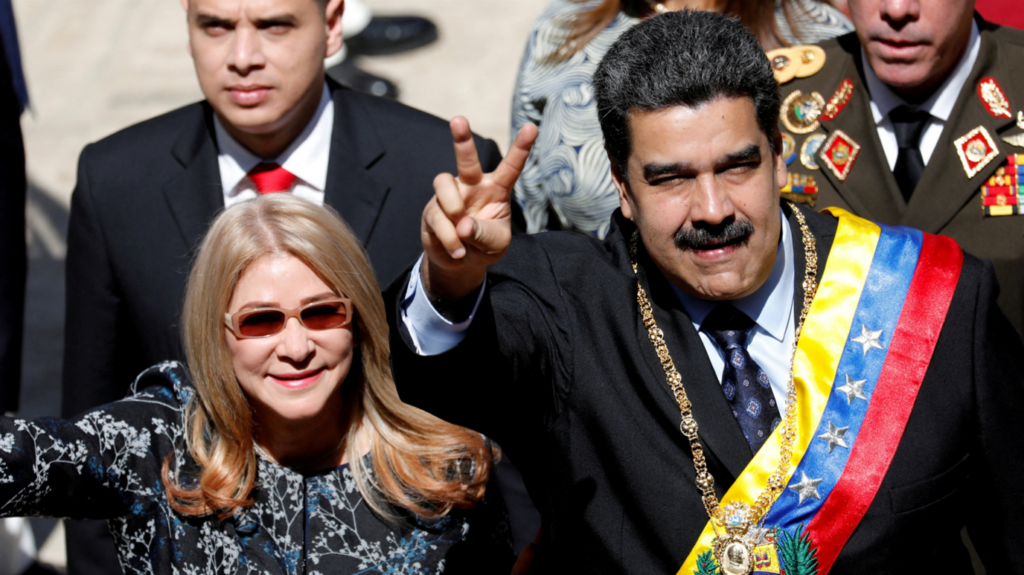
U.S. officials appeared to be using the charges as legal justification for military strikes in Venezuela that occurred without congressional authorization. Vice President JD Vance wrote on social media that the U.S. had offered Venezuela “multiple off ramps” before taking military action, suggesting the administration had pursued diplomatic alternatives before resorting to force.
“And PSA for everyone saying this was ‘illegal’: Maduro has multiple indictments in the United States for narcoterrorism. You don’t get to avoid justice for drug trafficking in the United States because you live in a palace in Caracas,” Vance stated, directly addressing constitutional concerns raised by Senator Mike Lee and other lawmakers questioning the operation’s legality without congressional war authorization.
Early Saturday morning, Secretary of State Marco Rubio reposted his own social media message from last year referencing charges against Maduro, writing that he is “NOT the president of Venezuela and his regime is NOT the legitimate government.” The emphatic capitalization suggested the administration’s view that Maduro’s illegitimacy as president under international law provided additional justification for his forcible removal beyond the criminal indictment.
New York federal prosecutors, along with prosecutors in Washington D.C. and Florida, initially charged Maduro and 14 other current and former Venezuelan officials in 2020 with narco-terrorism, corruption, and drug trafficking—though that earlier indictment notably did not include Maduro’s wife. The expansion to charge Flores suggests prosecutors developed additional evidence during the intervening years establishing her active participation in the conspiracy rather than merely benefiting from her husband’s alleged crimes.
Amanda Houle, one of the prosecutors who led the 2020 case against Maduro, now serves as criminal chief at the Manhattan U.S. attorney’s office, providing continuity in the government’s pursuit of the Venezuelan leader. The investigation was originally supervised by Emil Bove, Trump’s former criminal defense lawyer and a former prominent Justice Department official who is now a federal judge, creating potential complications if appeals in the Maduro case reach courts where Bove serves.
The fresh charges against Maduro come just weeks after Trump issued an unexpected and controversial pardon to another former foreign leader whom Bove pursued as a prosecutor: Juan Orlando Hernández, the ex-president of Honduras. Hernández had been convicted in 2024 for conspiring to import cocaine into the United States, making Trump’s pardon particularly jarring given the administration’s simultaneous military operation to capture Maduro on similar charges.
The Hernández pardon raised questions about consistency in Trump administration policy toward foreign leaders accused of drug trafficking. Critics argued that pardoning one Latin American president convicted of cocaine conspiracy while simultaneously launching military operations to capture another facing similar allegations suggested selective application of justice based on political considerations rather than consistent legal principles.
President Trump told Fox News Saturday that the U.S. is “now deciding next steps for Venezuela,” adding “we’ll be involved in it very much.” The statement suggested the administration had not finalized plans for Venezuelan governance following Maduro’s removal despite executing the military operation to capture him, potentially creating power vacuums and instability if no clear succession plan exists.
The stunning American military action, which plucked a sitting head of state from office through force, echoed the U.S. invasion of Panama that led to the surrender and seizure of its leader, Manuel Antonio Noriega, in 1990—exactly 36 years ago Saturday. The historical parallel was not lost on Latin American observers who remember the Panama invasion as controversial exercise of U.S. military power to enforce drug trafficking charges against a foreign leader.
Noriega, like Maduro, faced federal drug trafficking charges in the United States and was ultimately convicted and imprisoned following his capture. However, the Panama invasion involved approximately 27,000 U.S. troops and resulted in several hundred Panamanian deaths, generating lasting controversy about proportionality and international law compliance. Whether the Venezuela operation will face similar retrospective criticism depends partly on casualty counts and long-term outcomes in Venezuelan governance.
Trump announced the developments on Truth Social shortly after 4:30 a.m. ET and scheduled a news conference for 11 a.m. ET at his Mar-a-Lago resort in Florida. The president’s decision to make major announcements about military operations and foreign leader captures via social media rather than through formal White House channels or Pentagon briefings reflected his unconventional communication approach but also raised questions about appropriate protocols for disclosing sensitive national security operations.
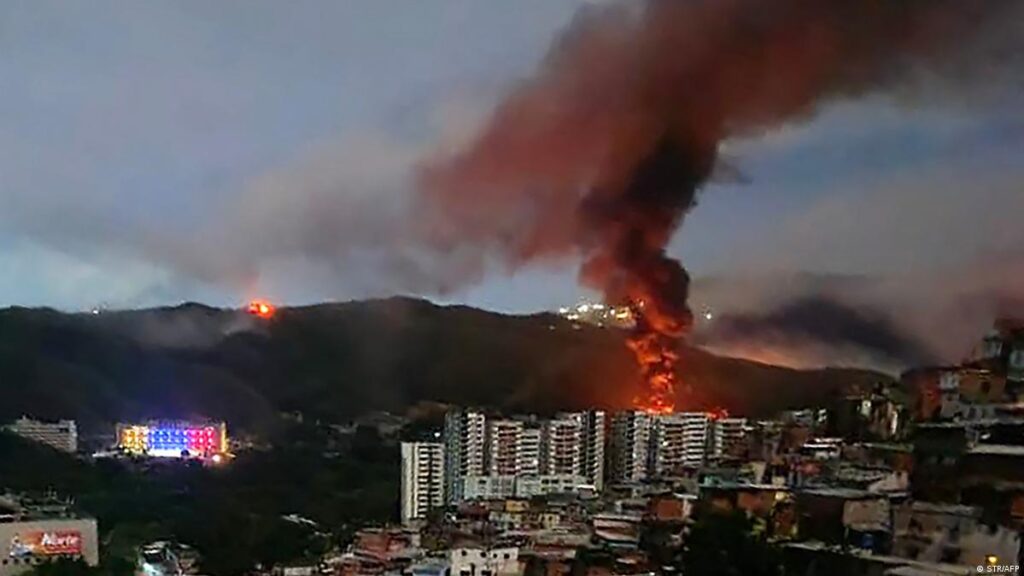
The charges against Cilia Flores represent unprecedented territory in U.S. prosecution of foreign officials. While the U.S. has previously charged family members of foreign leaders with corruption or money laundering, charging a sitting first lady alongside her husband in a narco-terrorism conspiracy breaks new ground in asserting U.S. criminal jurisdiction over foreign government officials’ families.
If both Maduro and Flores face prosecution in Manhattan federal court, they would likely be represented by separate defense attorneys given potential conflicts of interest between spouses who might seek to minimize their own culpability by cooperating against each other. However, the diplomatic immunity and head-of-state status questions surrounding their detention could generate preliminary legal battles before substantive trial proceedings begin.
The indictment’s allegation that drug trafficking “enriched and entrenched Venezuela’s political and military elite” suggests prosecutors will present evidence showing systematic corruption throughout Venezuelan government and armed forces rather than portraying Maduro as a lone actor. Such evidence could implicate dozens or hundreds of Venezuelan officials in the conspiracy, though practical difficulties of capturing and extraditing such individuals make additional prosecutions uncertain.
The weapons charges—possession of machineguns and destructive devices—typically carry mandatory minimum sentences under federal law when connected to drug trafficking conspiracies. Prosecutors often include such charges to increase potential sentences and provide leverage in plea negotiations, though whether Maduro and Flores would consider plea agreements or insist on trials remains speculative.
The Justice Department’s release of the new indictment immediately following Maduro’s capture suggested careful coordination to frame the military operation as law enforcement action executing arrest warrants rather than regime change operation violating international law. Whether federal courts accept that characterization or find that the circumstances of the defendants’ capture violate due process protections or international law norms will likely become central issues if the case proceeds to trial.
For Venezuela, the charging of both Maduro and his wife creates additional uncertainty about governance and succession. Under Venezuelan constitutional law, Vice President Delcy Rodríguez would assume presidential authority, but whether she can effectively govern while demanding proof of life for her predecessor and facing potential U.S. pressure to resign or cooperate remains highly uncertain.
The narco-terrorism charges carry potential life imprisonment if convictions are obtained, though actual sentences would depend on sentencing guideline calculations and judges’ discretionary decisions. The 250 tons of cocaine allegation would place the conspiracy among the largest drug trafficking cases ever prosecuted in U.S. courts, ensuring intense public and media attention throughout legal proceedings that could last years before final resolution.
Politico/NBC/AP





