

Flash floods triggered by days of intense monsoon rainfall have killed at least 16 people in Indonesia’s North Sulawesi province, sweeping away homes, isolating villages and forcing hundreds of residents into emergency shelters, officials said Tuesday, as rescue teams continued searching for those still missing.
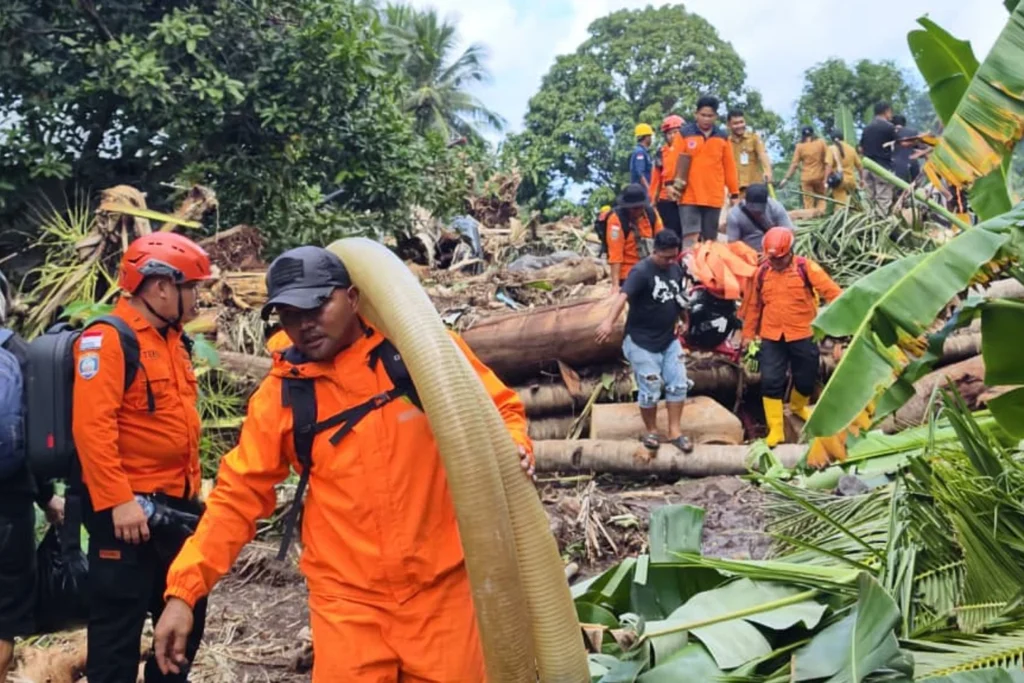
The floods struck early Monday after rivers burst their banks on Siau Island, part of the Siau Tagulandang Biaro district, unleashing torrents of water mixed with mud, rocks and debris that surged through residential areas. Abdul Muhari, a spokesperson for Indonesia’s National Disaster Management Agency, said the fast-moving floodwaters overwhelmed communities before many residents had time to escape.
Emergency responders supported by police and military personnel were dispatched to four of the hardest-hit villages on Siau, a small volcanic island located about 130 kilometers (80 miles) north of Sulawesi, Indonesia’s fourth-largest island. Access to several areas remained difficult as damaged roads and disrupted communications slowed relief operations, Muhari said.
By Tuesday, as rain eased and floodwaters began to recede, rescuers had recovered 16 bodies from submerged neighborhoods and debris-filled riverbanks, according to Nuriadian Gumeleng, a spokesperson for North Sulawesi’s search and rescue office. Search teams were continuing to look for at least three people who remained unaccounted for, focusing on areas where entire clusters of homes were inundated.
The flooding destroyed at least seven houses and damaged more than 140 others, with water rushing down hillsides and tearing through villages built along river channels. More than 680 residents were displaced and sought refuge in temporary shelters set up in churches, schools and other public buildings, Muhari said.
Sitaro District Chief Chyntia Ingrid Kalangit declared a 14-day emergency response period beginning Monday, a move aimed at accelerating evacuations, aid distribution and infrastructure repairs. She said at least 25 people were injured in the flooding and warned that unstable weather conditions could still pose a threat.
“We are urging residents to remain vigilant, especially those living near rivers and steep slopes,” Kalangit said, adding that additional rainfall could trigger further flooding or landslides. She said the provincial government had deployed heavy equipment to clear debris and sent relief supplies, including food, clean water and medical assistance, to affected communities.
The disaster has once again highlighted Indonesia’s vulnerability to extreme weather, particularly during the monsoon season, which typically runs from November through March. As an archipelago of more than 17,000 islands with mountainous terrain and densely populated riverbanks, Indonesia frequently experiences floods, landslides and other weather-related disasters.
Climate and disaster experts say such events are becoming more destructive as heavier rainfall linked to climate change combines with deforestation, poor drainage and unregulated development. In rural and island communities like those on Siau, homes are often built close to rivers or on unstable slopes, increasing the risk when heavy rains strike.
Residents who survived the floods described scenes of chaos as walls of muddy water surged through their neighborhoods in the predawn hours. Some said they were awakened by the sound of rushing water and collapsing structures, while others were forced to flee rooftops or cling to debris as the floods tore through their villages.
Local authorities said restoring access to isolated areas remained a priority, as several roads were washed out or buried under mud and fallen trees. Power and communications outages further complicated coordination efforts, though officials said conditions were gradually improving.
The tragedy in North Sulawesi comes just weeks after a far deadlier series of floods and landslides struck other parts of Indonesia. In December, catastrophic flooding across 52 cities and regencies on Sumatra, the country’s largest island, killed at least 1,178 people, injured more than 7,000 and left 148 missing as of Tuesday, according to the National Disaster Management Agency.
Those disasters prompted renewed calls for stronger early warning systems and better land-use planning, particularly in flood-prone regions. While Indonesia has made progress in disaster preparedness following the devastating 2004 Indian Ocean tsunami, challenges remain in remote and under-resourced areas.
Analysts say the situation on Siau Island underscores the difficulty of responding quickly to disasters in geographically isolated communities. With limited infrastructure and reliance on ferries or small aircraft, delivering aid and evacuating victims can take precious time.
Humanitarian organizations have urged authorities to ensure that displaced residents receive adequate shelter, sanitation and health care, warning that stagnant water and crowded conditions could raise the risk of disease outbreaks in the days ahead.
For families who lost loved ones and homes, the road to recovery is expected to be long. Local officials said damage assessments were still underway and that longer-term reconstruction plans would depend on support from provincial and national governments.
As Indonesia braces for continued monsoon rains, disaster officials emphasized the importance of public awareness and preparedness. Muhari said authorities were monitoring weather forecasts closely and coordinating with local governments to issue alerts if conditions worsen.
The floods in North Sulawesi serve as a stark reminder of the human toll of extreme weather in Indonesia, where seasonal rains remain a lifeline for agriculture but also pose a recurring threat to lives and livelihoods.
AP





