

At least 24 Venezuelan security officers were killed during a late-night U.S. military operation to seize President Nicolás Maduro and fly him to the United States to face federal drug trafficking charges, Venezuelan officials said Tuesday.
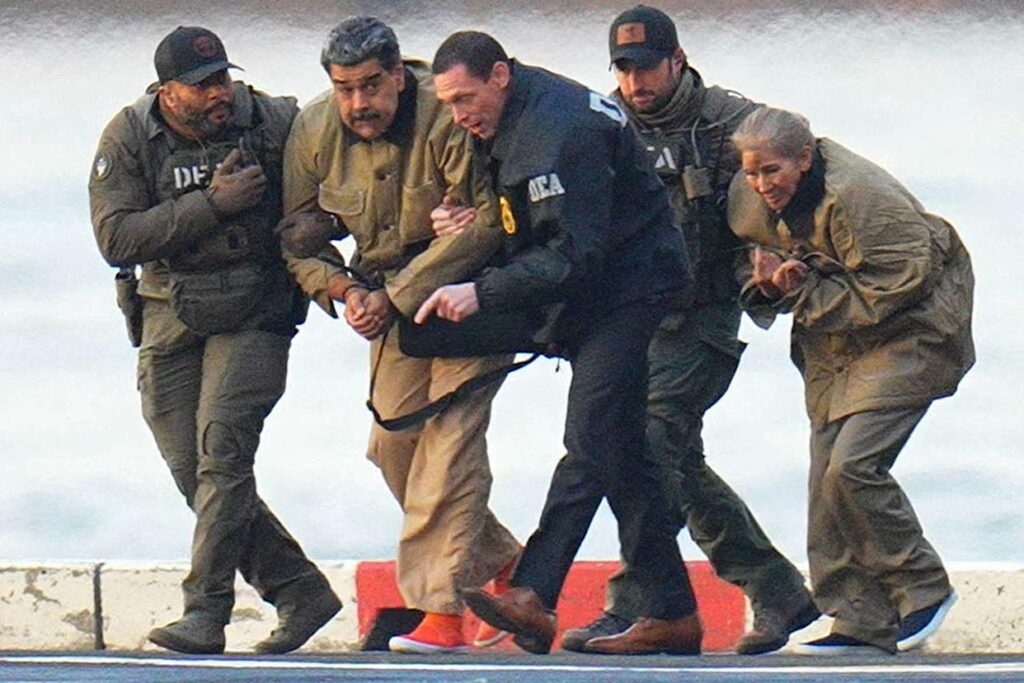
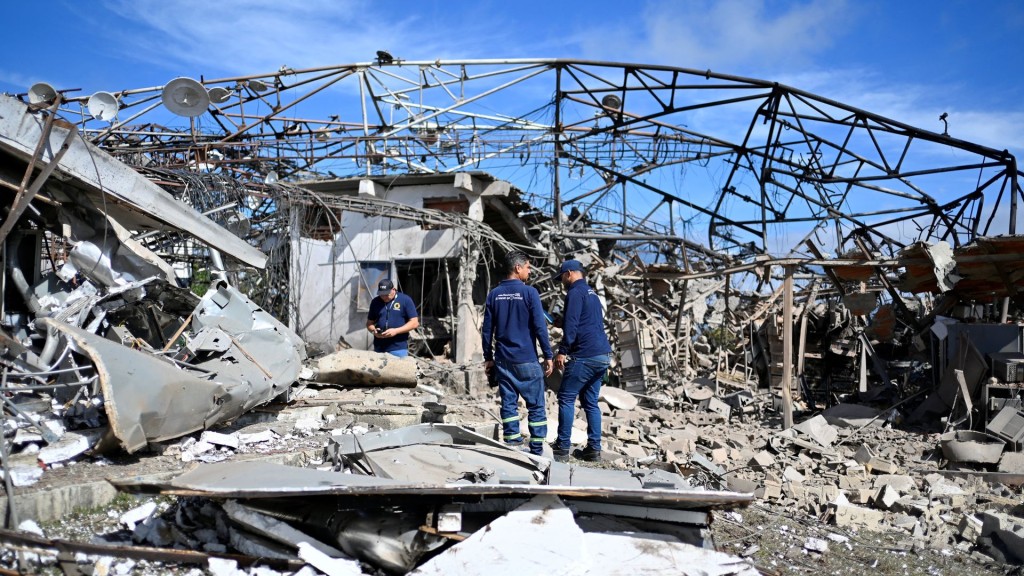
Venezuela’s attorney general, Tarek William Saab, said the operation left “dozens” of officials and civilians dead and announced that prosecutors would examine the deaths, describing the incident as a “war crime.” Saab did not clarify whether his estimate referred exclusively to Venezuelans.
The toll among Venezuelan forces follows an announcement by Cuba’s government that 32 Cuban military and police officers stationed in Venezuela were killed during the operation, a development that prompted two days of official mourning on the island.
The Venezuelan military published a video tribute on Instagram honoring fallen security personnel. The montage displayed photographs of those killed alongside black-and-white footage of soldiers, U.S. aircraft over Caracas and armored vehicles destroyed in the fighting.
“Their spilled blood does not cry out for vengeance, but for justice and strength,” the military wrote in the post. It added that the deaths strengthened its resolve to “rescue our legitimate President,” dismantle what it called foreign-backed terrorist groups and prevent similar events from occurring again on Venezuelan soil.
In Washington, President Donald Trump rejected Democratic criticism of the operation, arguing that previous administrations had also sought Maduro’s arrest. Speaking at a House Republican retreat, Trump complained that Democrats were failing to acknowledge what he described as a successful mission that resulted in Maduro’s removal, despite bipartisan agreement that Maduro was not Venezuela’s rightful president.
Maduro was indicted in the United States in 2020, accused of participating in a long-running narco-terrorism conspiracy involving international cocaine trafficking. U.S. officials have noted that the Biden administration increased the reward for information leading to Maduro’s arrest near the end of his term, after Maduro assumed a third term despite evidence suggesting he lost Venezuela’s most recent election. The Trump administration later raised the reward to $50 million.
“They’ve been after this guy for years,” Trump said. “At some point, they should say, ‘You did a great job.’”
Trump’s comments followed briefings by Secretary of State Marco Rubio and other senior officials to congressional leaders late Monday. The briefings came amid growing concern among lawmakers that the administration may be pursuing a more aggressive foreign policy in the Western Hemisphere without clear consultation or a defined plan for Venezuela’s future governance.
After the session, House Speaker Mike Johnson told reporters he does not anticipate U.S. troops being deployed to Venezuela, saying the operation was “not a regime change” mission. Democratic leaders, however, said the briefing left unanswered questions about the administration’s broader intentions.
Public opinion in the United States remains divided. A poll conducted over the weekend by The Washington Post and SSRS found that about four in 10 Americans supported the use of U.S. military force to capture Maduro, while a similar share opposed it. Roughly two in 10 respondents said they were unsure. Nearly half of those surveyed opposed the United States taking control of Venezuela or selecting a new government, and about nine in 10 said Venezuelans should determine their own leadership.
Maduro pleaded not guilty Monday to federal drug trafficking charges in a U.S. courtroom. U.S. forces captured him and his wife early Saturday during a raid on a guarded compound in Caracas. His longtime ally, Vice President Delcy Rodríguez, has since been sworn in as Venezuela’s acting president.
Since Maduro’s ouster, Trump and senior officials have fueled international unease by signaling a more assertive U.S. posture abroad. In recent days, Trump has renewed calls for an American takeover of Greenland, threatened military action against Colombia over cocaine trafficking and warned that Cuba’s communist government faces mounting pressure.
Trump has said his administration will now oversee Venezuela policy and push the country’s leaders to open its vast oil reserves to U.S. energy companies.
Colombia’s foreign affairs minister, Rosa Villavicencio, said Tuesday she plans to meet with the U.S. Embassy’s chargé d’affaires in Bogotá to lodge a formal complaint over recent threats from Washington. Trump recently said he was not ruling out action against Colombia and criticized its president over drug trafficking concerns.
Villavicencio said Colombia seeks to strengthen relations with the United States and expand cooperation against narcotics trafficking, echoing comments made earlier by other Colombian officials.
Meanwhile, leaders from France, Germany, Italy, Poland, Spain and the United Kingdom joined Danish Prime Minister Mette Frederiksen in a statement defending Greenland’s sovereignty. The self-governing territory, part of the Kingdom of Denmark and a member of NATO, should determine its own future, the leaders said.
“Greenland belongs to its people,” the statement said. “It is for Denmark and Greenland, and them only, to decide on matters concerning Denmark and Greenland.”
The Associated Press





