

Russia fired a powerful Oreshnik hypersonic missile overnight at a target in western Ukraine near the border with NATO member Poland, marking only the second deployment of the nuclear-capable weapon in what Kyiv’s European allies condemned Friday as a deliberate attempt to intimidate them from continuing support for Ukraine’s defense.
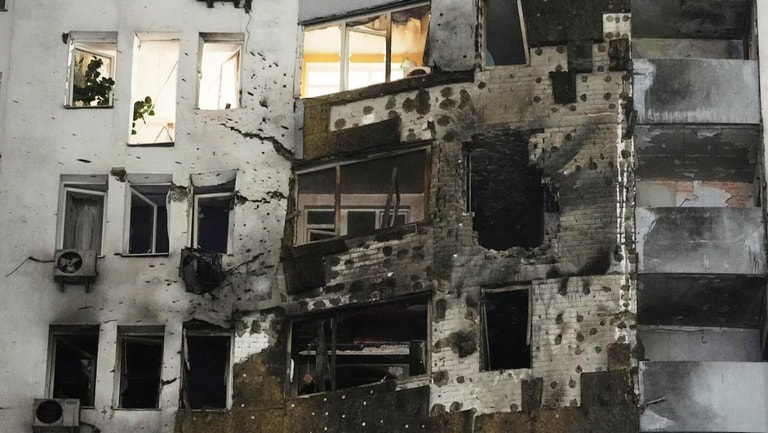
The strike came amid a massive nighttime assault that Ukrainian authorities said killed four people in Kyiv, knocked out electrical power in the capital, damaged the Qatari embassy, and left nearly 6,000 apartment buildings without heat as temperatures plunged to minus 8 degrees Celsius (17.6°F), creating humanitarian crisis conditions for hundreds of thousands of residents forced to shelter in unheated homes during winter’s coldest period.
The Oreshnik—an intermediate-range ballistic missile (IRBM) designed to project Russian power across Europe and which Moscow claims is impossible to intercept—can carry nuclear warheads although there was no indication it had done so in this strike.
A senior Ukrainian official stated the missile appeared to be carrying inert “dummy” warheads similar to the first Oreshnik deployment in November 2024, suggesting Russia deployed the weapon for psychological impact and strategic signaling rather than maximum destructive effect.
According to Reuters, the strike appeared aimed at intimidating Ukraine at a crucial juncture in peace negotiations, with analysts noting it occurred after a difficult week for Russia including the U.S. military capture of Venezuelan President Nicolás Maduro, a close ally of Russian President Vladimir Putin whose detention represented a significant blow to Moscow’s Latin American relationships and demonstrated American willingness to use military force against governments aligned with Russian interests.
Moscow claimed it fired the Oreshnik missile in retaliation for what Russian officials characterize as an attempted drone attack on one of Putin’s residences last month—allegations that Ukraine denies and the United States has explicitly stated did not occur.
U.S. President Donald Trump told reporters he does not believe the alleged attack happened, though he acknowledged “something else happened in the area,” leaving ambiguous what incident Russia might be mischaracterizing or fabricating.
Ukrainian Foreign Minister Andriy Sybiha condemned the strike as posing “a grave threat to security” given its proximity to European Union and NATO borders. “It is absurd that Russia attempts to justify this strike with the fake ‘Putin residence attack’ that never happened,” Sybiha wrote on X. “Putin uses an IRBM near EU and NATO border in response to his own hallucinations — this is truly a global threat. And it demands global responses.”
President Volodymyr Zelenskyy emphasized the strike was “demonstrably” close to EU member states and warned Ukraine’s neighbors to recognize the dangers the missile deployment poses beyond Ukraine’s borders.
“From the standpoint of the use of medium-range ballistics, this is the same challenge for Warsaw, Bucharest, Budapest, and many other capitals,” Zelenskyy stated in his nightly video address. “Everyone should understand it in the same way, and take it equally seriously.”
The strike occurred just days after a European summit where countries pledged to deploy troops in Ukraine in the event of a ceasefire, with Washington backing security guarantees for Kyiv—diplomatic developments that may have prompted Russia to demonstrate military capabilities that threaten NATO allies supporting Ukraine with the message that continued assistance carries risks of Russian retaliation extending beyond Ukrainian territory.
“Russia’s reported use of an Oreshnik missile is a clear escalation against Ukraine and meant as a warning to Europe and to the U.S.,” EU foreign policy chief Kaja Kallas declared on X. “EU countries must dig deeper into their air defence stocks and deliver now. We must also further raise the cost of this war for Moscow, including through tougher sanctions.”
German Chancellor Friedrich Merz, who spoke with the leaders of France and Britain following the strike, stated: “Threatening gestures are intended to instil fear, but they will not work. We stand with Ukraine.”
The coordinated response from major European powers demonstrated unified rejection of Russian intimidation attempts while reaffirming support for Ukraine despite the implicit threats the Oreshnik deployment represented.
The senior Ukrainian official told Reuters the missile struck a workshop belonging to a state enterprise in Lviv, the western city approximately 70 kilometers from the Polish border.
Impact from several submunitions caused “minor penetrations of concrete structures” at the workshop and created craters in surrounding forest areas, suggesting the weapon’s destructive potential even when carrying non-explosive warheads designed primarily for testing and psychological effect.
Separately, Ukraine’s SBU state security service stated Russia had attempted to destroy civilian infrastructure in the Lviv region amid “rapidly deteriorating weather conditions”—timing that maximizes humanitarian impact by targeting energy systems during periods when heating failures threaten lives. Moscow claimed it hit energy infrastructure and a factory manufacturing drones allegedly used in the disputed attack on Putin’s residence.
Kyiv has characterized Moscow’s allegation that Ukraine attacked Putin’s residence in Russia’s Novgorod region on December 29 as “an absurd lie” designed to sabotage peace negotiations and provide justification for escalatory strikes.
The lack of credible evidence supporting Russian claims, combined with American statements that the attack did not occur, suggests Moscow either fabricated the incident or significantly misrepresented what actually happened.
Russia fired a total of 242 drones and 36 missiles, including the Oreshnik, targeting infrastructure in the western Lviv region and in and around Kyiv, according to Ukrainian military statements.
The massive scale of the assault—among the largest single-night attacks of the war—demonstrated Russia’s continued capability to launch overwhelming drone and missile barrages despite nearly four years of sustained warfare depleting weapons stockpiles.
Among the four people killed in Kyiv was Serhiy Smoliak, 56, an emergency medic who arrived to assist survivors at a suburban apartment building hit by a drone and was killed in a follow-up strike—a targeting pattern suggesting Russian forces deliberately attacked first responders, a war crime under international humanitarian law. His body lay covered on snowy ground near a roadside where he died attempting to save others. Four other medics and five rescuers were wounded at the same location.
Authorities reported more than 25 people injured across Kyiv with electricity knocked out to more than half a million homes. With overnight temperatures forecast to fall to minus 10 degrees Celsius (14°F), Kyiv Mayor Vitali Klitschko stated that heating had been restored to nearly 1,100 apartment buildings of approximately 6,000 affected by the strikes—meaning that roughly 5,000 buildings remained without heat as residents faced life-threatening cold.
Residents sheltered underground on mattresses and chairs, some wrapped in blankets as they waited for repairs to heating systems. Prime Minister Yulia Svyrydenko stated that repair crews were working around the clock to restore heat and power in Kyiv, though the scale of damage and winter conditions complicated restoration efforts.
Qatar confirmed its embassy in Kyiv sustained damage though no personnel were injured. The country has occasionally acted as mediator in the conflict, facilitating prisoner exchanges and maintaining diplomatic channels between warring parties.
The embassy damage—whether intentional targeting or collateral damage—creates diplomatic complications for a nation attempting to play neutral mediating role.
The Oreshnik was fired just before midnight according to Lviv regional officials, with Ukrainian military tracking showing the missile traveled at speeds reaching 13,000 kilometers per hour (approximately 8,000 miles per hour or Mach 10).
Such extreme velocity makes interception extraordinarily difficult with current missile defense technologies, as systems designed to track and destroy incoming projectiles struggle to react quickly enough against hypersonic threats moving at ten times the speed of sound.
Moscow first deployed an Oreshnik—Russian for “hazel tree”—against what it characterized as a military factory in Ukraine in November 2024. Ukrainian sources stated that missile carried dummy warheads rather than high explosives and caused limited physical damage, suggesting Russia used the November deployment primarily to demonstrate possession of the new weapons system and test its performance under operational conditions.
The Friday deployment occurred Tuesday following announcements by Britain and France of plans to deploy troops in Ukraine in the event of a ceasefire—prompting Moscow to respond that it would view foreign soldiers as legitimate combat targets.
British Defence Minister John Healey was in Kyiv on Friday discussing potential future troop deployments, making the Oreshnik strike’s timing appear calculated to influence those negotiations through demonstration of Russia’s capability to threaten NATO forces that might eventually deploy to Ukrainian territory.
According to The Associated Press, the intense barrage and launch of the nuclear-capable Oreshnik missile came days after Ukraine and its allies reported major progress toward agreeing on frameworks for defending the country from further Russian aggression if a U.S.-led peace deal is reached.
The timing suggests Russia aims to shape negotiations by demonstrating military capabilities that could threaten any post-peace security arrangements.
Europe’s leaders condemned the attack as “escalatory and unacceptable,” with EU foreign policy chief Kaja Kallas stating that Putin’s reply to diplomacy was “more missiles and destruction.”
The assessment reflected European frustration that diplomatic initiatives toward peace negotiations have been met with Russian military escalation rather than de-escalation that might facilitate compromise.
The attack also coincided with deteriorating relations between Moscow and Washington after Russia condemned U.S. seizure of oil tankers in the Atlantic as part of the Venezuela blockade.
It came as President Trump signaled support for a comprehensive sanctions package designed to economically cripple Moscow, though Russia has given no public indication of willingness to moderate its maximalist demands that Ukraine cede territories, abandon NATO aspirations, and accept permanent limitations on its military capabilities.
Ukrainian intelligence services assessed that the Oreshnik carries six warheads, each containing six submunitions, for a total of 36 separate impact points from a single missile.
This multiple independently targetable reentry vehicle (MIRV) design allows one missile to strike dispersed targets across a wide area, dramatically increasing the weapon’s effectiveness against distributed infrastructure or military facilities.
Putin has previously claimed the Oreshnik streaks toward targets “like a meteorite” at Mach 10 velocity and remains immune to any existing missile defense system.
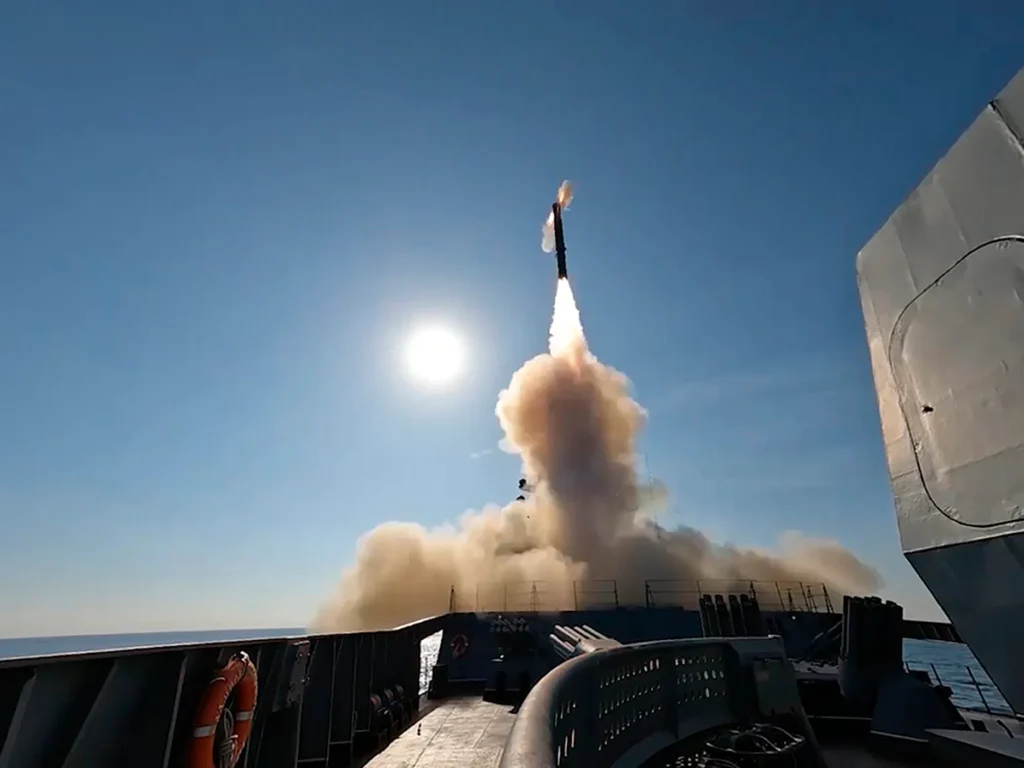
The Russian president has warned that several Oreshnik missiles used in conventional strikes could produce destruction comparable to nuclear attacks, while threatening that Russia might use the weapon against NATO allies of Kyiv that permit Ukraine to strike inside Russia with longer-range missiles.
Ukrainian Foreign Minister Sybiha announced Ukraine would initiate international action in response to the missile deployment, including requesting an urgent United Nations Security Council meeting and convening the Ukraine-NATO Council. “Such a strike close to EU and NATO border is a grave threat to the security on the European continent and a test for the transatlantic community. We demand strong responses to Russia’s reckless actions,” Sybiha wrote on X.
Ukraine’s request for an emergency Security Council meeting has been conveyed to council members, with six of 15 members calling for Monday discussions, though no date had been set by Friday evening, according to a U.N. diplomat speaking anonymously because deliberations remain private.
The Security Council response will likely prove symbolic given Russia’s permanent seat and veto power preventing any binding resolutions condemning its actions.
Pope Leo XIV, speaking at the Vatican to ambassadors from around the world, urged the international community to continue pursuing peace and ending suffering in Ukraine.
“Faced with this tragic situation, the Holy See strongly reiterates the pressing need for an immediate ceasefire, and for dialogue motivated by a sincere search for ways leading to peace,” the pontiff declared, reflecting Vatican concern about escalating weapons deployments and humanitarian catastrophe.
Several Kyiv districts sustained damage in overnight attacks, with drones crashing onto a multistory building’s roof in the Desnyanskyi district while the first two floors of another residential building were destroyed.
In the Dnipro district, drone debris damaged a multistory building and sparked fires that emergency services battled through the night.
Dmytro Karpenko, 45, whose windows shattered in the attacks, rushed to help his neighbor whose house caught fire. “What Russia is doing, of course, shows that they do not want peace.
But people really want peace, people are suffering, people are dying,” he stated, capturing the war-weariness afflicting Ukrainian civilians after nearly four years of sustained conflict.
Lviv resident Kristofer Chokhovich, who identified himself as American, described hearing “a loud, shocking explosion, and it’s normal at this time of the war to hear these things here.”
He emphasized: “I just want everyone in the world to know that Ukraine is strong and we don’t care how many missiles you send.”
Another Lviv resident, Ulyana Fedun, characterized the attack as “very unpleasant” but not frightening “because we’ve been living in this state for four years,” reflecting how sustained warfare has normalized experiences that would be traumatic in peacetime contexts.
The psychological adaptation to constant danger illustrates both Ukrainian resilience and the profound toll that years of bombardment have exacted on civilian populations.
Russian media and military bloggers claimed the Oreshnik targeted an underground natural gas storage facility in the Lviv region, though neither Ukrainian nor Russian officials confirmed the specific target.
The Lviv region’s proximity to Poland makes it strategically significant as a conduit for Western military aid flowing to Ukraine from supply hubs just across the border, making infrastructure there attractive targets for Russian strikes attempting to disrupt logistics.
Analysts assess that the Oreshnik deployment provides Russia with new psychological warfare capabilities, unnerving Ukrainian civilians and intimidating Western nations supporting Ukraine by demonstrating weapons systems that appear unstoppable with current defense technologies.
The psychological impact may exceed the weapon’s actual military utility, particularly when deployed with inert warheads that cause minimal physical damage but maximum fear about Russia’s willingness to use increasingly powerful weapons.
The attack’s timing—amid diplomatic initiatives toward peace negotiations, following European commitments to deploy troops in ceasefire scenarios, and during a period when Russia faces setbacks including Maduro’s capture—suggests Putin calculated that escalatory demonstration of military power would strengthen Russia’s negotiating position by reminding Western nations of the costs and risks of continued support for Ukraine.
Whether the Oreshnik deployment achieves its apparent objectives of intimidating NATO or instead strengthens Western resolve to support Ukraine depends on how European and American leaders respond.
Initial statements condemning Russian escalation while reaffirming support for Ukraine suggest the intimidation strategy may be counterproductive, though sustained pressure through winter attacks targeting civilian infrastructure could eventually erode public support for continued involvement in a conflict with no clear resolution timeline.





