

OSLO, Norway — The Norwegian Nobel Institute has definitively rejected any possibility that Venezuelan opposition leader María Corina Machado could give or share her 2025 Peace Prize with President Donald Trump, issuing a rare public statement clarifying that Nobel awards remain permanently fixed once announced.
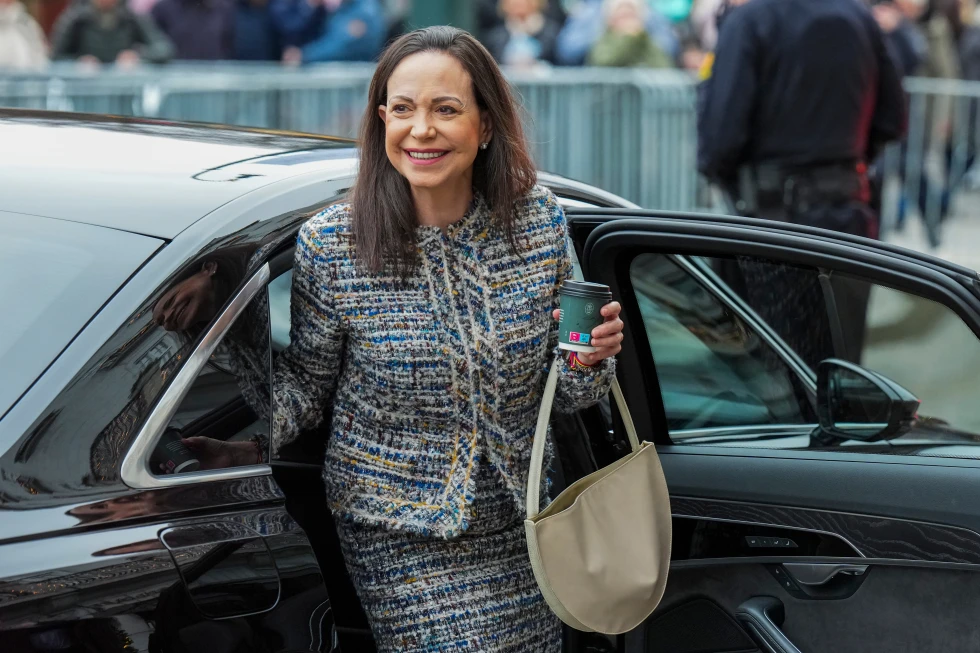
The organization that oversees the Nobel Peace Prize released its unequivocal position Friday following days of speculation about Machado’s expressed desire to honor Trump for his role in the military operation that captured Venezuelan President Nicolás Maduro.
Once the Nobel Peace Prize is announced, it cannot be revoked, transferred or shared with others, the Norwegian Nobel Institute stated in unusually blunt language designed to end the discussion.
“The decision is final and stands for all time,” the institute declared.
The Nobel Foundation statutes contain no provisions for appeals, modifications or redistribution of prizes after announcement, institute officials emphasized.
The statement comes after Machado told Fox News host Sean Hannity on Monday that she would like to give or share the prestigious award with Trump.
Trump oversaw the controversial U.S. military raid that extracted Maduro from Venezuela on January 3.
Maduro now faces narco-terrorism and drug trafficking charges in federal court in New York.
“I certainly would love to be able to personally tell him that we believe — the Venezuelan people, because this is a prize of the Venezuelan people — certainly want to give it to him and share it with him,” Machado stated during Monday’s Fox News appearance.
“What he has done is historic. It’s a huge step towards a democratic transition,” she added.
Machado dedicated the prize to Trump, along with the Venezuelan people, shortly after the Nobel Committee announced her selection in October 2025.
The dedication came before the dramatic U.S. military operation that removed Maduro from power.
Trump has coveted the Nobel Peace Prize and has openly campaigned for winning the award himself since returning to office in January 2025.
The former and current president has frequently referenced his belief that he deserves the prize for various diplomatic initiatives during both his administrations.
The Norwegian Nobel Institute statement also noted that Nobel committees do not comment on laureates’ actions or statements after receiving awards, according to Reuters.
This institutional silence policy means the committee will not address Machado’s political statements or her characterization of what the Venezuelan people want regarding the prize.
When Hannity directly asked Machado during Monday’s interview whether she had offered to give Trump the Nobel Peace Prize, she responded with carefully chosen words.
“Well, it hasn’t happened yet,” Machado stated, leaving ambiguous whether she meant the offer or the actual transfer.
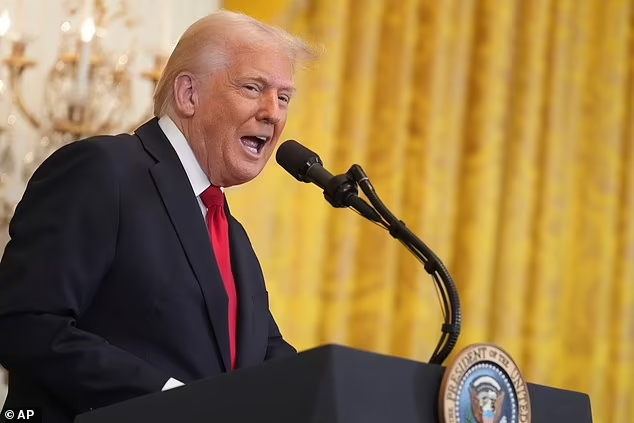
Trump, speaking to Hannity on Thursday, indicated he would be honored to accept the prize if Machado presented it during a planned meeting in Washington next week.
“It would be a great honor,” Trump told Hannity, confirming that Machado plans to visit the White House.
However, Trump’s enthusiastic reception of Machado’s symbolic gesture contrasts sharply with his actual governance decisions for post-Maduro Venezuela.
When it comes to governing Venezuela after Maduro’s capture, Trump has backed someone else entirely: Delcy Rodríguez, who served as vice president under Maduro.
Trump has called Machado a “very nice woman” but maintains she lacks sufficient support within Venezuela to govern effectively.
The disconnect between accepting symbolic honors from Machado while empowering her political rival to run Venezuela highlights the complex calculations driving Trump administration policy.
Machado, a former National Assembly member, was barred from running in Venezuela’s 2024 general election by authorities aligned with Maduro.
She backed a stand-in candidate who independent observers widely considered to have won the vote, although Maduro claimed victory.
Ballot audits by independent election monitors showed significant irregularities in official results that credited Maduro with victory.
Machado’s exclusion from the ballot and the disputed election results helped justify international criticism of Maduro’s government as authoritarian.
The Nobel Committee cited her courageous opposition to authoritarianism and advocacy for democratic principles when awarding her the 2025 Peace Prize.
A representative for Machado did not immediately respond to messages seeking comment on the Nobel Institute’s statement.
The episode illustrates how Nobel Peace Prizes can become entangled in geopolitical controversies and domestic political calculations that extend far beyond the committee’s original intentions.
The Prize Politics and Presidential Ambitions
The Nobel Institute’s swift intervention to clarify prize rules reflects institutional concern about protecting the award’s integrity from becoming a political football in U.S.-Venezuela relations.
While Machado’s gesture toward Trump appears motivated by genuine gratitude for Maduro’s removal, it also serves strategic purposes by publicly aligning her with the American president whose support she needs.
For Trump, the symbolic offer of a Nobel Prize—even one he cannot actually receive—provides validation he has long sought from an institution that has frustrated his ambitions.
The president’s visible pleasure at Machado’s gesture, coupled with his invitation for her White House visit, suggests he values the symbolic recognition regardless of legal impossibility.
Yet Trump’s decision to back Rodríguez rather than Machado for Venezuelan leadership reveals that symbolic gestures matter less than pragmatic calculations about who can actually govern.
Rodríguez, despite serving under Maduro, apparently commands networks within Venezuelan institutions that Trump’s advisors believe Machado lacks.
This creates an awkward situation where Trump accepts honorary credit for “democratic transition” from an opposition leader he simultaneously marginalizes from actual power.
The Nobel Institute’s unusual public statement also protects the prize from becoming devalued through political horse-trading.
If laureates could transfer or share awards based on political allegiances, the Nobel Peace Prize would lose credibility as recognition of individual achievement and become instead a tradeable commodity in diplomatic relations.
The institute’s firm response establishes precedent that may deter future laureates from similar gestures, preserving the award’s symbolic power.
The Broader Context of Nobel Prize Controversies
The Norwegian Nobel Committee has faced persistent criticism about politicized selections, with some prizes appearing to reward hoped-for outcomes rather than achieved accomplishments.
Barack Obama’s 2009 Peace Prize, awarded just months into his presidency, generated widespread criticism that the committee sought to influence rather than recognize his policies.
The committee cannot revoke prizes even when laureates subsequently engage in actions seemingly contradicting peace, as evidenced by Myanmar’s Aung San Suu Kyi maintaining her award despite presiding over ethnic cleansing.
This institutional rigidity—once announced, prizes remain permanent regardless of subsequent events—stems from Norwegian law and Nobel Foundation statutes established over a century ago.
The rules prevent committees from second-guessing historical judgments or responding to political pressure by revoking controversial selections.
Machado’s case differs from attempts to revoke prizes because she seeks to add a recipient rather than remove one, but the same inflexibility applies.
The Nobel Institute’s Friday statement treats transfer and sharing as equivalent to revocation—all constitute modifications to announced decisions that statutes prohibit.
Trump’s Long-Standing Nobel Ambitions
Trump’s interest in winning the Nobel Peace Prize dates to his first term, when he publicly suggested his North Korea diplomacy warranted consideration.
Japanese Prime Minister Shinzo Abe’s 2018 nomination of Trump for the prize was later revealed, fueling Trump’s expectations that recognition would follow.
No award materialized despite Trump’s diplomatic outreach to North Korean leader Kim Jong Un in historic summits that ultimately produced no denuclearization progress.
Trump’s second-term interest in the prize has only intensified, with the president frequently referencing his belief that Venezuelan intervention deserves Nobel recognition.
Machado’s offer, though legally impossible to fulfill, provides Trump with a form of validation from a Nobel laureate even if the committee never selects him.
The episode demonstrates how symbolic gestures can partially satisfy ambitions when formal recognition remains elusive.
Implications for U.S.-Venezuela Relations
Machado’s planned White House visit next week will test how Trump balances symbolic recognition of an opposition figure with practical support for Rodríguez’s transitional government.
The Venezuelan opposition leader needs American backing but currently lacks the institutional power base to govern without U.S. military enforcement.
Rodríguez, conversely, brings continuity and existing administrative networks but carries the stigma of serving Maduro’s authoritarian government.
Trump’s attempt to leverage both figures—honoring Machado symbolically while empowering Rodríguez practically—may prove unsustainable as Venezuelan politics stabilize.
The Nobel Prize controversy adds another layer to already complex negotiations about Venezuela’s future governance structure and the extent of American control over the country’s political transition.
As Washington determines Venezuela’s trajectory, symbolic disputes about prize transfers matter less than fundamental questions about sovereignty, democracy, and whether military intervention can actually produce the democratic transitions it promises to deliver.
AP/Reuters





