

Real Madrid terminated Xabi Alonso’s contract as first-team manager on Monday, ending a brief and chaotic tenure that lasted fewer than eight months and culminated in a dramatic loss to Barcelona in the Spanish Super Cup final.
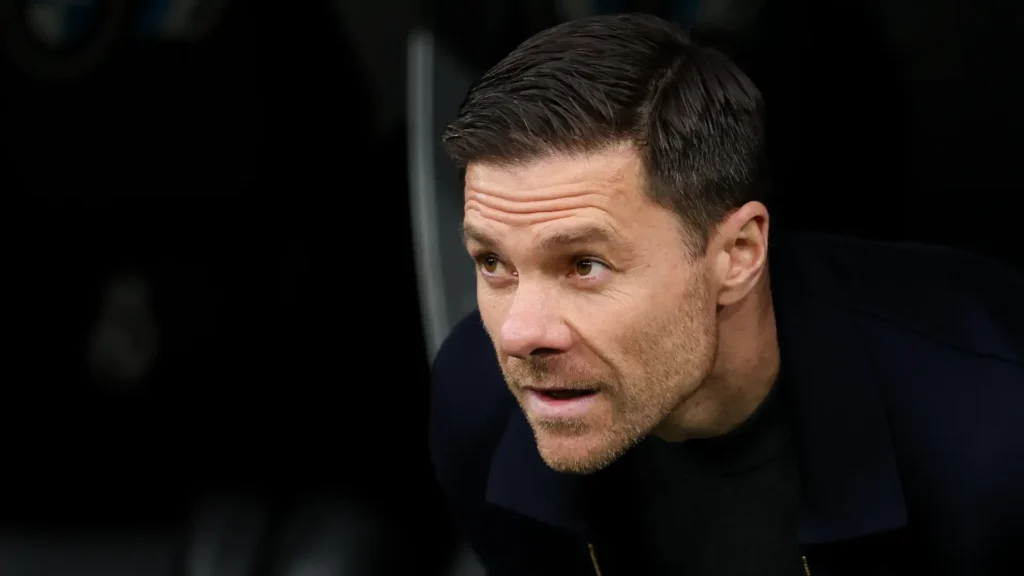
The club immediately elevated Álvaro Arbeloa, who had been managing Madrid’s B team since June, to lead the senior squad. Arbeloa and Alonso were teammates at Real Madrid, Liverpool and for Spain’s national team, winning the 2010 World Cup together in what now seems a distant era of shared triumph.
While Madrid characterized the separation as a mutual agreement, the timing leaves little doubt about the club’s dissatisfaction. The decision came just hours after Sunday’s 3-2 defeat to Barcelona in Jeddah, Saudi Arabia, a loss that exposed fractures within the squad and raised fundamental questions about Alonso’s ability to command one of football’s most demanding environments.
“Real Madrid wishes to announce that, by mutual agreement between the club and Xabi Alonso, it has been decided to bring his time as first team coach to an end,” the club said in a statement. “Xabi Alonso will always carry the affection and admiration of all Madridistas because he is a Real Madrid legend and has always represented the values of our club. Real Madrid will always be his home.”
The statement’s warm language could not obscure the reality of Alonso’s struggles. The 44-year-old manager arrived last May amid considerable fanfare as Carlo Ancelotti’s successor, bringing with him the reputation earned through an extraordinary season at Bayer Leverkusen, where he guided the German club to an unprecedented Bundesliga and DFB Pokal double after inheriting a team mired in the relegation zone.
That success generated enormous expectations at the Santiago Bernabéu, expectations that Alonso proved unable to meet. From the outset, his tactical approach encountered resistance, and reports of discord between the manager and key players became a persistent theme throughout his brief tenure.
According to The Associated Press, pressure mounted as the team failed to perform at the level Madrid’s supporters demand. Alonso clashed repeatedly with star forward Vinícius Júnior, with widespread reports suggesting the manager had lost control of the dressing room, a fatal development for any coach at a club where player power has historically shaped managerial fortunes.
Vinícius and other squad members complained publicly about being substituted during matches, an unusual breach of protocol that signaled deeper problems with Alonso’s authority. Although some players offered public support late last year, the situation showed no signs of improvement.
The Spanish Super Cup final crystallized Alonso’s predicament. After the defeat, cameras captured what appeared to be an awkward moment when Alonso seemed to want his players to perform a traditional guard of honor for Barcelona during the awards ceremony. Kylian Mbappé and other players instead called him back and walked away from the presentation, a striking display of independence that underscored the fractured relationship between manager and squad.
The moment reflected a broader crisis of confidence that had undermined Alonso’s position for months. Despite his legendary status as a player who won six titles with Madrid between 2009 and 2014, including the 2014 Champions League, his coaching methods never gained traction with the current squad.
Former Valencia midfielder Gaizka Mendieta offered insight into why Alonso’s approach faltered at Madrid. Speaking to CasinoStugan, Mendieta suggested that the high-pressing, compact defensive system that succeeded at Leverkusen was fundamentally incompatible with Madrid’s footballing culture and identity.
“Obviously, we know how Xabi used to play with Bayer Leverkusen and what he wanted to do at Madrid,” Mendieta said. “Personally, I don’t think we saw the style that Xabi Alonso wanted. We didn’t see that at Real Madrid with any managers. What I mean is, again, judging from what we saw at Leverkusen, he wants a compact team that goes and presses high and defends together. I have never seen that at Real Madrid, ever. The team will always break at some point during the games.”
Mendieta’s analysis highlights a critical disconnect between Alonso’s tactical philosophy and the institutional expectations at a club where individual brilliance has traditionally trumped collective pressing schemes. Madrid’s identity has been built on attacking flair and counter-attacking prowess rather than the suffocating defensive organization that characterized Alonso’s Leverkusen side.
This philosophical mismatch may explain why Madrid has struggled to find consistent form under Alonso despite possessing exceptional talent. The team won the season’s first clasico in October by 2-1 but currently trails Barcelona by four points at the halfway stage of La Liga, an unacceptable position for a club that considers anything less than championship contention a failure.
Alonso’s record across 34 matches in all competitions showed 24 victories, six defeats and four draws, respectable numbers that nevertheless failed to capture the underlying dysfunction. The statistics suggested competence, but the eye test and persistent reports of dressing room discord told a different story.
Mbappé, who joined Madrid from Paris Saint-Germain last summer and worked with Alonso for the entirety of the manager’s tenure, became the first player to publicly acknowledge the coaching change on Monday. The France international posted a gracious message on Instagram Stories alongside a photograph of himself and Alonso exchanging salutes.
“It’s been short but it was a pleasure to play for you & learn from you,” Mbappé wrote. “Thank you for giving me the confidence since Day 1. I will remember you as a manager who had clear ideas and knows many things about football. Best of luck for your next chapter.”
The message reflected Mbappé’s diplomatic nature and his respect for Alonso’s football intelligence, even as the broader squad dynamics suggested a less harmonious relationship between coach and players.
Turkish midfielder Arda Güler also praised Alonso in a heartfelt Instagram post, crediting the manager with believing in him from the beginning. “Xabi Alonso, Thank you for believing and trusting in me from the first day,” Güler wrote. “Every conversation, every detail, every demand helped shape my game and push me to a higher level. I’m truly grateful for everything you added to my journey. Your faith in me made me a better player. Wishing you and your staff nothing but success in what comes next. Your impact will always stay with me.”
Notably absent from the public farewells was Vinícius, whose relationship with Alonso had reportedly deteriorated significantly during the manager’s tenure. The Brazilian winger’s silence spoke volumes about the divisions that ultimately made Alonso’s position untenable.
Alonso had not issued any public statement by Monday evening, maintaining silence as his coaching staff joined him in departing the club. Madrid thanked Alonso’s entire technical team in its official statement, acknowledging their collective effort even as it moved decisively to change direction.
The club also announced Arbeloa’s appointment in a second statement, emphasizing his deep roots within Madrid’s academy system and his success with youth teams. The 42-year-old Arbeloa has spent his entire coaching career at Madrid since 2020, progressing through the club’s youth ranks before taking charge of Castilla, the B team, last June.
Arbeloa coached the Infantil A team during the 2020-21 season, winning the league championship. He then managed Cadete A in 2021-22 before taking over Juvenil A from 2022 to 2025, guiding that team to a treble in 2022-23 that included victories in La Liga, the Copa del Rey and the Champions Cup. His Juvenil A side also won La Liga in the 2024-25 season.
As a player, Arbeloa enjoyed considerable success at Madrid from 2009 to 2016, winning eight titles including two European Cups and one Spanish league championship. He also represented Spain during its golden era, contributing to victories at the 2010 World Cup and the 2008 and 2012 European Championships.
This background gives Arbeloa institutional knowledge and credibility within the club, though whether he can succeed where Alonso failed remains uncertain. He inherits a squad filled with world-class talent but marked by apparent divisions and underperformance relative to expectations.
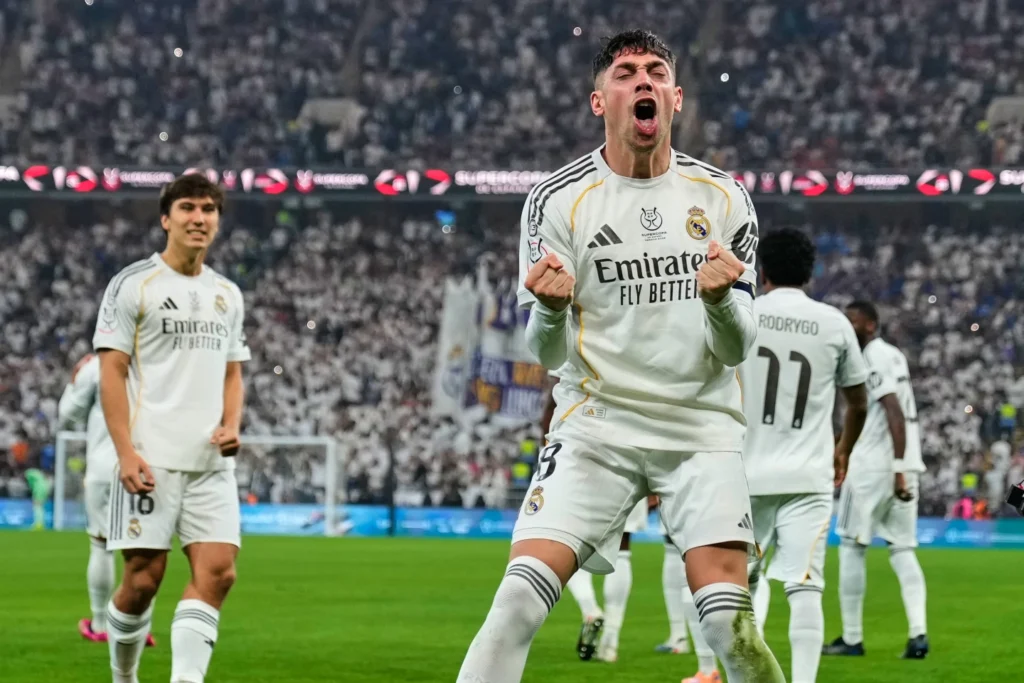
Madrid faces Albacete on Wednesday in the Copa del Rey round of 16, Arbeloa’s first match in charge. The fixture represents an opportunity to begin establishing his authority and implementing whatever tactical adjustments he deems necessary.
The broader question confronting Madrid involves whether the problem resided primarily with Alonso’s methods or whether deeper issues within the squad will persist regardless of who occupies the manager’s office. The club’s willingness to promote from within rather than pursue an established external candidate suggests confidence that Arbeloa’s familiarity with Madrid’s culture will prove decisive.
Alonso’s contract had run through June 2028, a four-year commitment that reflected Madrid’s initial conviction that he represented the club’s long-term future. That conviction evaporated in fewer than eight months, a timeline that underscores both the pressure inherent in managing Madrid and the club’s ruthless approach to underperformance.
For Alonso, the dismissal represents a significant setback in what had been a promising coaching career. His achievements at Leverkusen demonstrated tactical acumen and man-management skills, but translating that success to Madrid proved beyond his capabilities, at least for now.
The question moving forward involves whether Alonso will receive another opportunity at an elite club or whether Monday’s dismissal will define his coaching reputation. His intelligence and tactical knowledge remain evident, but his inability to navigate Madrid’s political complexities and establish authority over star players will give pause to other major clubs considering him for leadership positions.
For Madrid, the priority now shifts to salvaging a season that has failed to meet expectations. Arbeloa inherits a team trailing Barcelona in La Liga but still competing in multiple competitions with sufficient talent to challenge for titles if he can restore cohesion and confidence.
Whether the problems that undermined Alonso will dissipate under new management or whether they reflect more fundamental issues within the squad will become clear in the weeks ahead. Madrid’s institutional impatience guarantees that Arbeloa will face the same unforgiving scrutiny that ended his predecessor’s tenure, making his appointment both an opportunity and a considerable risk.
Goal.com/AP





