

An Iranian official said about 2,000 people, including members of the security forces, have been killed during nearly two weeks of nationwide unrest, marking the first time authorities have publicly acknowledged a death toll far higher than previously reported.
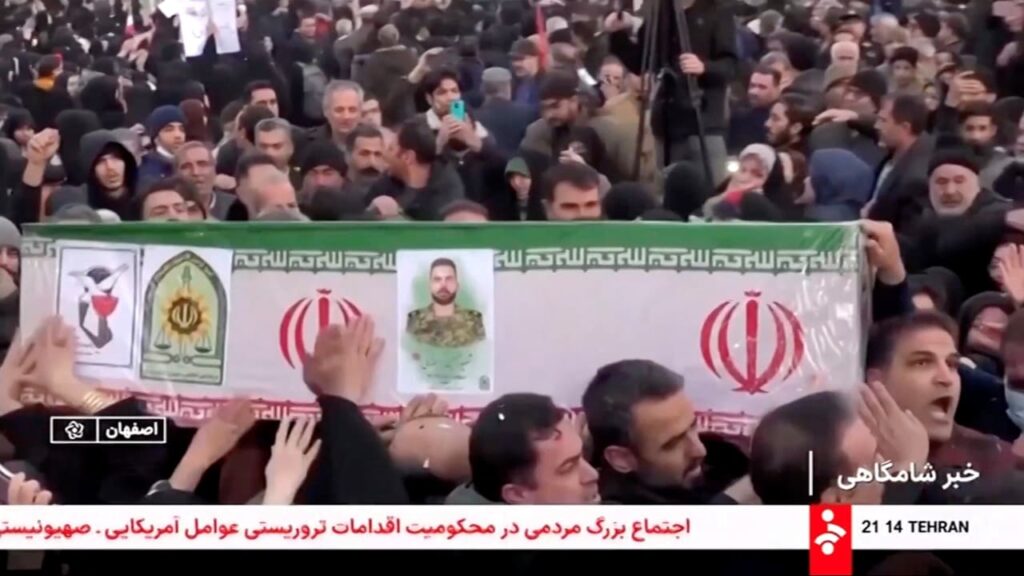
The official, who spoke to Reuters on condition of anonymity, said those killed included both protesters and security personnel, blaming what he described as “terrorists” for the violence. He did not provide a detailed breakdown of casualties.
The acknowledgment came as Iranians were able to make phone calls abroad for the first time in days, offering rare accounts of heavy security deployments, damaged buildings and lingering fear following an intense government crackdown.
The protests, initially triggered by a sharp economic downturn and the collapse of Iran’s currency, have evolved into one of the most serious domestic challenges faced by the clerical leadership in years.
They have also unfolded against a backdrop of mounting international pressure after Israeli and U.S. military strikes last year and renewed threats from Washington.
On Monday, President Donald Trump announced a 25% tariff on goods from any country that does business with Iran, a move aimed at increasing pressure on Tehran as the unrest continues. Trump has also said military options remain under consideration, warning earlier this month that the United States was “locked and loaded.”
Iran has not formally responded to the tariff announcement, though China — Iran’s largest oil customer — swiftly criticized the measure. Iran remains under heavy U.S. sanctions and exports much of its oil to China, with the United Arab Emirates, Turkey, Iraq and India among its other major trading partners.
Despite the scale of the protests, Iranian authorities have sought to project control, adopting what officials describe as a dual-track approach that distinguishes between legitimate economic grievances and what they call violent or foreign-backed unrest.
Government spokesperson Fatemeh Mohajerani said Tuesday that the state views both protesters and security forces as “children of the nation,” while maintaining that law enforcement must respond firmly when demonstrations turn violent.
Analysts say the unrest comes at a particularly vulnerable moment for Iran, as years of sanctions, inflation and unemployment have eroded public confidence in the government.
German Chancellor Friedrich Merz said Tuesday that he believes the Iranian government is nearing collapse, describing the unrest as potentially decisive. Iranian Foreign Minister Abbas Araghchi dismissed the remarks, accusing Berlin of hypocrisy and double standards.
Despite the turmoil, there has been no visible split within Iran’s powerful security establishment, a factor analysts say has allowed the Islamic Republic to survive previous protest waves.
Rights groups have long disputed official casualty figures. The U.S.-based Human Rights Activists News Agency said more than 10,700 people have been detained since the protests began Dec. 28. Reuters said it could not independently verify those figures.
Other opposition groups outside Iran have suggested the death toll may exceed the 2,000 cited by the Iranian official.
The unrest has been compounded by a sweeping communications blackout. The United Nations rights office said Tuesday that phone services had been restored, but internet access remained limited and unreliable.
Videos verified by Reuters showed nighttime clashes in recent days, with gunfire, burning vehicles and damaged buildings in several cities.
The Associated Press reported that residents in Tehran were able to briefly contact journalists abroad Tuesday, describing a capital under heavy security surveillance.
Witnesses said anti-riot police armed with batons, shields, shotguns and tear gas were stationed at major intersections, alongside members of the Revolutionary Guard’s Basij force and plainclothes security personnel.
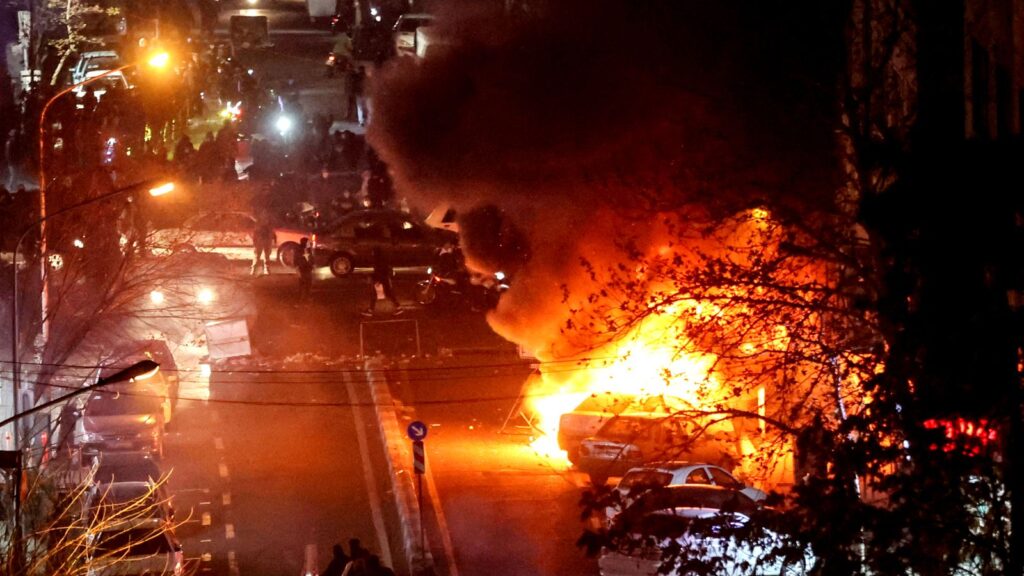
Several government offices and banks were burned during the unrest, they said, and many financial transactions remained disrupted due to the internet shutdown.
Shops were open but foot traffic was sparse, witnesses said, adding that merchants at Tehran’s Grand Bazaar were ordered to reopen by security forces. Iranian state media did not acknowledge such directives.
Residents also reported searches for satellite internet equipment, including Starlink terminals, as authorities sought to limit outside communication.
Supreme Leader Ayatollah Ali Khamenei praised large pro-government rallies held Monday, calling them a warning to foreign powers. State television broadcast crowds chanting slogans against the United States and Israel.
Iran’s attorney general has warned that participation in protests could be treated as a capital offense under charges of being an “enemy of God.”
Meanwhile, Iranian officials say communication channels with Washington remain open despite public threats.
Foreign Minister Araghchi said in an interview with Al Jazeera that contact with U.S. special envoy Steve Witkoff has continued before and after the protests, though he described U.S. proposals as incompatible with Washington’s rhetoric.
White House press secretary Karoline Leavitt said the administration is receiving private messages from Tehran that differ sharply from Iran’s public statements.
She said diplomacy remains Trump’s preferred option, even as the president has made clear he is willing to use force if he deems it necessary.
Trump said Sunday that Iran wants to negotiate but cautioned that action could come before talks if the crackdown continues.
Iran’s parliamentary speaker warned that U.S. military bases and Israeli targets would be considered legitimate if Washington intervenes militarily.
The acknowledgment of a 2,000-person death toll marks a turning point in the crisis, suggesting either a shift in Iran’s messaging strategy or an effort to preempt mounting international scrutiny.
By framing the violence as the work of “terrorists,” authorities appear intent on justifying the scale of the crackdown while maintaining a narrative of internal legitimacy.
Trump’s tariff announcement signals a renewed reliance on economic pressure as a tool of coercion, though its effectiveness may be limited given Iran’s long-standing isolation from Western markets and its deepening ties with non-Western partners.
The partial restoration of communications has offered fleeting glimpses into conditions inside Iran, but the continued internet restrictions underscore the government’s determination to control information flows.
With no clear fractures inside Iran’s security apparatus and protests continuing despite arrests and casualties, the standoff appears set to persist, raising questions about how far both Tehran and Washington are willing to escalate in the days ahead.
AP/Reuters





