

WASHINGTON — The Trump administration says it is exploring steps to revoke the U.S. citizenship of naturalized Americans convicted of fraud, a move that would mark a significant expansion of its immigration crackdown and has raised alarms among legal experts and civil rights advocates.
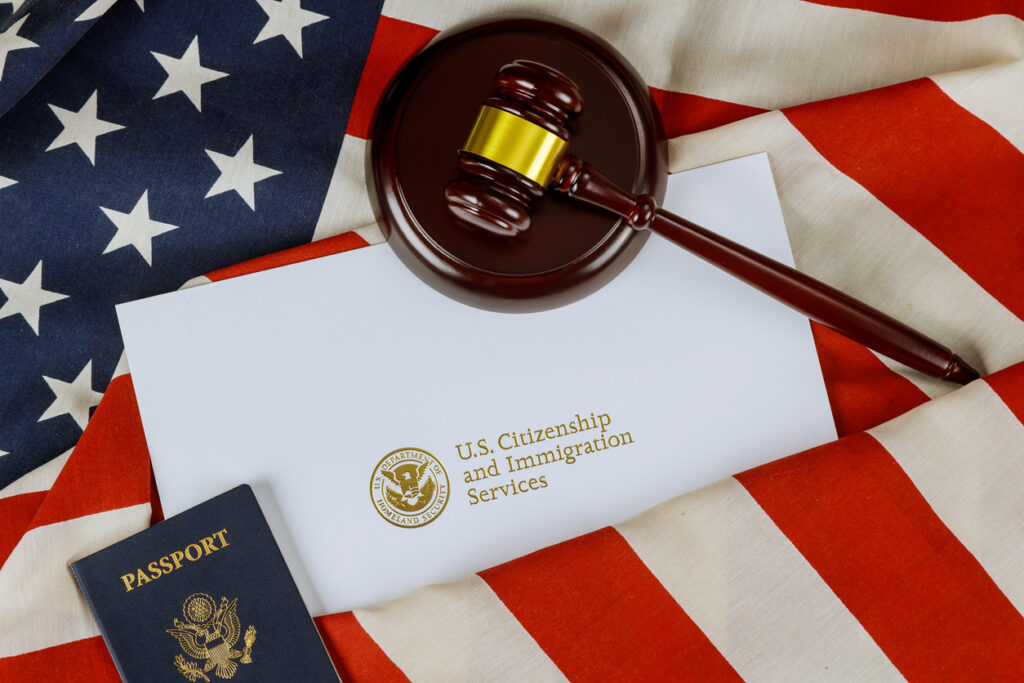
President Donald Trump has repeatedly suggested that citizenship obtained through dishonesty should be subject to revocation, telling The New York Times this week that he would strip naturalized Americans of their status “in a heartbeat” if they were dishonest during the process.
“I think that many of the people that came in from Somalia, they hate our country,” Trump said in the interview, comments that critics say single out an entire community based on the actions of a small number of individuals.
The remarks come as federal authorities investigate large-scale fraud schemes in Minnesota involving misuse of government-funded programs. While only specific individuals have been charged or convicted, Trump has repeatedly referenced Minnesota’s Somali community while discussing denaturalization, drawing accusations that his administration is conflating criminal accountability with collective blame.
Trump did not identify which foreign-born citizens could be targeted or clarify what standards would be applied. “If they deserve to be stripped, I would, yes,” he said, without specifying whether he was referring to existing legal criteria or a broader reinterpretation of citizenship law.
Immigration lawyers say U.S. law sets a high bar for revoking citizenship.
“The government would have to prove fraud or intentional misrepresentation during the naturalization process itself,” said Eryn Hanlon, an immigration attorney and partner at Greenwood Hanlon Kendrick. She said this could include concealing serious crimes, falsifying identities or entering sham marriages — not crimes committed after citizenship is granted.
Trump administration officials have raised denaturalization repeatedly in recent months. In December, White House press secretary Karoline Leavitt said the administration was “looking at” revoking citizenship from individuals of Somali descent convicted in the Minnesota fraud cases, echoing earlier comments by Trump suggesting they should be sent “back to where they came from.”
Trump has also floated revoking citizenship from political opponents born in the United States, though legal experts note there is no constitutional mechanism for doing so. He has publicly threatened to strip the citizenship of New York-born comedian Rosie O’Donnell, who dismissed the remarks after relocating to Ireland following Trump’s 2024 election victory.
His primary focus, however, has remained on foreign-born Americans. Trump has questioned the citizenship of New York Mayor Zohran Mamdani, born in Uganda and naturalized in 2018, and has repeatedly targeted Rep. Ilhan Omar of Minnesota, who was born in Somalia and became a U.S. citizen in 2000. At a campaign event in Pennsylvania last year, Trump told supporters that Omar should be expelled from the country, prompting chants of “send her back.”
If implemented, the policy would represent a sharp escalation of Trump’s immigration agenda, which already includes efforts to end Temporary Protected Status for Somalis and expand travel restrictions affecting dozens of countries.
Internal guidance obtained by The New York Times shows that U.S. Citizenship and Immigration Services field offices were instructed to refer 100 to 200 denaturalization cases per month to the Justice Department beginning in 2026. By comparison, just 305 denaturalization cases were filed between 1990 and 2017, according to the National Immigration Forum. During Trump’s first term, that average rose to 42 cases annually.
Smita Dazzo, deputy legal lead at HIAS, a nonprofit that provides legal assistance to refugees and asylum seekers, said such targets would be extremely difficult to meet without stretching the law.
“It would be very unlikely that a program of this scale would not face immediate legal challenges,” Dazzo said, noting that all denaturalization cases must be decided in federal court.
Democratic Sen. Ed Markey of Massachusetts condemned the reported push, calling it “xenophobia disguised as policy.”
“All American citizens — regardless of where they were born — deserve the full protection of the Constitution,” Markey said.
Legal framework and risks
Under U.S. Citizenship and Immigration Services guidelines, citizenship can be revoked only if it was obtained through deliberate deception or illegal means, such as willfully concealing material facts during the application process. There is no statute of limitations for such cases.
Denaturalization is not a punishment for criminal convictions, legal experts emphasize.
“Citizenship cannot be revoked simply because someone commits a crime,” Dazzo said. “It has to relate directly to how they obtained their citizenship.”
Hanlon agreed, saying that fraud must have occurred during the naturalization process itself.
Advocates worry the administration could reinterpret minor errors as intentional deception.
“They may take something insignificant — a typo, a wrong date — and argue it was a material misrepresentation,” Dazzo said.
The stakes are high. Once citizenship is revoked, individuals revert to lawful permanent resident status, making them vulnerable to deportation.
“U.S. citizens cannot be deported,” Dazzo said. “But once denaturalized, that protection disappears.”
The renewed focus on denaturalization reflects a broader effort by the Trump administration to redefine the boundaries of American citizenship, shifting it from a permanent legal status to a conditional one for foreign-born Americans.
While existing law already allows citizenship to be revoked in rare cases of proven fraud, critics argue the administration’s rhetoric and internal targets risk politicizing a process historically used sparingly.
Legal scholars warn that aggressive use of denaturalization could undermine trust in the immigration system and raise constitutional questions about equal protection and due process.
As the administration continues to explore its options, the courts are likely to become the ultimate battleground, determining whether the push represents lawful enforcement or an unprecedented attempt to weaponize citizenship itself.
Time.com





