

Iranian authorities were expected Wednesday to carry out the first execution linked to weeks of nationwide unrest that has shaken the Islamic Republic, a development that has drawn sharp warnings from the United States and renewed condemnation from human rights organizations monitoring what they describe as an unprecedented crackdown.
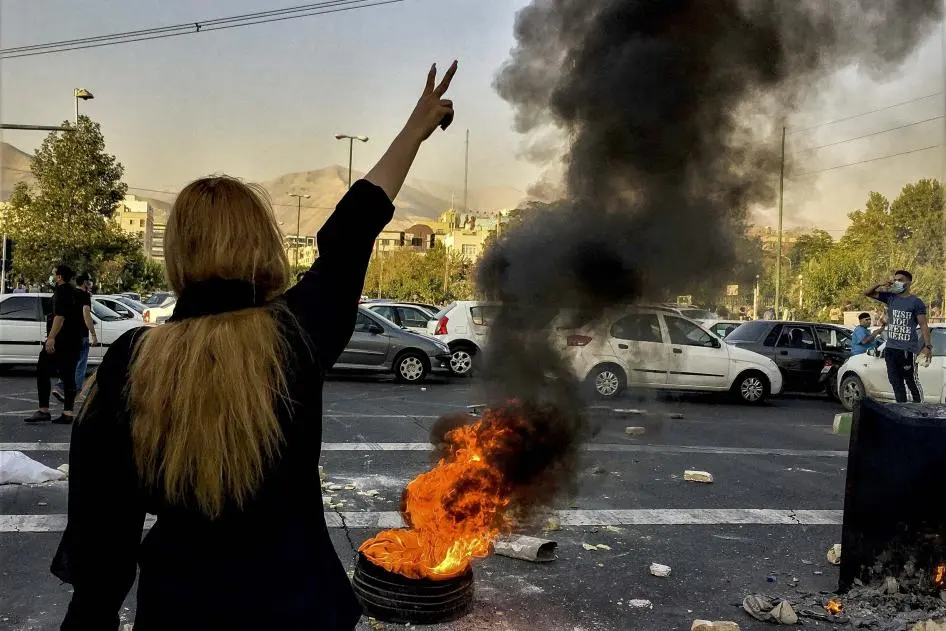
The execution, if carried out, would mark a significant escalation by Iranian authorities as protests triggered by soaring prices and economic hardship enter their bloodiest phase. President Donald Trump said the United States would take “very strong action” should the execution proceed, even as Israeli and Arab officials have privately urged Washington to refrain from immediate military strikes, arguing the Iranian regime has not yet been sufficiently weakened.
Human rights groups and U.S. officials say the man facing execution is Erfan Soltani, 26, who was detained amid the unrest and sentenced to death without due process. Amnesty International, the U.S. State Department and other advocacy organizations said Soltani would become the first known protester executed in connection with the demonstrations.
“This time, the Islamic Republic regime didn’t even bother with its usual 10-minute sham trial,” the State Department said in a post on X, adding that Soltani was sentenced without a defense lawyer or meaningful legal proceedings. “Erfan is the first protester to be sentenced to death, but he will not be the last,” the statement said.
Iran has been largely cut off from the outside world for days because of a near-total internet blackout, but information and videos emerging through limited international calls and satellite connections suggest security forces have responded to the unrest with lethal force on a scale not seen in decades.
The U.S.-based Human Rights Activists News Agency, known as HRANA, said at least 2,500 people have been killed since protests erupted last month. The group said the toll includes nearly 150 members of Iran’s security forces and that more than 18,000 people have been arrested.
HRANA said its figures are compiled through a network of sources inside Iran who cross-check information, and that the sharp rise in reported deaths earlier this week coincided with Iranians briefly regaining the ability to contact the outside world after days of silence.
Soltani’s family lost contact with him on Jan. 8, Amnesty International said, and were informed on Sunday that he had been sentenced to death. The rights group called for urgent international pressure on Tehran to halt all executions.
“The international community must urgently call on Iran’s authorities to immediately stop all executions,” Amnesty said, adding that Iranian authorities have “weaponized the death penalty” since mass protests in 2022 following the death of Mahsa Amini. Amnesty said thousands have been executed since then in what it described as a sustained campaign of repression.
Iranian officials have publicly defended the use of harsh penalties. Judiciary chief Gholamhossein Mohseni-Ejei said swift punishment was necessary to restore order, according to remarks broadcast by Iranian state television.
“If we want to do something, we have to do it quickly,” Mohseni-Ejei said in a video shared online. Delays of months, he added, would diminish the deterrent effect of punishment.
Trump, speaking to CBS News, said he was closely watching developments. “If they do such a thing,” he said, referring to Soltani’s execution, “we will take very strong action.” He described the reported killings of protesters as “significant,” while noting uncertainty about the precise death toll.
International concern has grown as more evidence of the crackdown emerges. French Foreign Minister Jean-Noël Barrot told RTL radio that France suspects the repression may be “the most violent in Iran’s contemporary history” and called for it to stop immediately.
Despite the communications blackout, videos verified by NBC News through geolocation techniques show large numbers of bodies piled outside what appears to be a makeshift morgue near Tehran. Witnesses who managed to make international phone calls described a heavy security presence across major cities, limited pedestrian traffic and a tense calm even as some shops reopened.
Iranian authorities have acknowledged a high number of casualties but have disputed responsibility, blaming what they describe as “terrorists” and “rioters.” The semi-official Fars news agency said most of those killed were ordinary citizens with no connection to the protests, suggesting they were victims of violence instigated by unrest rather than by security forces.
State television said a mass funeral under heavy security was scheduled Wednesday in Tehran for 300 bodies, including members of the security forces and civilians.
Tehran has also accused Washington of fomenting unrest. Iran’s mission to the United Nations said in a post on X that the United States was engineering “unrest and chaos” as a pretext for military intervention, accusing U.S. policy of being rooted in regime change. “This playbook has failed before,” the mission said, adding that Iranians would defend their country.
Behind the scenes, U.S. allies have urged caution. Israeli and Arab officials have told the Trump administration that while the Iranian regime is under pressure, it may not yet be vulnerable enough for U.S. military strikes to deliver a decisive blow, according to sources cited by NBC News.
The potential execution of a protester represents a turning point in Iran’s response to domestic dissent. While Tehran has long relied on mass arrests and intimidation, carrying out executions linked directly to protests could harden international opposition and further isolate the country diplomatically. For Washington, the crisis poses a familiar dilemma: balancing rhetorical and economic pressure against the risks of military escalation in an already volatile region.
The communications blackout underscores how modern authoritarian responses increasingly focus on controlling digital space, limiting both domestic coordination and international scrutiny. Economically, prolonged unrest and isolation threaten to deepen Iran’s existing financial crisis, potentially fueling further protests in a cycle of repression and resistance.
Whether Trump’s warning translates into concrete action remains uncertain, particularly given signals from allies urging restraint. But the execution threat has already elevated the crisis to a new level, raising the stakes for Iran’s leadership and the international community alike.





