

President Donald Trump’s Board of Peace, an ambitious new international body designed to oversee Gaza’s reconstruction and potentially address broader global conflicts, will grant permanent membership to nations or individuals contributing $1 billion while offering three-year terms to those who join without financial commitment, a U.S. official said Sunday.
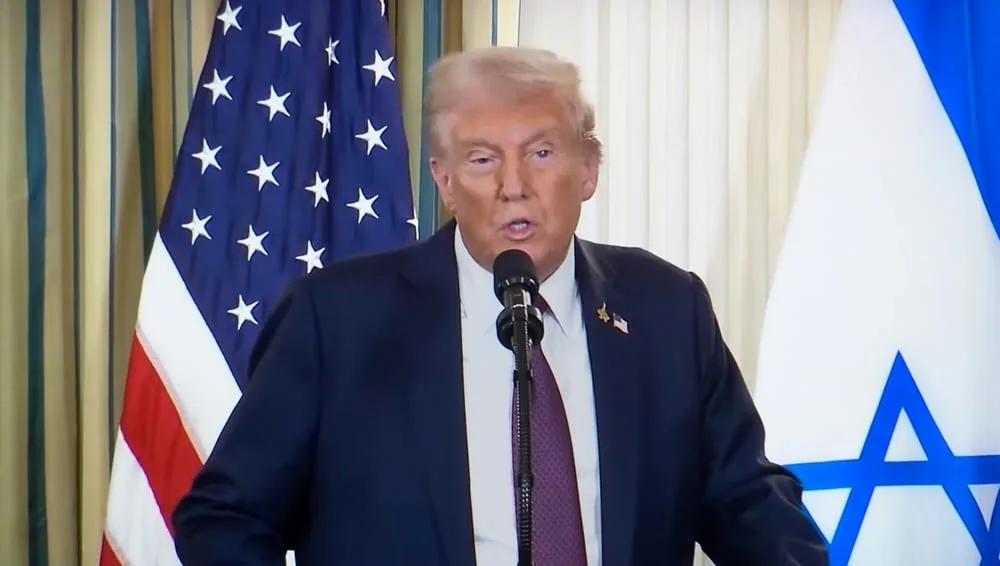
The payment structure, which Bloomberg first reported, establishes an unprecedented pay-for-influence model in international diplomacy where financial contributions determine the duration and permanence of participation in what Trump has characterized as “the Greatest and Most Prestigious Board ever assembled.”
All funds collected through the billion-dollar contributions will flow directly toward rebuilding Gaza, devastated by two years of warfare between Israel and Hamas, the official told CNN. The official added that “there will not be exorbitant salaries and massive administrative bloat that plagues many other international organizations,” suggesting the board will operate with minimal overhead costs.
At least eight additional countries disclosed Sunday that Washington had extended invitations to join the board, with Hungary and Vietnam announcing their acceptance. India, Australia, Jordan, Greece, Cyprus and Pakistan confirmed receiving invitations, joining previously announced invitees including Canada, Turkey, Egypt, Paraguay, Argentina and Albania. The total number of nations invited remains unclear, though the U.S. is expected to announce the complete official membership roster during the World Economic Forum meeting in Davos, Switzerland, this week.
The board represents a central component of the United Nations-backed American plan to demilitarize and reconstruct Gaza following the ceasefire that took effect Oct. 10. Members will receive defined portfolios “critical to Gaza’s stabilization and long-term success,” the White House said Thursday, though specific portfolio assignments have not been publicly disclosed.
Trump chairs the body alongside an executive committee including U.S. Secretary of State Marco Rubio, former British Prime Minister Tony Blair, Canadian Prime Minister Mark Carney, Trump foreign policy envoy Steve Witkoff, deputy national security adviser Robert Gabriel, Trump’s son-in-law Jared Kushner, billionaire businessman Marc Rowan, World Bank President Ajay Banga and Israeli business owner Yakir Gabay.
The executive committee also includes representatives from Qatar, Egypt and Turkey, nations serving as ceasefire monitors whose inclusion prompted sharp criticism from Israeli Prime Minister Benjamin Netanyahu. His office issued a rare rebuke of its closest ally Saturday, stating the committee “was not coordinated with Israel and runs contrary to its policy.”
Israel has consistently opposed Qatari and Turkish involvement in Gaza’s future governance, repeatedly accusing both nations of supporting and funding Hamas. Turkey maintains strained relations with Israel while sustaining good ties with Hamas, positioning Ankara to potentially play a crucial role in persuading the militant group to relinquish power in Gaza and disarm, though whether Turkey will exercise such influence remains uncertain.
The board notably lacks representation from the Palestinian Authority, the Hamas rival governing portions of the occupied West Bank that international planners expect will eventually assume control of Gaza after implementing extensive reforms. The Palestinian Authority’s absence from the board raises questions about Palestinian self-determination in reconstruction planning and whether international oversight will adequately incorporate Palestinian perspectives.
Under the American plan, day-to-day governance in Gaza will fall to a Palestinian technocratic committee separate from the Board of Peace. A distinct “Gaza executive board” supporting governance operations includes officials from Turkey, Qatar, Egypt, the United Arab Emirates and select members of both the Board of Peace and the technocratic committee, creating overlapping structures with potentially complex coordination requirements.
The invitation letters Trump sent Friday to world leaders positioned the Board of Peace as an entity that would “embark on a bold new approach to resolving global conflict,” language suggesting ambitions extending well beyond Gaza reconstruction to encompass broader international dispute resolution. The characterization raises the possibility that the board could evolve into a rival to the United Nations Security Council, the 15-member body created after World War II that represents the U.N.’s most powerful mechanism for addressing international security threats.
The Security Council has been paralyzed by repeated U.S. vetoes preventing action to end the Gaza war, while the United Nations’ overall influence has diminished following major funding cuts imposed by the Trump administration and other donors. The institutional weakness creates an opening for alternative structures like the Board of Peace to claim legitimacy as more effective vehicles for conflict resolution.
Trump’s invitation letters noted that the Security Council had endorsed the U.S. 20-point Gaza ceasefire plan, which includes creating the Board of Peace. Several invitees posted the letters on social media, providing public confirmation of the diplomatic outreach and the board’s proposed mandate.
Hungarian Prime Minister Viktor Orbán, one of Trump’s most enthusiastic supporters in Europe, accepted membership through Foreign Minister Péter Szijjártó, who announced the decision on state radio Sunday. Vietnam’s Communist Party chief, To Lam, also accepted, a foreign ministry statement said, marking an unusual alignment between the socialist state and a Trump administration initiative.
India received an invitation, a senior government official with knowledge of the matter said, speaking on condition of anonymity because authorities had not publicly disclosed the information. Australia has been invited and will discuss the proposal with Washington “to properly understand what this means and what’s involved,” Deputy Prime Minister Richard Marles told Australian Broadcasting Corp. on Monday, reflecting cautious interest that may characterize responses from other democratic nations weighing participation.
The Associated Press reported that Jordan, Greece, Cyprus and Pakistan confirmed invitations Sunday, expanding the geographic and political diversity of potential board membership. The range of countries approached suggests Trump administration efforts to construct a geographically representative body rather than one dominated exclusively by Western or Middle Eastern nations.
The board’s structure and operating principles raise fundamental questions about international governance models. The $1 billion permanent seat option creates a two-tier membership system where wealthy nations or individuals can secure indefinite influence while countries unable or unwilling to make such contributions hold temporary positions. This arrangement differs markedly from traditional international organizations where membership equality prevails regardless of financial contributions, though funding levels often correlate with informal influence.
Whether the billion-dollar threshold represents a realistic expectation or aspirational goal remains uncertain. Few nations maintain discretionary budgets permitting billion-dollar contributions to reconstruction initiatives, particularly for territories where their direct interests may be limited. The financial requirement could restrict permanent membership to a small number of wealthy Gulf states, major economic powers like the United States and China, or billionaire individuals rather than achieving broad international participation.
The board’s focus on Gaza reconstruction during the ceasefire’s challenging second phase encompasses deploying an international security force, disarming Hamas, managing the Palestinian technocratic committee and overseeing physical reconstruction of infrastructure destroyed during the conflict. These interconnected objectives present formidable political and practical challenges that even a well-funded, prestigious board may struggle to coordinate effectively.
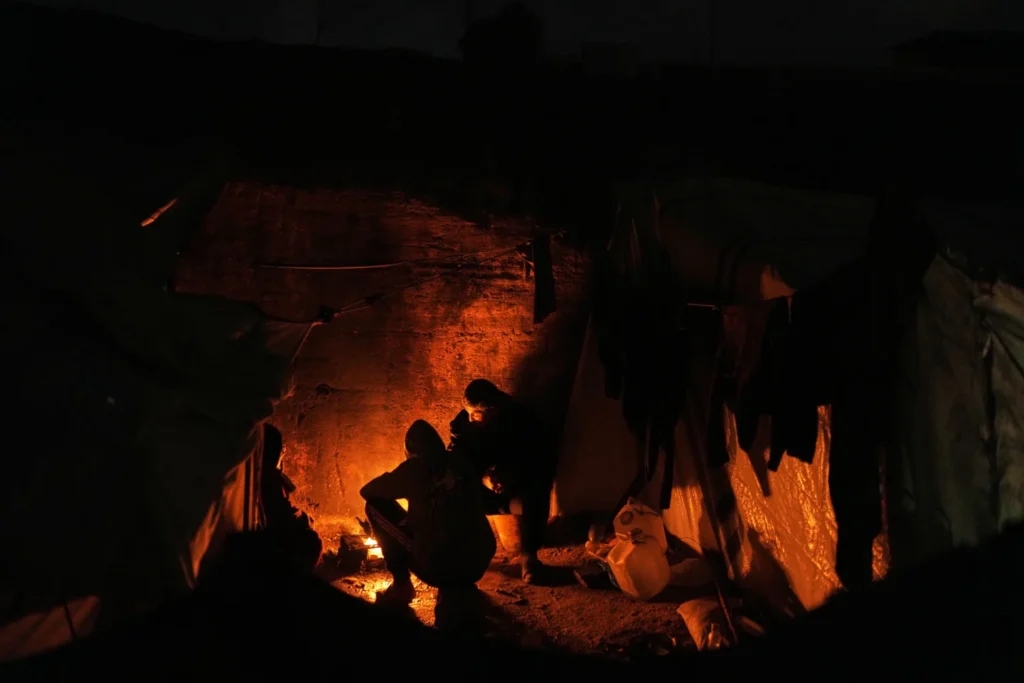
The ceasefire framework’s second phase requires Hamas disarmament, a condition the militant group has historically resisted. Without mechanisms to compel compliance, the board may find itself overseeing reconstruction in territory where armed factions retain weapons and influence, undermining security conditions necessary for sustainable development.
International security force deployment raises questions about troop contributions, command structures and rules of engagement. Previous international stabilization missions have struggled with unclear mandates, inadequate resources and withdrawal timelines that undermine long-term effectiveness. Whether Board of Peace members will commit military personnel alongside financial resources will significantly impact the initiative’s credibility and operational capacity.
The Palestinian technocratic committee tasked with daily governance represents an attempt to establish administrative capacity independent of both Hamas and the Palestinian Authority’s existing political structures. Whether technocrats can command legitimacy and authority in Gaza’s post-conflict environment without clear political backing from recognized Palestinian leadership presents a substantial governance challenge.
Physical reconstruction requires not only financial resources but also security conditions permitting construction, supply chains delivering materials and labor forces willing to work in potentially dangerous environments. The magnitude of destruction across Gaza necessitates multiyear, multibillion-dollar commitments that may exceed what board members and associated donors prove willing to sustain once international attention shifts to other crises.
Netanyahu’s objection to the executive committee composition reveals the board’s potential to generate friction with Israel despite the U.S.-Israel alliance. If board operations proceed over Israeli objections, particularly regarding Turkish and Qatari roles, tensions could complicate reconstruction logistics given Israel’s control over Gaza’s borders and its capacity to restrict movement of goods and personnel.
The board’s broader aspirations to address global conflicts beyond Gaza remain vague. Without defined geographic scope, issue areas or decision-making procedures, the entity’s potential expansion from Gaza-specific reconstruction overseer to general international peacemaker appears more rhetorical than operational. Whether member nations will grant the board jurisdiction over conflicts affecting their interests or defer to existing multilateral mechanisms remains highly uncertain.
For Trump, the Board of Peace represents an opportunity to claim leadership on Middle East peace efforts while potentially constructing an alternative international architecture less constrained by established institutions like the United Nations. The president’s transactional approach to international relations finds expression in the pay-for-permanence membership model, reflecting his business background and skepticism toward traditional diplomatic structures.
As nations weigh whether to join and at what level of financial commitment, the Board of Peace’s ultimate composition, resources and influence will emerge. Whether the initiative transforms Gaza reconstruction and international conflict resolution or becomes another ambitious but ultimately ineffective diplomatic experiment depends on factors including member commitment, Palestinian cooperation, Israeli acquiescence and the board’s ability to coordinate diverse stakeholders toward common objectives in one of the world’s most intractable conflicts.
CNN/AP





