

A massive fire that tore through a crowded shopping complex in Pakistan’s largest city, Karachi, has left at least six people dead — including a firefighter — with dozens more still unaccounted for, underscoring persistent safety failures in a city long plagued by deadly blazes.
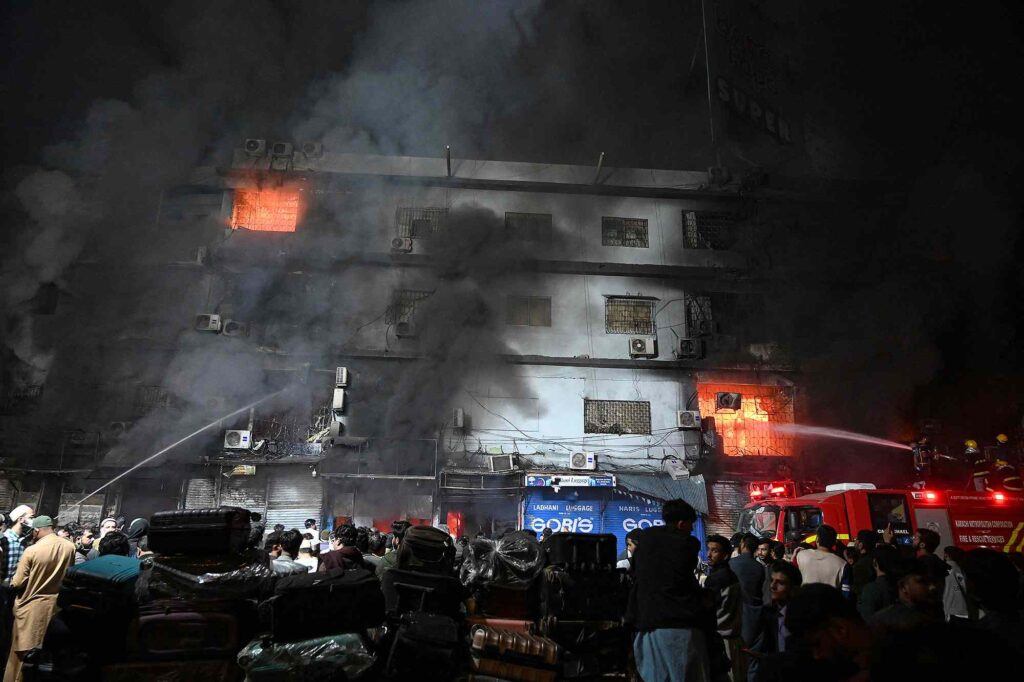
Firefighters in Karachi extinguished the inferno at the multistory Gul Plaza shopping center on Sunday after battling the flames for nearly 24 hours, officials said. Rescue teams then shifted to cooling debris and searching for missing people feared trapped inside the building, which houses more than 1,200 shops.
The blaze erupted late Saturday night in the city’s commercial district and spread rapidly through stores packed with cosmetics, clothing, carpets and plastic goods, materials that fueled the fire and produced thick, toxic smoke, said Dr. Abid Jalal Sheikh, Karachi’s chief rescue officer.
Five bodies were recovered from the four-story building and its basement, Sheikh said. Rescue officials confirmed that a firefighter later died after sustaining injuries while attempting to contain flames on the upper floors, bringing the official death toll to six. Families gathered outside the cordoned-off site throughout Sunday, anxiously awaiting word on loved ones who had not been seen since the fire broke out.
Sindh Chief Minister Murad Ali Shah said the fire had been fully extinguished and that search operations were underway for dozens of missing people. He added that earlier estimates suggested it could take several more hours before crews were able to safely access all parts of the damaged structure.
Television footage showed firefighters in heavy protective gear navigating smoke-filled corridors as parts of the building collapsed. Large sections of the plaza were left charred and unstable, with twisted metal, fallen air-conditioning units and shattered shop signs scattered across the street.
Reuters, citing police and medical officials, reported a higher toll later Sunday. Police surgeon Dr. Summaiya Syed told the news agency that at least 11 people had died, while Karachi Mayor Murtaza Wahab said more than 60 people were still missing, raising fears that the number of casualties could climb further.
Firefighters told Reuters that the building’s poor ventilation system allowed smoke to accumulate rapidly, severely hampering rescue efforts and making it difficult to reach people believed to be trapped inside. The mall’s layout and the concentration of flammable merchandise caused parts of the fire to smolder long after flames were brought under control.
Sindh province police chief Javed Alam Odho told reporters at the scene that preliminary findings pointed to an electrical fault, possibly involving a circuit breaker, as the cause of the fire. He said a formal investigation would follow once the site was deemed safe.
Emergency services said they received the first distress call at 10:38 p.m. Saturday, reporting a fire in ground-floor shops. By the time fire crews arrived, the flames had already raced through upper floors, engulfing much of the structure in a densely packed area where access for emergency vehicles was limited.
Prime Minister Shehbaz Sharif expressed grief over the loss of life and directed authorities to deploy all available resources to assist rescue operations and prevent further casualties. In a statement, he also called for accountability and stronger measures to avert similar disasters.
Karachi, a megacity of more than 20 million people, has a long history of fatal fires linked to lax enforcement of safety codes, illegal construction and outdated electrical systems. In November 2023, a fire at another shopping mall in the city killed at least 10 people and injured 22, reigniting public anger over what many see as chronic official neglect.
Shopkeepers and residents told local media that delayed response times and shortages of water and equipment hampered early firefighting efforts at Gul Plaza. Traders said decades of investment and livelihoods were wiped out overnight, intensifying frustration in a city where commercial buildings often operate without proper fire exits, alarms or sprinklers.
The Karachi mall fire once again exposes deep structural weaknesses in urban safety governance across Pakistan’s largest cities. Despite repeated tragedies, enforcement of building regulations remains inconsistent, particularly in commercial hubs where profit-driven development often outpaces oversight.
Experts say the combination of overcrowded markets, illegal modifications, aging electrical infrastructure and inadequate emergency access creates conditions ripe for catastrophe. Fires in Karachi frequently spread quickly because buildings are packed tightly together and stocked with combustible materials, while narrow streets slow the arrival of fire engines.
The human cost is compounded by the absence of reliable occupancy records in many markets, making it difficult for authorities to determine how many people may be trapped during emergencies. This uncertainty prolongs rescue efforts and deepens trauma for families waiting for news.
The economic fallout is also severe. Markets like Gul Plaza are economic lifelines for thousands of small traders who often lack insurance or alternative sources of income. Rebuilding can take years, pushing already vulnerable families further into financial hardship.
Public confidence in official assurances has eroded after each major fire, as promised reforms fail to materialize. Analysts say meaningful change would require stricter inspections, transparent penalties for violations, modernized firefighting infrastructure and coordinated urban planning — steps that demand sustained political will.
As search teams continue combing through debris in Gul Plaza, the tragedy has renewed calls for accountability in a city where deadly fires are no longer rare shocks, but recurring reminders of systemic failure.
CNN/Reuters





