

American forces killed an Al-Qaeda-affiliated leader in northwest Syria on Friday who military officials say maintained direct connections to the Islamic State operative responsible for a December ambush that claimed the lives of two U.S. soldiers and an American civilian interpreter, U.S. Central Command disclosed.
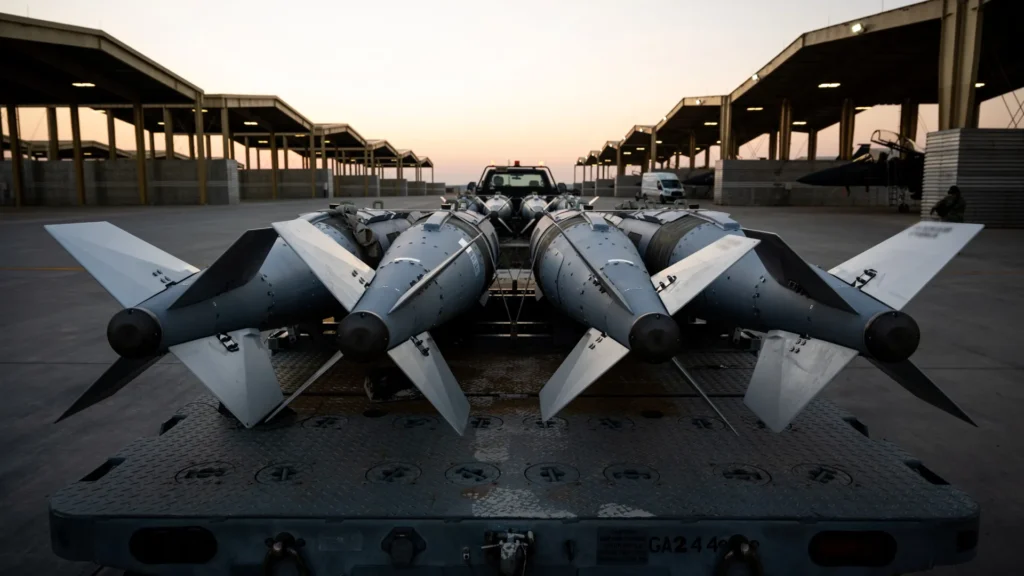
The airstrike targeting Bilal Hasan al-Jasim represents the third wave of retaliatory operations following the Dec. 13 attack that killed Sgt. Edgar Brian Torres-Tovar, Sgt. William Nathaniel Howard and civilian interpreter Ayad Mansoor Sakat. CENTCOM characterized al-Jasim as “an experienced terrorist leader who plotted attacks and was directly connected” to the ambush that prompted President Donald Trump to order an expanded military campaign against what he termed “ISIS thugs” attempting to reconstitute following the ouster of autocratic ruler Bashar Assad approximately one year ago.
“The death of a terrorist operative linked to the deaths of three Americans demonstrates our resolve in pursuing terrorists who attack our forces,” Adm. Brad Cooper, CENTCOM commander, said in a statement. “There is no safe place for those who conduct, plot, or inspire attacks on American citizens and our warfighters. We will find you.”
The strike marks the latest action in Operation Hawkeye Strike, a comprehensive campaign that has seen U.S. forces and coalition partners including Jordan and Syria target more than 100 Islamic State infrastructure installations and weapons storage sites across Syrian territory. The operation reflects a significant intensification of American military engagement in Syria following the deadly December ambush that exposed continuing threats to U.S. personnel despite the Islamic State’s loss of territorial control.
Trump emphasized that Syrian forces were fighting alongside American troops as the U.S. military expands cooperation with security forces participating in the anti-militant coalition. The Republican president disclosed that Syrian President Ahmad al-Sharaa was “extremely angry and disturbed by this attack,” suggesting coordination between Washington and Damascus regarding counterterrorism operations despite the complex political landscape following Assad’s removal from power.
The December ambush that precipitated the current military campaign occurred as American forces operated in eastern Syria, where approximately 900 U.S. troops maintain presence primarily to prevent Islamic State resurgence. The attack demonstrated that despite losing the caliphate territory it once controlled across Syria and Iraq, the extremist group retains capacity to conduct lethal operations against coalition forces through affiliated networks and opportunistic strikes.
Al-Jasim’s connections to both Al-Qaeda and Islamic State operatives illustrate the fluid relationships among extremist groups operating in Syria’s fragmented security environment. While Al-Qaeda and the Islamic State have historically competed for dominance within global jihadist movements, tactical cooperation at local levels appears to persist, particularly when targeting common enemies like American forces and their regional partners.
CENTCOM’s description of al-Jasim as an experienced leader who plotted attacks suggests he played a coordinating role beyond simple tactical execution, potentially connecting disparate extremist cells and facilitating operations across northwestern Syria where both Al-Qaeda affiliates and Islamic State remnants maintain varying degrees of influence. His elimination disrupts these networks temporarily, though whether the leadership vacuum will significantly degrade operational capacity remains uncertain given extremist groups’ demonstrated resilience in reconstituting command structures.
The northwest Syria location of Friday’s strike indicates American intelligence successfully tracked al-Jasim to territory where multiple armed factions compete for control following Assad’s fall. The region’s complex dynamics, with Turkish-backed opposition forces, Kurdish-led militias, remnant Assad loyalists and various extremist groups all operating in proximity, create both opportunities and challenges for U.S. counterterrorism efforts.
Operation Hawkeye Strike’s scale, with more than 100 targets engaged, suggests American forces are conducting a systematic degradation campaign against Islamic State capabilities rather than pursuing only high-value individuals. The dual approach of eliminating leadership while destroying infrastructure aims to prevent the group from reconstituting the administrative and military apparatus that enabled its previous territorial conquests.
The partnership with Jordan and Syria in targeting operations represents pragmatic cooperation among nations with divergent interests but shared concerns about extremist threats. Jordan faces infiltration risks along its lengthy Syrian border, while Syria’s new government under al-Sharaa seeks to establish control and legitimacy partly through demonstrating effectiveness against terrorist groups that flourished during the civil war’s chaos.
For the United States, the expanded military operations serve multiple objectives beyond immediate retaliation for the December deaths. Preventing Islamic State resurgence protects American personnel deployed in Syria, reassures regional partners about Washington’s commitment to counterterrorism despite broader Middle East policy uncertainties, and sends deterrent messages to extremist networks considering attacks on U.S. forces.
The emphasis in Cooper’s statement on finding attackers regardless of location reflects longstanding American policy of pursuing those responsible for killing U.S. citizens and military personnel. This approach has driven counterterrorism operations across multiple continents for more than two decades, though its effectiveness in preventing future attacks versus generating cycles of retaliation remains subject to debate.
The deaths of Torres-Tovar, Howard and Sakat in December renewed attention to the risks American forces face in Syria and questions about the mission’s duration and objectives. While the Trump administration has not announced plans to withdraw the roughly 900 troops deployed primarily in eastern Syria, neither has it articulated a clear timeline for when conditions might permit departure without risking Islamic State resurgence.
Syrian President al-Sharaa’s reported anger over the December ambush and willingness to coordinate with American forces represents a significant shift from Assad’s approach, which tolerated or occasionally facilitated extremist operations when they aligned with regime interests. Whether this cooperation proves durable as Syria’s new government consolidates power and navigates relationships with competing external powers including Russia, Iran and Turkey remains uncertain.
The operation’s success in eliminating al-Jasim demonstrates continued American intelligence and strike capabilities in Syria despite the political transformation following Assad’s ouster. Maintaining surveillance networks, human intelligence sources and rapid-response strike assets requires substantial resources and local cooperation that could become more difficult if Syria’s security situation further deteriorates or if Damascus recalibrates its relationship with Washington.
For the families of the three Americans killed in December, al-Jasim’s death may provide some measure of justice, though it cannot restore lost lives or fully address the circumstances that placed their loved ones in harm’s way. Military families accept risks inherent in service, yet each combat death generates questions about whether the mission justifying those risks remains achievable and worth the human cost.
The broader Operation Hawkeye Strike will likely continue as long as Islamic State remnants threaten American forces and regional stability. Whether the campaign ultimately succeeds in preventing extremist resurgence or merely suppresses activity temporarily until international attention shifts elsewhere will determine its strategic value beyond the immediate tactical achievements of individual strikes like Friday’s action against al-Jasim.
As American forces maintain their presence in Syria amid the country’s ongoing transformation, the tension between preventing terrorist safe havens and avoiding indefinite military commitments in unstable regions persists. The December ambush and subsequent operations underscore that withdrawing from counterterrorism missions carries risks, yet remaining deployed offers no guarantee against future attacks by adaptable extremist networks operating across Syria’s fragmented landscape.
AP





