

MINNEAPOLIS — Federal immigration officers shot and killed a 37-year-old man during an enforcement operation in Minneapolis on Saturday, authorities said, triggering immediate protests by hundreds of demonstrators in a city already convulsed by tensions over aggressive immigration enforcement that resulted in another fatal shooting three weeks earlier.
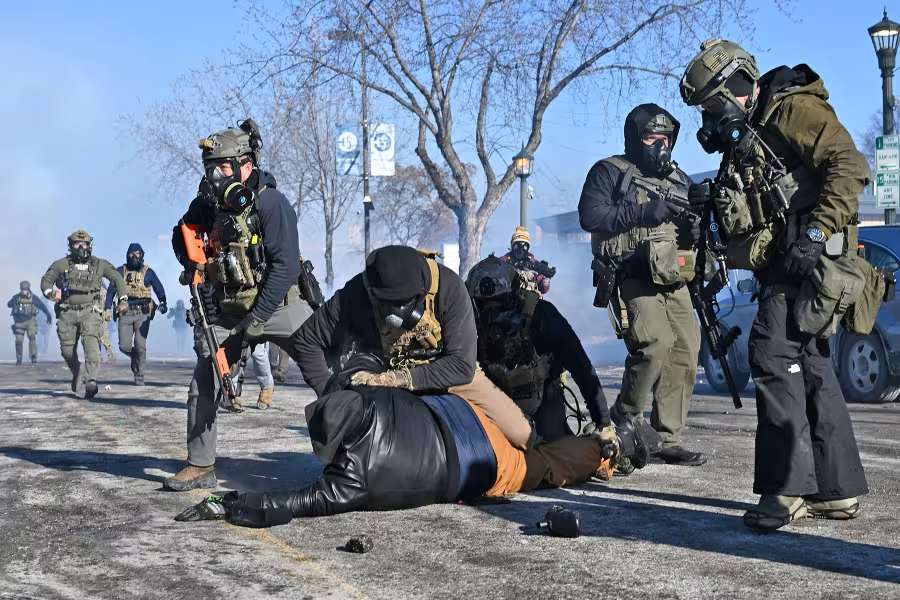
Minneapolis Police Chief Brian O’Hara said a 37-year-old Minneapolis resident was killed but declined to identify him. He added that information about circumstances leading to the shooting remained limited, though he disclosed the man was believed to be a U.S. citizen and a lawful gun owner with no criminal record.
The Department of Homeland Security said in a statement that federal officers conducting an operation as part of the Trump administration’s immigration crackdown fired “defensive shots” after a man with a handgun approached them and “violently resisted” when officers attempted to disarm him.
DHS spokesperson Tricia McLaughlin told The Associated Press in text messages that the person had a firearm with two magazines and that the situation was “evolving.”
The incident, captured on video posted to Facebook and verified by NBC News, occurred in the area of West 26th Street and Nicollet Avenue in south Minneapolis. Video circulating on social media and aired on cable news stations showed people wearing masks and tactical vests wrestling with a man on a snow-covered street before shots are heard. In the footage, the man falls to the ground, with several more shots audible.
“We are working to confirm additional details. We ask the public to remain calm and avoid the immediate area,” the city said in a Facebook post shortly after the shooting.
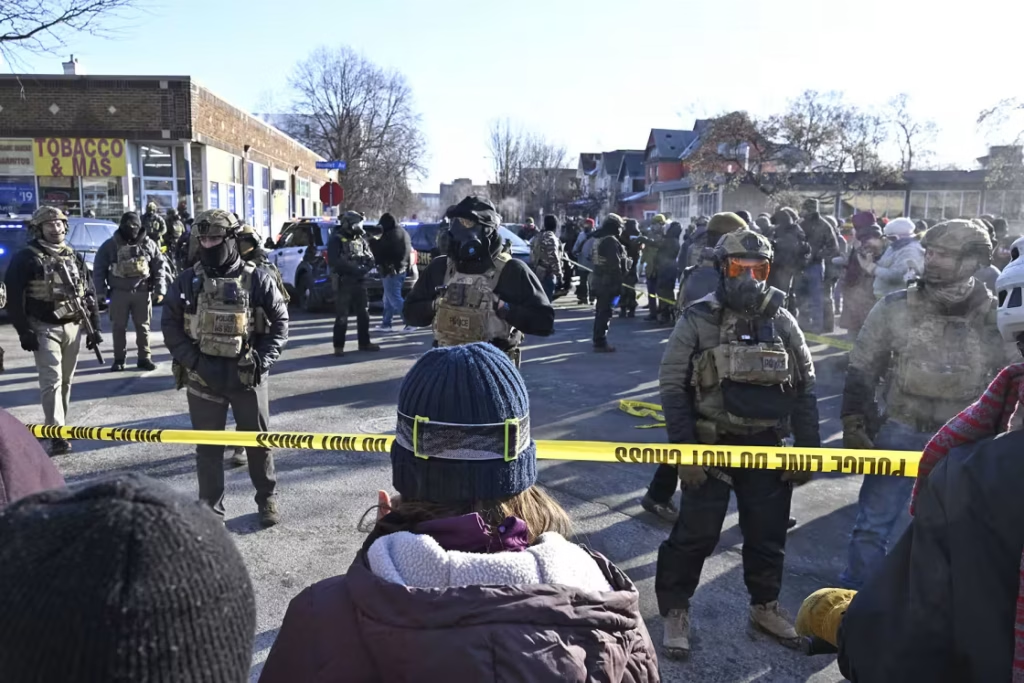
Two intersections in south Minneapolis were blocked from traffic as dozens of masked federal immigration officers secured the scene. Protesters quickly gathered, with some shouting “murderer” and directing expletives at agents.
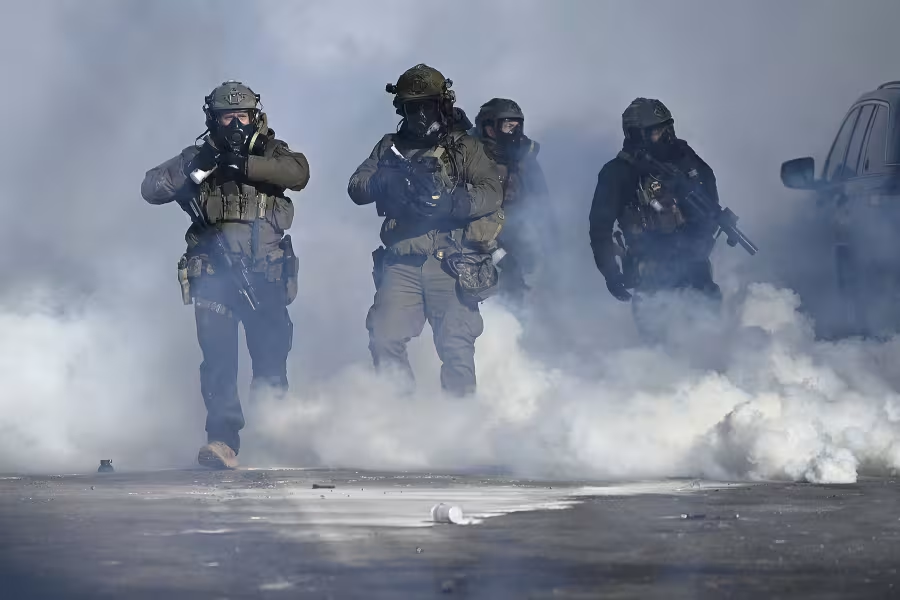
Later video from the area showed immigration agents deploying tear gas and pepper bombs on a growing crowd of onlookers. At least one protester was seen on NBC News video being taken to the ground and placed in handcuffs after agents began pushing demonstrators back from the scene. The protester’s face appeared bloodied when agents lifted him up.
Federal officers wielded batons and deployed flash bangs on the crowd as tensions escalated. Protesters dragged garbage dumpsters from alleyways to block streets, and those assembled chanted “ICE out now,” referring to Immigration and Customs Enforcement.
“They’re killing my neighbors!” Minneapolis resident Josh Koskie said.
After the shooting, an angry crowd gathered and screamed profanities at federal officers, calling them “cowards” and telling them to go home. One officer responded mockingly as he walked away, telling them: “Boo hoo.” Agents elsewhere shoved a yelling protester into a vehicle.
Minneapolis residents expressed frustration and anger about continued violence, weeks after Renee Nicole Good was shot and killed by a U.S. Immigration and Customs Enforcement officer on Jan. 7. Saturday’s shooting unfolded just over a mile from where Good, a 37-year-old unarmed woman, died when an ICE officer fired into her vehicle.
“It just really infuriates me because they’re going to try to keep coming and they’re going to keep hurting people and we have to keep on standing up,” Andrew Collier, a Minneapolis resident, said. “We can’t let them get comfortable with what they’re doing. And that means showing up whenever they do something terrible like this, or anytime they’re in our streets.”
Elisabeth Pletcher, 57, opened the doors to a nearby yoga studio where she works to let protesters take cover from tear gas and pepper bombs. Dozens of protesters and journalists gathered inside, some wiping tear gas from their eyes while watching the chaotic scene unfold outside.
“It’s absolutely atrocious. It is absolutely counter to everything that should be happening in the world,” she said. “We can be using these resources to feed people and to educate people and to take care of each other, and instead they are sowing fear and violence.”
Minnesota Gov. Tim Walz, a Democrat, said in a social media post he had contacted the White House after the shooting. He urged President Donald Trump to end what DHS has characterized as its largest-ever immigration enforcement operation.
“Minnesota has had it. This is sickening,” Walz said in a post on X. “The President must end this operation. Pull the thousands of violent, untrained officers out of Minnesota. Now.”
Minneapolis Mayor Jacob Frey called for immediate termination of the Trump administration’s immigration enforcement operations in the state. “How many more residents, how many more Americans need to die or get badly hurt for this operation to end?” Frey said at a news conference.
O’Hara appealed for calm from both the public and federal law enforcement. “Our demand today is for those federal agencies that are operating in our city to do so with the same discipline, humanity and integrity that effective law enforcement in this country demands,” the chief said. “We urge everyone to remain peaceful. We recognize that there is a lot of anger and a lot of questions around what has happened, but we need people to remain peaceful.”
Reuters conveyed that the incident marked the second fatal shooting involving federal agents this month during a surge in immigration enforcement in the northern U.S. city. The Trump administration has deployed more than 3,000 federal immigration personnel to Minneapolis since December in what officials have designated Operation Metro Surge.
The shooting occurred a day after thousands of demonstrators protesting the immigrant crackdown crowded Minneapolis streets in frigid weather, calling for federal law enforcement to depart. The Friday protests took place amid temperatures below zero degrees Fahrenheit with dangerous wind chills.
The confrontation between federal agents and a lawful gun owner raises complex questions about self-defense claims when heavily armed federal officers in tactical gear encounter civilians legally carrying firearms. Whether the man drew his weapon in response to perceiving a threat from masked agents or whether he initiated aggression remains unclear from available information.
The description of the man as a U.S. citizen with no criminal record who legally possessed firearms complicates the narrative that immigration enforcement targets only undocumented immigrants with criminal histories. Critics have consistently argued that aggressive enforcement operations endanger all residents regardless of immigration status, a concern Saturday’s shooting appears to validate.
The deployment of tear gas and flash bangs against protesters exercising First Amendment rights to demonstrate against government actions reflects the militarized posture federal agents have adopted in Minneapolis. The tactics typically reserved for riot control situations applied to angry but largely peaceful protesters escalate tensions rather than de-escalating volatile situations.
Federal officers’ mocking response to grieving community members and aggressive treatment of protesters captured on video provide imagery that undermines official claims about professional, disciplined enforcement operations. The agent who said “Boo hoo” to distressed residents demonstrated contempt that fuels community rage and undermines any remaining trust between federal authorities and Minneapolis populations.
For Minneapolis, already traumatized by Good’s killing three weeks earlier, Saturday’s shooting confirms residents’ worst fears that federal enforcement operations will continue producing civilian casualties regardless of whether victims are documented citizens or undocumented immigrants. The proximity of both shootings—occurring just over a mile apart—concentrates the trauma in specific neighborhoods experiencing what residents describe as occupation rather than law enforcement.
The political standoff between Minnesota’s Democratic state leadership and the Trump administration shows no signs of resolution, with each side accusing the other of endangering public safety. Federal officials characterize enforcement as targeting dangerous criminals while state leaders describe indiscriminate operations terrorizing established immigrant communities and claiming American lives.
As investigations proceed into Saturday’s shooting, the fundamental questions about federal authority to conduct aggressive immigration enforcement over state and local objections, the appropriateness of militarized tactics in civilian areas and the accountability mechanisms when federal agents kill civilians will intensify debates already tearing at Minneapolis’s social fabric.
NBC/AP/Reuters





