

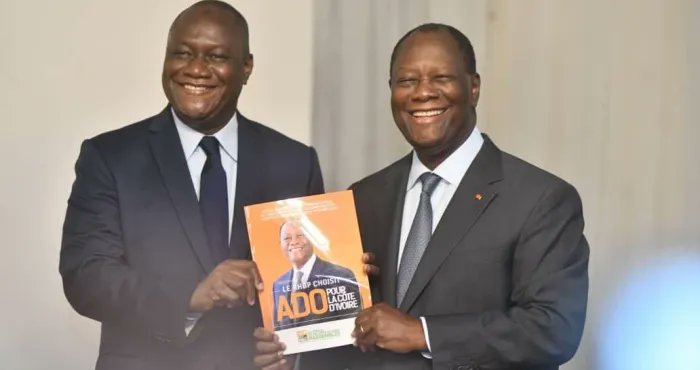
ABIDJAN, Ivory Coast — President Alassane Ouattara reshuffled his cabinet Friday, appointing his brother, Defense Minister Tene Birahima Ouattara, to the newly created position of vice prime minister while allowing him to retain his defense portfolio, elevating the younger Ouattara within the government hierarchy as succession questions loom.
The move came two days after Ouattara reappointed Robert Beugre Mambe as prime minister and followed the president’s re-election in October and his party’s December legislative election victory that secured a parliamentary majority.
Most senior ministers retained their key portfolios in the 35-member cabinet, signaling continuity rather than comprehensive overhaul following the Rally of Houphouetists for Democracy and Peace’s capture of nearly 80 percent of legislative seats.
A statement from the president’s office disclosed that Vagondo Diomande retained the Interior and Security Ministry position, Sansam Kambile remained justice minister, while Adama Coulibaly kept the budget portfolio. Niale Kaba was transferred from the Planning Ministry to head the Foreign Affairs Ministry with the rank of Minister of State.
Tene Birahima Ouattara, the president’s influential brother often mentioned among potential successors, assumes the vice prime minister title alongside his continuing defense responsibilities. The dual role positions him prominently within government structures as the 84-year-old president enters what the current Constitution specifies must be his final five-year term.
EDnews conveyed that the reshuffle maintained most senior ministers in key portfolios, indicating the president’s satisfaction with his administration’s performance during a period of sustained economic growth.
Six women remained in the cabinet, the same number as the previous government, according to the presidency statement cited by Seneweb quoting AFP. Approximately 30 of the 35 ministers were retained from the previous administration.
Four ministers departed the government team, including Agriculture Minister Kobenan Kouassi Adjoumani, who had served since 2011. The agriculture portfolio change comes as the cocoa sector, in which Ivory Coast functions as the world’s leading producer, experiences significant operational challenges.
Among five new appointees, Hien Sié, the head of Abidjan port, was designated to oversee Infrastructure and Road Maintenance, bringing private sector port management experience to the infrastructure portfolio.
The position of vice president, the constitutional successor to the head of state, was not affected by Friday’s reshuffle. Tiemoko Meyliet Koné continues holding that role, maintaining the formal succession structure even as the vice prime minister appointment elevates Tene Birahima Ouattara’s profile.
The main institutional change following legislative elections involved the selection of Patrick Achi, former prime minister, to head the National Assembly, positioning another potential successor in a key institutional role.
Ouattara, a former deputy managing director of the International Monetary Fund, has led the country since 2011 and has indicated his intention to prepare conditions for a new generation of political leaders during his tenure. However, the appointment of his brother to a newly created senior position raises questions about whether succession will occur within the Ouattara family or transition to unrelated political figures.
The changes unfold as Ivory Coast, the world’s largest cocoa producer, seeks to build on nearly 15 years of sustained economic growth that has positioned it among West Africa’s fastest-growing economies. Political stability has been credited with facilitating foreign investment and economic expansion following years of civil conflict that ended before Ouattara assumed office.
Ouattara was re-elected in October with nearly 90 percent of the vote, though opposition boycotts and low turnout raised questions about the election’s competitiveness. His fourth term sparked constitutional debates given that the charter was modified during his presidency, with supporters arguing the changes reset term limits while critics contended he exceeded constitutional authority.
The reshuffle’s timing, one month after legislative elections and two months after presidential polls, suggests Ouattara sought to reward loyal party members with cabinet positions while signaling continuity to reassure foreign investors and economic partners about policy stability.
For Tene Birahima Ouattara, the vice prime minister appointment represents a significant elevation that could position him for future leadership roles, though whether he will ultimately succeed his brother or whether other figures including Vice President Koné or National Assembly Speaker Achi emerge as successors remains uncertain.
The creation of the vice prime minister position itself appears designed to elevate Tene Birahima Ouattara’s standing without removing him from the strategically important defense portfolio, where he oversees security forces in a region experiencing persistent terrorism threats and occasional military coups.
The status quo cabinet composition suggests Ouattara is starting his fourth term prioritizing continuity over fresh approaches, a choice that postpones succession debates for several years but may intensify them as the constitutionally mandated final term progresses toward its 2031 conclusion.
For Ivory Coast’s cocoa sector, which generates substantial export revenue and employs millions, the departure of the long-serving agriculture minister amid operational challenges signals potential policy shifts, though the appointment of his replacement had not been announced in Friday’s statement.
Reuters/EDnews





