

Gunmen stormed a soccer field in the central Mexican city of Salamanca and opened fire at the end of a local match, killing at least 11 people and wounding 12 others, local and state authorities said, in one of the deadliest public attacks in Guanajuato this year and a stark reminder of the region’s entrenched criminal violence.
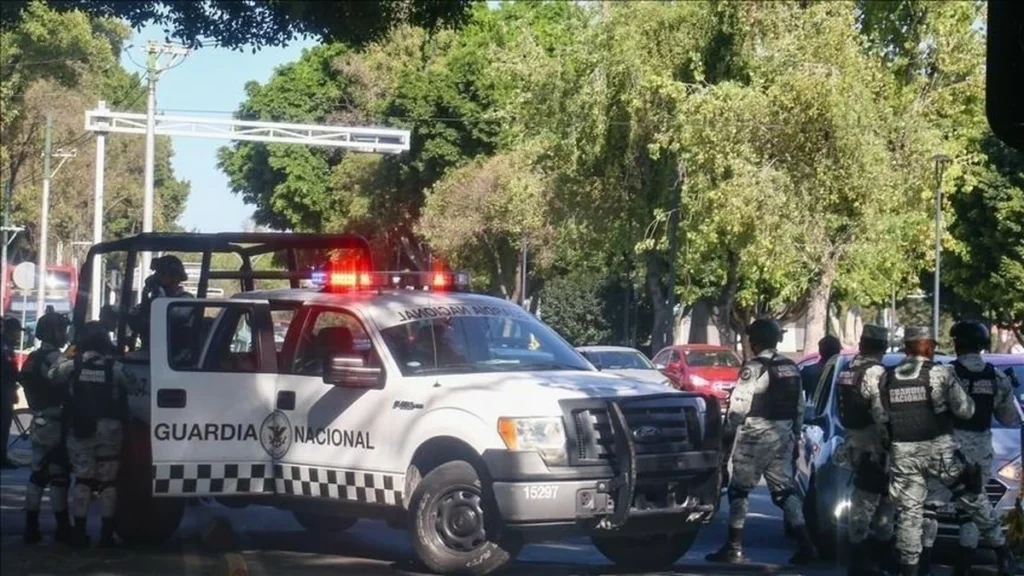
The shooting occurred Sunday as players and spectators were dispersing from the field, Salamanca Mayor Cesar Prieto said in a message shared on social media, describing a sudden and coordinated assault that left victims sprawled across the pitch and nearby areas. Ten people died at the scene, while an eleventh victim later succumbed to injuries at a hospital, municipal officials said.
Among the wounded were a woman and a minor, Prieto said, adding that several victims remained hospitalized with gunshot wounds of varying severity. Emergency responders and security forces rushed to the area, sealing off the soccer field as forensic teams began collecting evidence.
Prieto characterized the attack as part of a broader “crime wave” gripping the city and renewed his appeal to President Claudia Sheinbaum for federal assistance, saying local authorities were facing sustained pressure from organized crime groups operating in the region.
“Unfortunately, there are criminal groups trying to subjugate authorities, something they are not going to achieve,” Prieto said, framing the shooting as an act of intimidation aimed at undermining public order and government control.
The Guanajuato state prosecutor’s office said it had opened an investigation into the massacre and was working in coordination with federal authorities to reinforce security measures in Salamanca and surrounding municipalities. Officials did not immediately identify suspects or provide details on possible motives, though the region has long been a battleground for rival criminal organizations.
Guanajuato recorded the highest number of homicides of any Mexican state last year, according to government figures, despite being an industrial hub known for automobile manufacturing and energy infrastructure rather than traditional drug-trafficking corridors. Violence in the state has largely been attributed to a prolonged struggle between the Santa Rosa de Lima gang and the powerful Jalisco New Generation Cartel, whose rivalry has fueled assassinations, extortion and mass-casualty attacks.
Sunday’s shooting fits a grim pattern seen across parts of central Mexico, where armed groups increasingly carry out brazen assaults in public spaces, including bars, restaurants and sporting venues. Analysts say such attacks are often designed to send messages to rivals or authorities, while also asserting territorial dominance through fear.
While no group immediately claimed responsibility for the Salamanca attack, similar incidents in Guanajuato have previously been linked to disputes over fuel theft routes, drug distribution networks and local extortion rackets. The Santa Rosa de Lima gang, which originated in the region, has historically relied on fuel siphoning, known as “huachicol,” but has diversified into other criminal activities as pressure from security forces intensified.
The attack also comes amid a national debate over security policy, as President Sheinbaum’s administration seeks to balance aggressive law enforcement actions with social programs aimed at addressing the root causes of violence. Federal officials have highlighted a decline in nationwide homicide rates, saying Mexico’s 2025 murder rate fell to 17.5 killings per 100,000 inhabitants, the lowest level recorded since 2016.
However, independent analysts and security experts caution that national averages can obscure persistent hotspots such as Guanajuato, where violence remains stubbornly high despite broader statistical improvements. They also warn that official figures may not fully capture the scale of criminal activity, particularly in cases involving disappearances or underreported crimes.
In Salamanca, residents expressed shock and anger over the shooting, noting that amateur soccer matches are a central part of community life and often draw families, children and older spectators. The decision by gunmen to strike at such a gathering has heightened fears that no public space is truly safe.
Human rights advocates say repeated attacks on civilians underscore the urgent need for stronger protection measures at the local level, as well as more effective intelligence-sharing between municipal, state and federal forces. They also point to longstanding concerns about corruption and infiltration of local institutions by criminal groups, which can undermine security operations.
The mayor’s public appeal to Sheinbaum highlights the pressure facing local leaders in violence-prone regions, where municipal police forces are often outgunned and overstretched. While federal deployments can provide short-term stability, critics argue that without sustained investment in justice systems and economic opportunities, cycles of violence are likely to continue.
The Salamanca shooting adds to a growing list of mass-casualty incidents in Mexico that have drawn international attention and raised questions about the country’s security trajectory. In recent years, gunmen have targeted venues ranging from nightclubs to family gatherings, with some attacks leaving dozens dead in a single incident.
For the victims’ families, the national statistics offer little comfort. Funerals and hospital vigils have become a familiar scene in Guanajuato, where communities grapple with grief and uncertainty even as officials promise investigations and reinforcements.
As the probe into Sunday’s attack continues, authorities say they are stepping up patrols and checkpoints in Salamanca, though residents remain wary. For many, the shooting at a soccer field — a place associated with recreation and community rather than conflict — has become a powerful symbol of how deeply violence has penetrated everyday life in parts of Mexico.
AP/NBC





