

The White House and U.S. Treasury are promoting the upcoming rollout of “Trump Accounts,” a new savings initiative aimed at newborn children that President Donald Trump and his allies say reflects a broader promise to improve affordability and long-term economic security for American families.
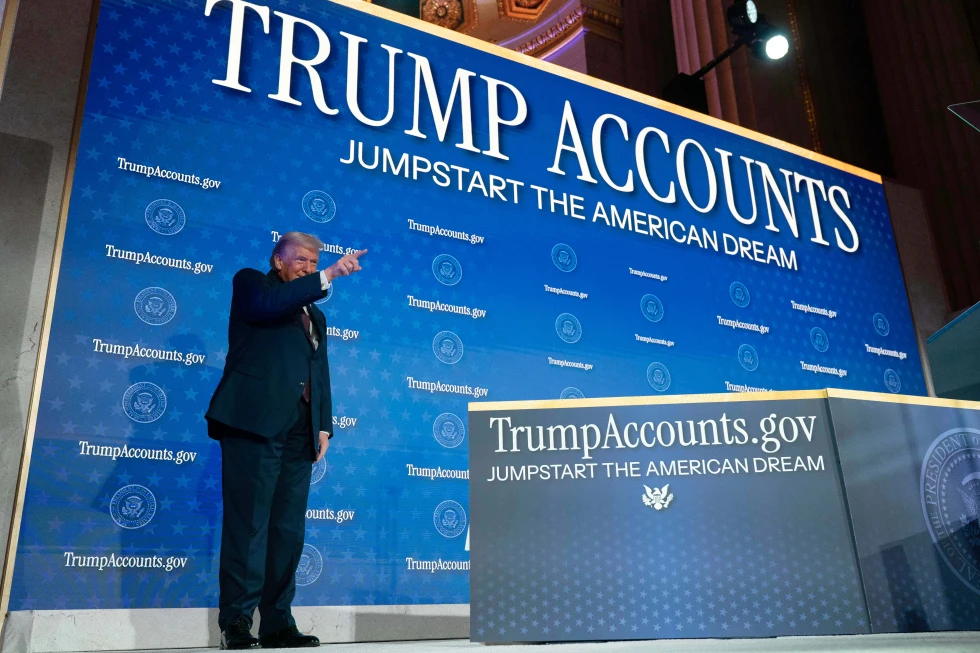
The program, embedded in Trump’s signature tax legislation, would provide a $1,000 government contribution for every qualifying newborn whose parents open an account. The money would be invested in the stock market by private financial firms and remain inaccessible until the child turns 18. Administration officials describe the initiative as a landmark effort to expand asset ownership and expose more Americans to equity markets from birth.
Treasury officials and White House advisers marked the initiative Wednesday at a public event in Washington that drew an eclectic mix of political figures and high-profile business and entertainment personalities, including Texas Republican Sen. Ted Cruz, rapper Nicki Minaj and “Shark Tank” investor Kevin O’Leary. Speakers framed Trump Accounts as a tool to narrow wealth gaps and strengthen what they described as the country’s capitalist foundations.
President Trump told the gathering that the program is designed to ensure children begin adulthood with tangible financial resources, not just obligations. He urged employers nationwide to make matching contributions part of their benefits packages, noting that several major companies have already pledged to participate.
“Every president in modern history has left our children with nothing but debt,” Trump said during the event. “But under this administration, we’re going to leave every child with real assets and a shot at financial freedom.”
Under the plan, parents who open a Trump Account for a qualifying newborn would trigger a $1,000 contribution from the U.S. Treasury. The funds must be invested in U.S. equity index funds that track the broader stock market and are subject to a strict cap on management fees of no more than 0.10% annually. The accounts would be administered by private banks and brokerages rather than the federal government.
Parents would be allowed to add up to $2,500 a year in pretax contributions, similar in structure to retirement savings vehicles. Total annual contributions would generally be capped at $5,000, though donations from employers, governments and charitable organizations would not count toward that limit. Friends, relatives and philanthropic groups would also be permitted to contribute.
Trump described the approach as preferable to direct cash assistance, arguing that long-term investment fosters a sense of ownership and responsibility. “We’re doing something much better than giving the next generation a handout,” he said. “We’re giving them ownership of America’s future.”
Eligibility for the $1,000 seed money is limited. To qualify, a child must be a U.S. citizen, have a Social Security number and be born between Jan. 1, 2025, and Dec. 31, 2028, the years covered by Trump’s current term. Parents of older children may still open accounts, but they will not receive the government contribution. The child’s access to the funds would generally be restricted until age 18, and withdrawals would be taxable.
The administration has emphasized that a parent’s immigration status does not affect a child’s eligibility, a detail Treasury officials say is intended to ensure broad participation among U.S.-born children.
Some older children may receive smaller seed contributions through private philanthropy rather than federal funding. In December, billionaires Michael and Susan Dell committed $6.25 billion to provide $250 to certain children age 10 and younger whose families live in ZIP codes with median incomes of $150,000 or less and who do not qualify for the Treasury contribution. Hedge fund founder Ray Dalio and his wife, Barbara, later pledged $75 million to fund similar contributions for children in Connecticut. On Wednesday, Trump announced that investor Brad Gerstner would donate $250 for every child under 5 in Indiana.
Several major corporations, including Uber, Intel, IBM, Nvidia and Steak ’n Shake, have indicated they plan to incorporate Trump Account contributions into employee benefits. Treasury Secretary Scott Bessent has promoted those efforts under what he calls a “50 State Challenge,” encouraging businesses and local governments to expand participation nationwide.
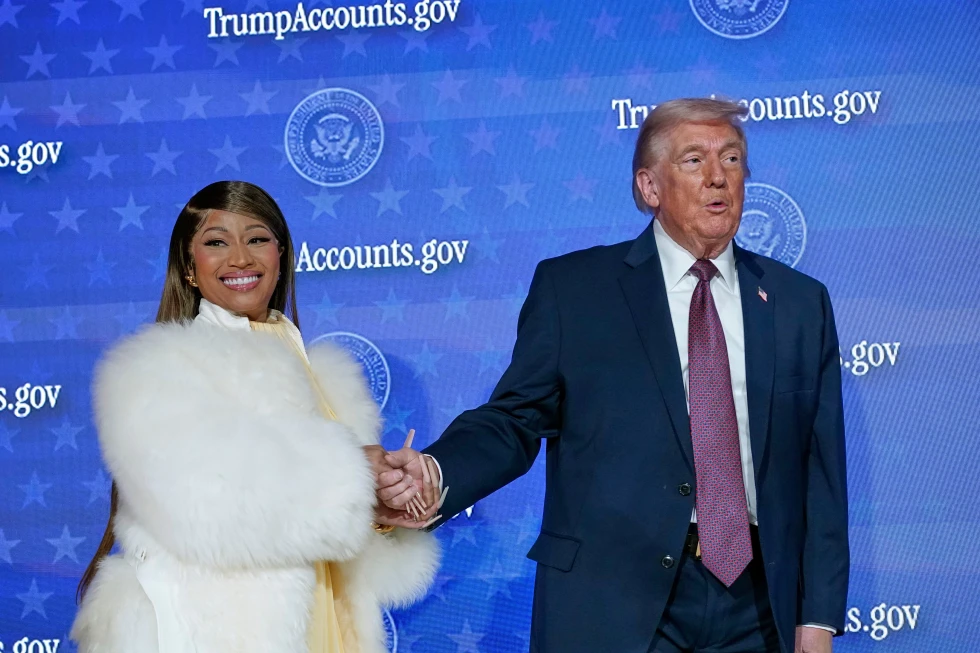
The accounts will not be open for contributions until July 2026. Parents of eligible children can register using IRS Form 4547, either while filing taxes this year or through an online portal expected to launch this summer, the Trump Accounts website says. Registration is required for the Treasury contribution, and parents who enroll by May will receive instructions on completing the account setup.
Supporters say the broader goal is to expand stock market participation among households that have historically been excluded. Roughly 58% of U.S. households owned stocks or bonds in 2022, based on data from the Securities and Exchange Commission, though the wealthiest 1% controlled nearly half of total stock value. Advocates argue that early exposure could help close that divide over time.
“This makes every child in America a capitalist from birth,” Gerstner said at the Treasury event, arguing that expanded ownership is a counterweight to rising interest in socialist economic ideas.
The initiative also fits into a wider national debate over “baby bonds.” Before Trump Accounts were created, California, Connecticut and the District of Columbia launched state-run programs that provide investment accounts to children, often targeting those born into poverty, foster care or families affected by the COVID-19 pandemic. Several other states, including Maryland, are considering similar models. Unlike Trump Accounts, those programs typically exclude wealthier families and are managed by public agencies.
Critics of the Trump Accounts argue that the program does little to address children’s immediate needs, particularly during early childhood when poverty rates are highest. They also contend that the accounts fail to offset reductions in other safety-net programs, including food assistance and Medicaid, enacted alongside the tax legislation that created the accounts.
Some economists and advocacy groups warn the program could widen wealth inequality rather than reduce it. Families with higher incomes are better positioned to make regular contributions and benefit from compounded investment returns, while lower-income households may be unable to add funds beyond the initial government contribution. Assuming a 7% annual return, analysts note, the $1,000 seed money would grow to roughly $3,570 over 18 years, a sum critics say may be modest compared with the advantages gained by families able to maximize contributions.
Administration officials counter that the accounts represent a long-term strategy rather than a short-term poverty intervention, and that expanding asset ownership complements, rather than replaces, other economic policies.
As the program moves toward implementation, Trump Accounts are emerging as a defining element of the administration’s economic message: a bet that early exposure to markets and private investment can reshape how future generations build wealth, even as questions remain about who stands to benefit the most.





