

SPRINGFIELD, Ill. — A former Sangamon County sheriff’s deputy received the maximum 20-year prison sentence Thursday for the fatal shooting of Sonya Massey, an unarmed Black woman killed in her own home after summoning law enforcement for protection, concluding a case that ignited national protests over systemic racism and prompted federal intervention in local policing practices.
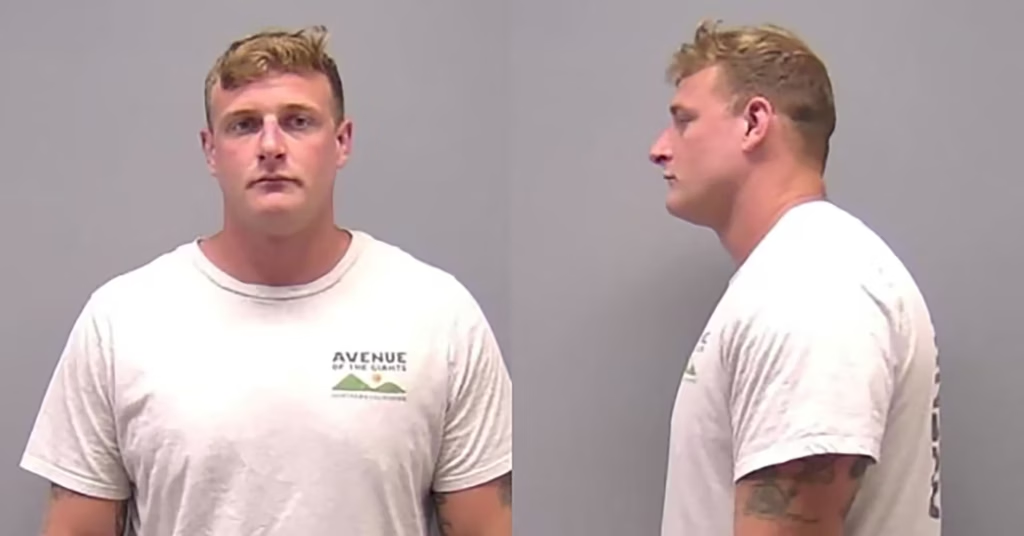
Sean Grayson, 31, was convicted in October of second-degree murder in the July 6, 2024 death of the 36-year-old single mother who had called 911 to report a possible intruder after discovering a broken window at her Springfield residence. Judge Ryan Cadigan of the 7th Judicial Circuit Court of Illinois handed down the maximum sentence permissible under the conviction, characterizing Grayson’s actions as demonstrating “unreasonable rage” requiring deterrence.
The shooting unfolded in the early morning hours when Massey, who struggled with mental health challenges, contacted emergency responders fearing a prowler lurked outside her home. Body camera footage captured the encounter that escalated from a welfare check to a fatal shooting within minutes, providing the visual evidence that became central to both prosecution and public outrage.
Grayson and Deputy Dawson Farley, who was not charged, initially searched the exterior of Massey’s residence before meeting her at the door. Video documentation shows Massey appeared confused and repeatedly invoked religious language, saying “Please, God” as the deputies entered her home.
The fatal sequence began when Grayson noticed a pot on the stove and ordered Farley to remove it. Instead, Massey approached the stove herself, retrieved the pot and made a comment teasing Grayson for moving away from “the hot, steaming water.” The interaction rapidly deteriorated from this moment.
When Massey stated “I rebuke you in the name of Jesus,” Grayson drew his firearm and shouted commands to drop the pan. Massey set the pot down and ducked behind a counter, but appeared to reach for it again. Grayson then fired, striking Massey in the face and killing her.
First Assistant State’s Attorney Mary Beth Rodgers emphasized during proceedings that Massey had complied with the order to drop the pot of water before Grayson shot her while cursing at the victim. This critical detail—that compliance preceded the fatal shooting—became central to the prosecution’s argument that Grayson’s actions constituted criminal conduct rather than justified use of force.
Grayson testified at trial that he feared Massey was about to scald him with the steaming water, claiming he honestly believed he faced imminent danger. Illinois law permits second-degree murder convictions when evidence demonstrates the defendant genuinely perceived a threat, even if that fear was objectively unreasonable. The jury rejected first-degree murder charges that could have resulted in life imprisonment, instead convicting on the lesser offense.
Massey’s family expressed profound dissatisfaction with the downgraded conviction. Her cousin Sontae Massey declared after the October verdict that “the justice system did exactly what it’s designed to do today. It’s not meant for us,” articulating the family’s perception that legal structures systematically fail to deliver justice when law enforcement kills Black citizens.
During Thursday’s sentencing hearing, Grayson apologized to the family, acknowledging his “terrible decisions” that night and expressing remorse for actions he cannot undo. “I made a lot of mistakes that night. There were points when I should’ve acted, and I didn’t. I froze,” Grayson told the court. “I made terrible decisions that night. I’m sorry.”
Defense attorney Mark Wykoff pleaded for leniency, revealing that Grayson suffers from Stage 3 colon cancer that has metastasized to his liver and lungs. Wykoff requested a six-year sentence given the terminal diagnosis, arguing that his client faces death from disease regardless of incarceration length.
Judge Cadigan rejected this appeal, imposing the full 20-year term. With standard credit for good behavior reducing sentences by one day for each day served, plus nearly 19 months already spent behind bars awaiting trial, Grayson could potentially secure release in approximately eight and a half years.
Massey’s family members lobbied forcefully for maximum punishment, describing how her death irrevocably altered their lives. Her teenage children testified about growing up without their mother, while Massey’s mother Donna disclosed living in constant fear following her daughter’s killing.
“I cry every day,” Donna Massey told the court, adding a devastating revelation about how the shooting transformed her relationship with law enforcement. “I’m afraid to call the police in fear that I might end up like Sonya.”
This statement encapsulates the broader crisis of confidence in policing that cases like Massey’s generate within Black communities. When calling for help becomes a potentially fatal action, the fundamental social contract between citizens and law enforcement collapses.
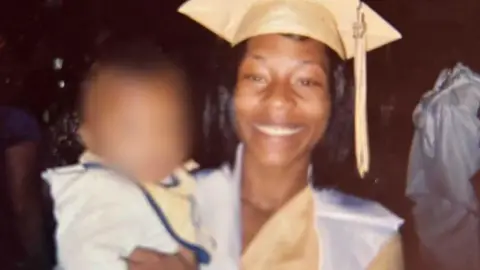
Massey’s 16-year-old daughter Summer articulated the family’s perspective after sentencing, acknowledging the limitations of judicial remedies. “Twenty years is not enough, but they did what they could do,” she told reporters gathered outside the courthouse.
The family reacted with an audible cheer—”Yes!”—when Judge Cadigan announced the sentence, prompting judicial admonishment for the courtroom outburst. The celebration, however muted by formal decorum requirements, reflected relief that Grayson received maximum punishment available under his conviction.
State’s Attorney John Milhiser framed the case as having ramifications extending far beyond one family’s tragedy. “Sonya Massey’s death rocked her family, but it rocked the community, it rocked the country,” Milhiser argued. “We have to do whatever we can to ensure it never happens again.”
Milhiser contended that Massey would be alive if any other deputy from the sheriff’s department had responded to her 911 call, placing responsibility not solely on individual misconduct but on systemic failures that allowed Grayson to serve in law enforcement.
The case prompted multiple institutional responses aimed at preventing similar incidents. Sangamon County agreed to pay Massey’s family a $10 million settlement negotiated by civil rights attorney Ben Crump, whose representation of families victimized by police violence has made him a national figure in accountability litigation.
The U.S. Department of Justice launched an investigation that concluded with the county committing to implement enhanced de-escalation training protocols and establish more comprehensive use-of-force data collection systems. These reforms acknowledge that the Massey shooting reflected broader deficiencies in training, supervision and accountability rather than merely individual officer failure.
The sheriff who hired Grayson was forced into retirement, eliminating leadership that permitted someone with Grayson’s background to serve in law enforcement. Subsequent reporting revealed concerning patterns in Grayson’s employment history that should have disqualified him from policing roles.
The incident catalyzed legislative action at the state level. Illinois enacted new transparency requirements mandating fuller disclosure of backgrounds for law enforcement job candidates, attempting to prevent agencies from hiring individuals with problematic histories by improving information sharing across jurisdictions.
James Wilburn, Massey’s father, advocated Thursday for federal implementation of this transparency law, arguing that state-level reforms alone cannot address systemic problems in police hiring practices. He concluded his victim impact statement by invoking his daughter’s final religious invocation: “Sean Grayson, I rebuke you in the name of Jesus.”
Wilburn later explained that while he values forgiveness as a principle, he cannot reconcile Grayson’s courtroom apology with trial testimony portraying Massey as the aggressor in their fatal encounter. This contradiction—expressing remorse while maintaining the victim posed a genuine threat—highlights the incompatibility between accepting responsibility and defending the shooting as justified.
Cousin Sontae Massey, who condemned the jury verdict in October, expressed Thursday that he was “thankful” for the maximum sentence while emphasizing work remains to eliminate conditions that “perpetuated, created this situation.” He called for reform of “outdated laws” that permitted Grayson’s second-degree murder conviction rather than the more serious first-degree charges.
The legal framework allowing conviction on lesser charges when defendants claim honest fear—regardless of how unreasonable that fear may be—creates a significant obstacle to accountability in police shooting cases. This standard effectively permits officers to escape the most serious consequences by asserting subjective fear, even when objective observers conclude no genuine threat existed.
Grayson acknowledged understanding the Massey family’s anger and begged forgiveness while recognizing it would not come “any time soon.” His terminal cancer diagnosis adds complexity to the punishment calculus, raising questions about whether he will survive to serve his full sentence or receive compassionate release as his condition deteriorates.
The case joins a catalog of high-profile instances where law enforcement officers used excessive or fatal force against Black Americans in their homes—spaces where citizens should experience maximum safety and minimum threat from those sworn to protect them. Each incident compounds community trauma and erodes the legitimacy of policing in communities that experience disproportionate violence from those entrusted with public safety responsibilities.
The body camera footage that documented Massey’s final moments served both as critical evidence enabling conviction and as powerful visual testimony contradicting official narratives. Without this technological documentation, the encounter might have been characterized very differently by surviving law enforcement personnel, potentially preventing any accountability.
As Grayson begins serving his sentence—however long his health permits—the broader questions raised by Massey’s death remain unresolved. The reforms implemented in Sangamon County and across Illinois represent progress toward preventing similar tragedies, but systemic change requires sustained commitment beyond the immediate aftermath of high-profile cases.
For Donna Massey, who fears calling police for help, and for Summer Massey, who will navigate adolescence and young adulthood without her mother, no sentence can restore what was taken. The maximum 20-year term provides some measure of accountability but cannot repair the fundamental breach of trust that occurred when a deputy summoned to provide protection instead delivered death.
AP/Reuters





