

LOS ANGELES — Former CNN anchor Don Lemon was taken into federal custody Thursday night on civil rights charges stemming from his coverage of an anti-immigration enforcement demonstration that disrupted a Minnesota church service, triggering immediate condemnation from press freedom advocates who characterized the arrest as an unprecedented assault on First Amendment protections for working journalists.
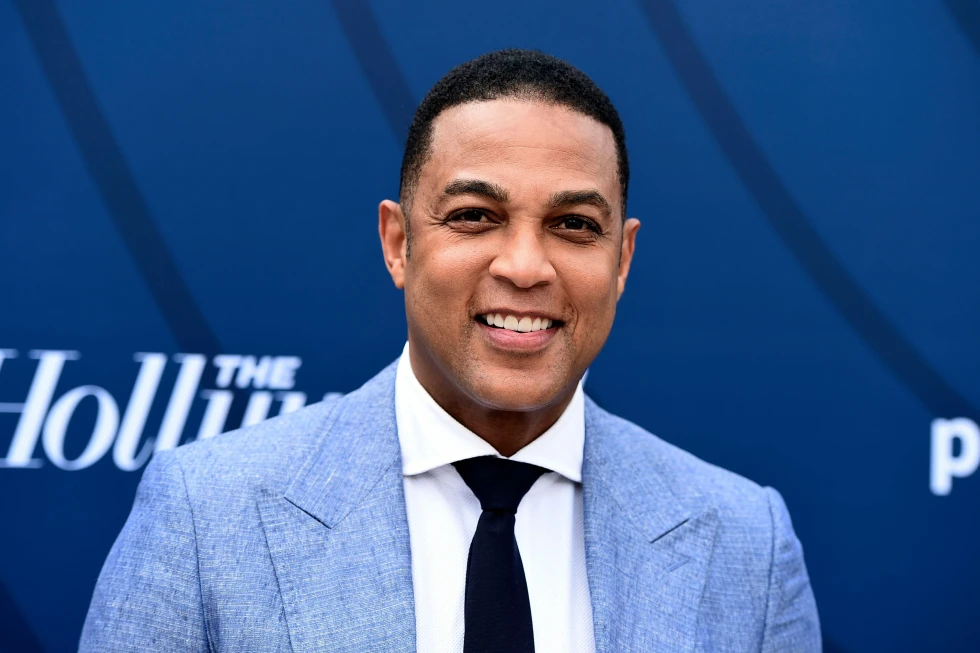
Federal agents apprehended Lemon in Los Angeles where he had been covering the Grammy Awards for his independent media platform, his attorney Abbe Lowell confirmed Friday. The arrest follows nearly two weeks of escalating legal confrontation between the Justice Department and journalists who documented the January 18 protest at Cities Church in St. Paul, where demonstrators interrupted services after learning one of the church’s pastors serves as a U.S. Immigration and Customs Enforcement official.
A grand jury was empaneled Thursday, and both the Federal Bureau of Investigation and Homeland Security Investigations—a law enforcement division within the Department of Homeland Security—participated in the operation that resulted in Lemon’s detention, sources with direct knowledge disclosed to CBS News. Three additional individuals were simultaneously arrested in Minnesota in connection with the church demonstration.
Attorney General Pam Bondi announced via social media Friday morning that federal agents arrested Lemon along with Trahern Jeen Crews, Georgia Fort and Jamael Lydell Lundy “in connection with the coordinated attack on Cities Church in St. Paul, Minnesota,” characterizing the protest as an assault on religious liberty rather than constitutionally protected political expression.
A source briefed on the investigation revealed that Lemon faces charges of conspiracy to deprive others of their civil rights and violation of the Freedom of Access to Clinic Entrances Act by allegedly interfering through force with the exercise of others’ First Amendment rights—an ironic legal framework given that Lemon’s defense centers on his own First Amendment protections as a journalist.
Lowell issued a forceful statement defending his client’s journalistic activities and condemning the Justice Department’s priorities. “Don has been a journalist for 30 years, and his constitutionally protected work in Minneapolis was no different than what he has always done,” Lowell declared. “The First Amendment exists to protect journalists whose role it is to shine light on the truth and hold those in power accountable. There is no more important time for people like Don to be doing this work.”
The attorney escalated his criticism by contrasting the aggressive prosecution of journalists with what he characterized as inadequate investigation of federal agents who killed Renee Good and Alex Pretti in Minnesota earlier this month. “The Justice Department has focused on arresting Lemon instead of investigating the federal agents who killed Renee Good and Alex Pretti in Minnesota earlier this month, calling it ‘the real indictment of wrongdoing in this case,'” Lowell asserted.
“This unprecedented attack on the First Amendment and transparent attempt to distract attention from the many crises facing this administration will not stand,” Lowell continued. “Don will fight these charges vigorously and thoroughly in court.”
CNN, Lemon’s former employer where he worked for more than 15 years before his 2023 termination, issued a statement expressing profound concern about press freedom implications. The network disclosed that the Justice Department had already failed twice to obtain arrest warrants for Lemon and several other journalists in Minnesota, where a chief judge of the Minnesota Federal District Court determined there was “no evidence” of criminal behavior in their journalistic work.
“The First Amendment in the United States protects journalists who bear witness to news and events as they unfold, ensuring they can report freely in the public interest, and the DOJ’s attempts to violate those rights is unacceptable,” CNN’s statement emphasized, pledging to monitor Lemon’s case closely despite his departure from the network.
The legal maneuvering preceding Lemon’s arrest reveals substantial internal disagreement within the federal judiciary about whether probable cause existed to justify criminal charges. Last week, a federal appellate court declined to order a lower court judge to sign arrest warrants for five people, including Lemon, in connection with the church protest. However, one of three appellate judges indicated he believed probable cause justified the arrests, exposing the fractured judicial assessment of the evidence.
Magistrate Judge Douglas Micko had previously rejected five arrest warrant applications for lacking probable cause, including Lemon’s. The judge also approved only one civil rights charge in initial cases against Nekima Levy Armstrong, former president of the Twin Cities NAACP chapter, and Chauntyll Louisa Allen, an elected St. Paul School Board member, while dismissing FACE Act charges against both defendants on grounds that no probable cause existed.
Federal prosecutors in the Minneapolis-based U.S. Attorney’s Office harbored significant reservations about the evidentiary strength of the church protest cases, a source familiar with internal deliberations disclosed to CBS News. When the first three defendants were initially charged, no career officials from that office appeared in court—instead, the Justice Department dispatched two attorneys from the Civil Rights Division in Washington to handle proceedings, suggesting local prosecutors’ reluctance to pursue the cases.
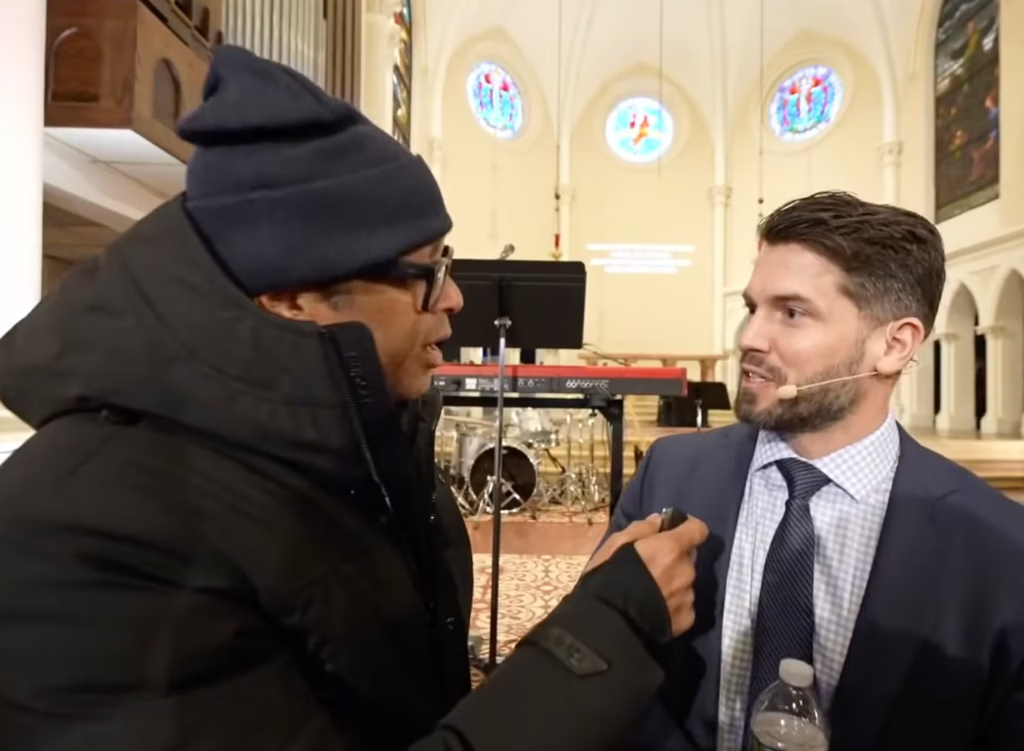
The Justice Department’s investigation has focused intensively on video documentation of a pre-protest meeting that Lemon filmed as part of his journalistic coverage. That gathering was attended by several defendants, including Allen, Armstrong and Lundy. Prosecutors have characterized this meeting as evidence of conspiracy to interfere with religious rights, while Lemon’s legal team maintains he was filming the session as reportorial activity protected by First Amendment press freedoms.
Julius Nam, a former federal prosecutor who handled civil rights cases, warned that the charging approach could establish dangerous precedent. “Although Lemon’s factual assertions and DOJ’s justifications must be tested in court, this case could set a dangerous precedent for charging reporters who cover protests for the conduct of the protesters if there was any prior communications with the protesters, and could even expose American journalists embedded with the U.S. military to being charged with war crimes along with soldiers who may commit such crimes,” Nam cautioned.
The arrest of Georgia Fort, an independent journalist who livestreamed the church protest, raises parallel First Amendment concerns. Fort broadcast the moments before her Friday arrest on Facebook Live, expressing disbelief at federal agents appearing at her door. “I don’t feel like I have my First Amendment right as a member of the press because now the federal agents are at my door arresting me for filming the church protest a few weeks ago,” Fort stated during the livestream.
The Justice Department has now arrested seven individuals connected to the church protest, though it initially sought to charge eight people. CBS News could not immediately determine the status of the final person the department had targeted for prosecution.
Lemon anticipated the eventual arrest despite initial judicial rejections of warrant applications. Following last week’s appellate court decision, he addressed the matter directly on his independent YouTube show. “And guess what,” he told viewers. “Here I am. Keep trying. That’s not going to stop me from being a journalist. That’s not going to diminish my voice. Go ahead, make me into the new Jimmy Kimmel, if you want. Just do it. Because I’m not going anywhere.”
During his coverage of the church protest, Lemon repeatedly emphasized his journalistic role rather than activist participation. “I’m not here as an activist. I’m here as a journalist,” he stated multiple times during his online broadcast from the scene, describing events before him and interviewing both churchgoers and demonstrators.
Lemon has maintained no organizational affiliation with the protest group that entered Cities Church and insists he was present solely in his capacity as an independent journalist documenting newsworthy events. His professional trajectory since leaving CNN includes launching The Don Lemon Show on X (formerly Twitter) in early 2024, though billionaire Elon Musk’s social media platform terminated the partnership months later shortly after Lemon interviewed Musk. He subsequently established his current YouTube-based platform where he posts regular commentary and reporting.
Trahern Jeen Crews, a Black Lives Matter Minnesota leader arrested alongside Lemon, has organized numerous protests and racial justice actions, particularly following George Floyd’s 2020 killing by Minneapolis police. After Trump administration officials announced earlier this month that arrests would be forthcoming in the church protest, Crews acknowledged to The Associated Press a historical “tradition” of Black activists and leaders being targeted or subjected to violence.
“Just as being a Black person, you always have to have that in mind,” Crews observed, placing the prosecutions within broader patterns of governmental responses to racial justice activism.
Jamael Lydell Lundy, another arrestee, serves as intergovernmental affairs manager in Hennepin County Attorney Mary Moriarty’s office and is married to St. Paul City Council Member Anika Bowie. Neither Bowie nor Moriarty could be reached for comment Friday. Lundy is also a state senate candidate who Lemon briefly interviewed as protesters gathered before traveling to the church.
“I feel like it’s important that if you’re going to be representing people in office that you are out here with the people,” Lundy told Lemon during that pre-protest conversation, adding that he believed in “direct action, certainly within the lines of the law.”
The arrests generated immediate condemnation from media advocates and civil rights organizations. Reverend Al Sharpton characterized the Trump administration’s actions as taking a “sledgehammer” to “the knees of the First Amendment,” framing the prosecutions as fundamental threats to constitutional protections.
Kelly McBride, senior vice president at the Poynter Institute, situated Lemon’s arrest within a broader pattern of governmental intimidation targeting journalists documenting opposition to presidential policies. She noted that recent actions including the search of a Washington Post journalist’s home suggested systematic efforts to discourage press scrutiny of administration activities.
The National Association of Black Journalists issued an Instagram statement declaring itself “outraged and deeply alarmed” by Lemon’s arrest. The organization condemned what it characterized as an effort to “criminalize and threaten press freedom under the guise of law enforcement,” positioning the prosecution as part of historical patterns of using legal mechanisms to suppress Black journalists and voices critical of governmental power.
Jordan Kushner, attorney for Nekima Levy Armstrong who was arrested in the initial wave of prosecutions last week, described the latest charges as “beyond the pale.” He emphasized that “nonviolent protest is not a federal felony,” challenging the legal theory underlying the conspiracy charges.
The Justice Department launched its civil rights investigation after demonstrators interrupted Cities Church services by chanting “ICE out” and “Justice for Renee Good,” referencing the 37-year-old mother of three fatally shot by an ICE officer in Minneapolis. The protest reflected broader community outrage over federal immigration enforcement tactics in Minnesota that have included two killings of American citizens and multiple controversial arrests generating national attention.
Cities Church belongs to the Southern Baptist Convention and lists among its pastoral staff David Easterwood, who leads ICE’s St. Paul field office. The congregation’s connection to federal immigration enforcement directly motivated the protest that has now resulted in federal criminal charges against multiple participants and journalists who documented the demonstration.
Lead pastor Jonathan Parnell praised the arrests in a Friday statement, expressing gratitude that “the Department of Justice acted swiftly to protect Cities Church so that we can continue to faithfully live out the church’s mission to worship Jesus and make him known.” The statement positions the prosecutions as legitimate protection of religious liberty rather than suppression of political expression or press freedom.
Attorney General Bondi reinforced this narrative in a video posted to social media Friday. “Make no mistake. Under President Trump’s leadership and this administration, you have the right to worship freely and safely,” Bondi declared. “And if I haven’t been clear already, if you violate that sacred right, we are coming after you.”
The framing of the church disruption as a civil rights violation against worshipers rather than protected political protest creates legal complexity that will be litigated throughout the criminal proceedings. Whether the demonstration constituted constitutionally protected expression or criminal interference with religious exercise represents a fundamental question that will determine the cases’ outcomes.
For journalists specifically, the prosecution raises existential questions about press freedom boundaries. If covering protests and filming pre-event meetings can establish conspiracy liability for subsequent protester actions, the chilling effect on investigative journalism and documentation of political dissent could prove profound. Reporters regularly communicate with subjects before, during and after newsworthy events—characterizing such routine journalistic practice as conspiracy fundamentally threatens independent journalism’s viability.
Lemon was expected to appear in Los Angeles federal court Friday afternoon for initial proceedings. The case will presumably be transferred to Minnesota for prosecution given the alleged crimes occurred in that jurisdiction.
As the legal proceedings unfold, the tension between religious liberty protections, freedom of assembly, press freedoms and governmental authority to enforce order will be tested through the specific facts of a church protest documented by working journalists who now face federal felony charges. The outcome will reverberate far beyond the individual defendants, potentially reshaping constitutional boundaries governing protest coverage and journalistic immunity from prosecution for subjects’ conduct.
CBS/AP





