

A Kenyan businesswoman visiting India for commercial purchases is counting heavy losses after she was robbed of more than ₹66 lakh ($80,000) in Mumbai by suspects masquerading as Indian police officers, authorities said, in a case that has highlighted growing concerns over impersonation crimes targeting foreign visitors.
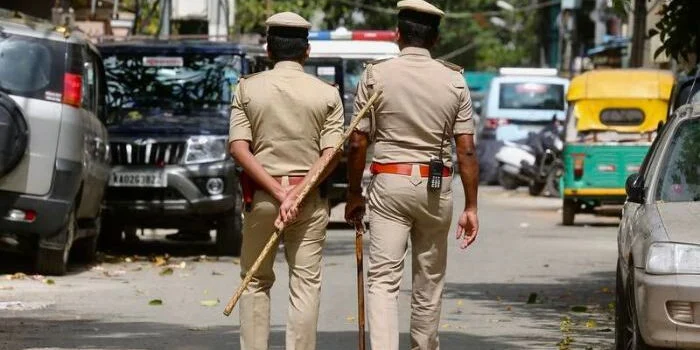
The robbery unfolded Tuesday afternoon outside the Alana Centre building along Mahatma Gandhi Road, a busy commercial stretch in south Mumbai, as the woman was returning to her hotel with a friend in a hired taxi, Indian media outlets reported.
Investigators said two men wearing helmets and face coverings intercepted the taxi and ordered the driver to stop, presenting what appeared to be official police identification. Posing as law enforcement officers, the suspects demanded to search the vehicle, raising no immediate alarm in an area accustomed to frequent security checks.
Police said the impostors questioned the Kenyan woman about her luggage and cash before forcibly seizing bags containing large sums of money. After taking the bags, the men instructed the woman to report the matter to the nearest police station and fled the scene on a motorcycle.
Only moments later did the woman realize she had been deceived.
With the assistance of the taxi driver, she went to the MRA Marg police station, where officers told her that a similar complaint involving fake police officers had recently been filed in the area, according to people familiar with the investigation.
The victim, identified by police as Sumaiya Mohammad Abadi, is an entrepreneur based in Nairobi who runs a business dealing in children’s garments. She had arrived in Mumbai on Monday, Jan. 26, and was staying at a hotel in the city’s business district while sourcing merchandise.
Before the robbery, Abadi had met a Kenyan acquaintance in the Kalbadevi area, one of Mumbai’s busiest wholesale markets. That acquaintance handed her ₹58 lakh (about 8.1 million Kenyan shillings) in cash, which was intended as payment to a wholesale garment trader, police said. Additional funds in her possession brought the total amount stolen to ₹66.45 lakh, roughly 9.3 million Kenyan shillings.
“The Kenyan woman was visiting the city for the first time to buy clothes for her business,” a police officer told the Hindustan Times. “She had visited India earlier, in 2023, but that trip was as a tourist.”
Mumbai police said they have launched an intensive manhunt for the suspects, deploying ground patrols and analyzing footage from closed-circuit television cameras across the area. Officers said investigators have traced the registration number of the motorcycle used in the escape and have detained one individual for questioning based on CCTV evidence.
“We have detained a person based on CCTV footage and the registration number of the bike used while committing the crime,” another officer said. “We are in the process of arresting him.”
Police said the suspects, once formally charged, are expected to face accusations including cheating, robbery and impersonating public servants, offenses that carry significant prison terms under Indian law.
The case has drawn attention not only because of the large amount of cash involved, but also because it underscores the vulnerability of foreign business travelers operating in cash-heavy markets. Mumbai’s wholesale trade hubs often rely on large cash transactions, particularly among small and medium-sized traders dealing in textiles, jewelry and consumer goods.
Crimes involving impersonation of police officers have emerged as a recurring concern in major Indian cities, especially in densely populated commercial zones where security presence is common and travelers may be less likely to question authority. Criminals exploit the assumption that uniformed or credentialed individuals represent legitimate law enforcement, allowing them to conduct searches or stops with minimal resistance.
For foreign visitors, the risks are compounded by unfamiliarity with local procedures. Legal experts note that legitimate Indian police officers rarely conduct roadside searches of private vehicles without clear cause or formal documentation, particularly when large sums of cash are involved. Tourists and visiting businesspeople, however, may not be aware of these norms.
The incident also highlights the continued reliance on cash transactions in parts of India’s informal and semi-formal economy, despite government efforts to promote digital payments. While electronic transactions have expanded rapidly in urban India, wholesale trade in certain sectors still depends heavily on cash, increasing exposure to theft.
Security analysts say organized impersonation rings often study police behavior closely, replicating uniforms, identification cards and even radio equipment to appear authentic. Helmets and masks, commonly worn by motorcyclists in Mumbai traffic, further obscure suspects’ identities and complicate identification.
Indian authorities have periodically warned the public — particularly foreign nationals — to verify the identity of officers during stops and to request official vehicles or station visits before complying with searches. Some embassies also advise citizens traveling to India for business to avoid carrying large amounts of cash and to use formal banking or escrow services where possible.
The robbery comes as Mumbai police face pressure to curb street-level crimes that could tarnish the city’s reputation as India’s financial capital and a major destination for international trade. High-profile cases involving foreign nationals often draw diplomatic attention, especially when victims are targeted because of perceived vulnerability.
For Kenyan entrepreneurs, India remains an important sourcing destination, particularly for textiles, pharmaceuticals and manufactured goods. Business associations in Nairobi say incidents like this could prompt renewed calls for safer trade practices and better coordination with local partners abroad.
As the investigation continues, police say they are reviewing whether the suspects may be linked to other similar crimes reported in the area. Authorities have urged anyone with information to come forward, while reiterating that legitimate police officers do not demand cash inspections in public without clear legal justification.
For Abadi, the incident has transformed what was meant to be a routine business trip into a costly ordeal. While police say they are optimistic about recovering some of the stolen funds, the case serves as a stark reminder of the risks faced by international traders operating far from home — and the lengths to which criminals will go by exploiting trust in official authority.
Kenyans.co.ke





