

More than 200 people have been killed in a landslide at the Rubaya coltan mine in eastern Democratic Republic of the Congo, a site controlled by Rwanda-backed M23 rebels, according to officials appointed by the armed group.
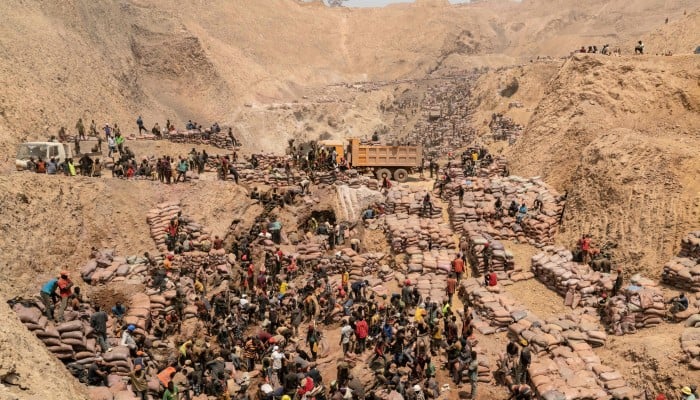
The collapse occurred Wednesday after heavy rains triggered a landslide at the mine, located about 60 kilometers (37 miles) northwest of Goma, the capital of North Kivu province. A spokesperson for the rebel-appointed provincial governor said the death toll includes artisanal miners, children and market vendors who were at or near the site when the ground gave way.
“More than 200 people were victims of this landslide,” Lumumba Kambere Muyisa told Reuters, adding that some bodies remained buried in mud and debris. He said about 20 injured survivors were receiving treatment at local health facilities, with others expected to be transferred to hospitals in Goma.
“We are in the rainy season, and the ground is fragile,” Muyisa said. “The earth collapsed while people were inside the mine shafts.”
Eraston Bahati Musanga, the M23-appointed governor of North Kivu, confirmed that bodies had been recovered but said others were believed to be trapped underground. Artisanal miners working at Rubaya said rescue efforts were continuing but hampered by unstable terrain and makeshift tunnels.
“It rained, then the landslide happened and swept people away,” said Franck Bolingo, a miner interviewed by AFP. “Some were buried alive, and others are still trapped in the shafts.”
The Rubaya mine is one of the world’s most significant sources of coltan, a mineral used to produce tantalum, a heat-resistant metal essential for smartphones, computers, aerospace equipment and gas turbines. The site alone accounts for more than 15 percent of the global tantalum supply, according to industry and U.N. estimates.
Artisanal mining dominates operations at Rubaya, with workers digging narrow tunnels by hand for a few dollars a day. Safety measures are minimal, and collapses are common, former miners said.
“People dig everywhere, without control or safety,” said Clovis Mafare, a former Rubaya miner. “In a single pit, there can be hundreds of miners. When one tunnel collapses, many others can follow.”
M23 rebels seized Rubaya and its surrounding mines in May 2024 as part of a renewed offensive that expanded their control over mineral-rich areas of eastern Congo. The United Nations has accused the group of exploiting Rubaya’s coltan to finance its rebellion, alleging the imposition of taxes on mining and transport that generate hundreds of thousands of dollars each month. Rwanda has denied backing the group or benefiting from the trade.
Following the disaster, the rebel-appointed provincial authorities said artisanal mining at Rubaya had been temporarily suspended. Residents whose homes were built close to the mine were ordered to relocate due to the risk of further landslides.
Eastern Congo has endured decades of conflict involving government forces and dozens of armed groups, fueling one of the world’s largest humanitarian crises. More than 7 million people have been displaced nationwide, including more than 300,000 since December, according to humanitarian agencies.
Despite the country’s vast mineral wealth, more than 70 percent of Congolese live on less than $2.15 a day. Analysts say disasters like the Rubaya collapse underscore how poverty, weak regulation and prolonged conflict continue to exact a heavy toll on civilians in Congo’s resource-rich east.
TheIndependent/Aljazeera





