

Armed separatists launched coordinated assaults across Pakistan’s southwestern Balochistan province early Saturday, killing at least 33 people including 15 security personnel and 18 civilians while targeting police stations, paramilitary installations and detention facilities in nearly a dozen simultaneous attacks that exposed persistent security vulnerabilities in the mineral-rich but violence-plagued region.
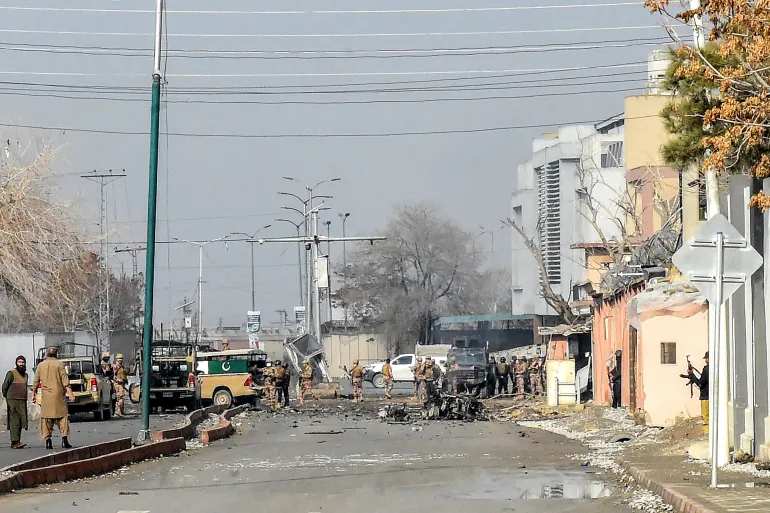
The outlawed Balochistan Liberation Army claimed responsibility for the multi-district offensive that began approximately 3 a.m. local time Saturday, targeting military installations, police stations and civil administration officials through gun attacks and suicide bombings across nine districts of Pakistan’s largest but least-populated province, according to AFP news agency.
Several police stations in the provincial capital Quetta faced assault from alleged ethnic Baloch gunmen in attacks that authorities struggled to contain hours after initial contact. Police officials in four districts disclosed to AFP that security forces had not yet completely suppressed the insurgent operations by midday Saturday.
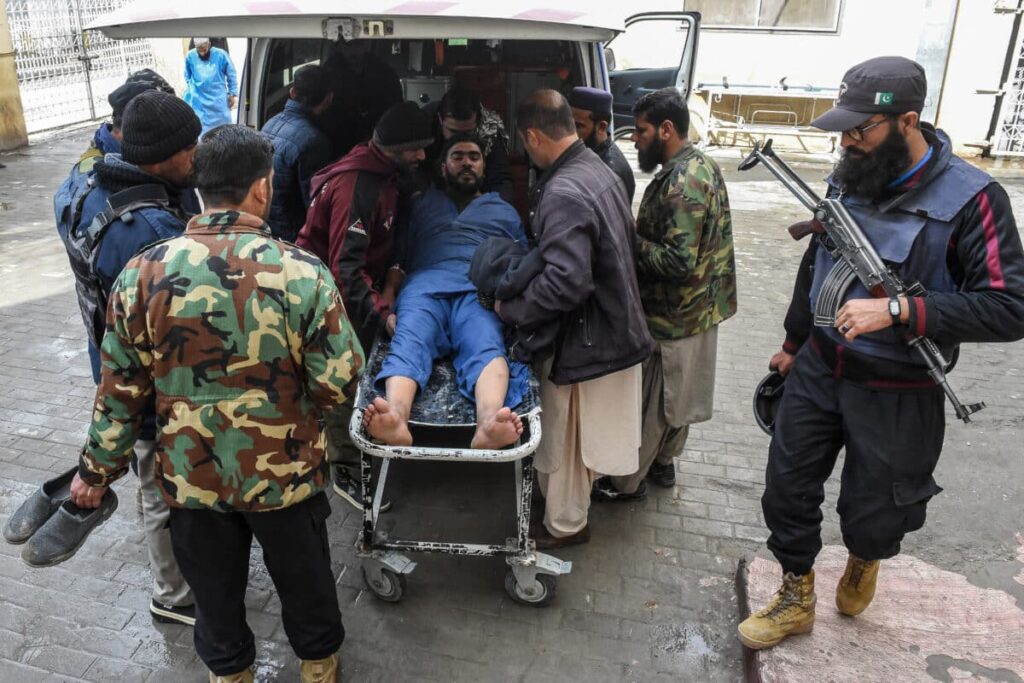
Interior Minister Mohsin Naqvi confirmed in a statement that 10 security officers perished in the violence, while praising forces for killing 37 insurgents after coming under fire at multiple locations across the province. Provincial health officials and security sources provided higher casualty figures, with at least 15 security personnel and 18 civilians killed in the coordinated offensive.
An unnamed security official quoted by AFP characterized the operation as a coordinated assault hitting “more than 12 locations” throughout the province. Pakistani military sources claimed at least 92 BLA fighters were killed during Saturday’s engagements, elevating the total to 133 insurgents eliminated in the preceding 48 hours.
The attacks came one day after the military announced that security forces raided two militant hideouts in the southwest, killing 41 insurgents in separate gunbattles. This sequential pattern suggests sustained confrontation between government forces and separatist networks operating from established strongholds throughout Balochistan’s remote terrain.
A senior government official in one targeted district disclosed that insurgents “freed at least 30 inmates from a district jail, seizing firearms and ammunition. They also attacked a police station and took ammunition with them.” The successful prison break in Mastung district and weapons seizure demonstrates the attacks achieved tactical objectives beyond inflicting casualties, strengthening insurgent capabilities through captured armaments and freed personnel.
A senior official in Quetta told AFP that the group had abducted a deputy district commissioner, indicating that separatists successfully captured high-ranking government administrators during the assaults. The kidnapping of civilian officials represents an escalation beyond typical targeting of military and police personnel, potentially complicating government operations and providing insurgents with valuable hostages for future negotiations.
The circumstances surrounding civilian deaths remained unclear Saturday. Baloch separatist groups have previously targeted civilians suspected of collaborating with state agencies, raising concerns that some fatalities may have resulted from deliberate insurgent actions against perceived collaborators rather than crossfire casualties.
Shahid Rind, spokesman for the Balochistan government, maintained that most BLA attacks were foiled, attempting to minimize the operational success insurgents achieved. However, the sustained nature of engagements, confirmed casualties, successful prison break and administrator kidnapping suggest more substantial separatist accomplishments than official government characterizations acknowledge.
A senior military official in Islamabad offered a dismissive assessment, describing the attacks as “coordinated but poorly executed” and claiming they “failed due to poor planning and rapid collapse under effective security response.” This framing conflicts with evidence of sustained fighting, tactical achievements and casualties inflicted on security forces.
Interior Minister Naqvi employed inflammatory rhetoric in his statement, asserting that attacks were carried out by “Fitna al-Hindustan”—a phrase the government uses for the BLA—which he alleged receives backing from neighboring archenemy India. Pakistan has repeatedly accused New Delhi of supporting Baloch separatist movements, charges India consistently denies and which lack publicly available evidence.
Prime Minister Shehbaz Sharif praised security forces for “foiling” the attacks while also accusing India of backing the separatists. “We will continue the war against terrorism until its complete eradication,” Sharif declared in a statement, framing the separatist violence within counterterrorism paradigms rather than acknowledging underlying political grievances driving the insurgency.
New Delhi has not responded to the latest allegations as of Saturday evening, maintaining its customary silence regarding Pakistani accusations of supporting separatist violence.
Several members of Pakistani security forces were abducted during the attacks, though precise numbers remained unavailable Saturday. Authorities suspended internet and train services while security operations continued, jamming mobile phone services and disrupting traffic in affected districts as part of efforts to prevent insurgent coordination and escape.
Pakistan Railways suspended train services from Balochistan to other parts of the country after insurgents destroyed rail tracks, disrupting critical transportation infrastructure linking the province with the rest of Pakistan. The infrastructure sabotage reflects separatist strategy of isolating Balochistan and demonstrating the central government’s inability to protect vital economic corridors.
Provincial Health Minister Bakht Muhammad Kakar confirmed that attacks began almost simultaneously across Balochistan, indicating sophisticated coordination and communications among dispersed insurgent units. He disclosed that two police officers were killed in a grenade attack on a police vehicle in Quetta, where the government declared emergencies at all hospitals to manage incoming casualties.
Insurgents attempted to storm the provincial headquarters of paramilitary forces in Nushki district, though authorities claimed the assault was repelled. In Dalbandin district, militants hurled grenades at a government administrator’s office, but swift security force response allegedly forced them to flee. Attacks on security posts in Balincha, Tump and Kharan districts were reportedly thwarted.
In Pasni and Gwadar districts, insurgents attempted to abduct passengers traveling on buses along highways, according to police accounts. These attempted kidnappings demonstrate separatist efforts to generate revenue through ransom demands while terrorizing civilian populations and demonstrating governmental inability to protect travelers on major thoroughfares.
Balochistan Chief Minister Sarfraz Bugti provided context for recent security operations, claiming that “over the past 12 months, security forces in Balochistan have sent more than 700 terrorists to hell, with around 70 terrorists eliminated in just the last two days alone.” He insisted that “these attacks cannot weaken our resolve against terrorism,” projecting confidence despite the coordinated assault’s scale.
The province has endured decades of rebellion by separatist groups seeking independence from Pakistan’s central government in Islamabad. Balochistan remains the country’s poorest province despite abundant untapped natural resources including natural gas, minerals and strategic coastline along the Arabian Sea—economic disparities that fuel separatist grievances about resource exploitation benefiting distant elites while local populations remain impoverished.
Baloch separatist groups and the Pakistani Taliban, known by the acronym TTP (Tehrik-e-Taliban Pakistan), have intensified attacks throughout Pakistan in recent months. The TTP, while constituting a separate organization, maintains alliance with Afghanistan’s Taliban, which returned to power in August 2021 following U.S. military withdrawal.
Pakistan has repeatedly asserted that Baloch separatists, the Pakistani Taliban and other militant organizations use Afghan territory to launch attacks inside Pakistan. The Kabul government denies these claims, creating diplomatic friction between the neighboring nations as cross-border security concerns persist.
Last year, ethnic Baloch separatists attacked a train carrying 450 passengers, prompting a two-day siege during which dozens perished. In August 2024, rebels blew up bridges, stormed hotels and targeted security installations in assaults across the province that left dozens dead, demonstrating escalating capabilities and willingness to conduct large-scale coordinated operations.
The United States has designated the BLA as a terrorist organization, aligning American counterterrorism policy with Pakistani governmental framing of the separatist movement. However, this designation does not address underlying political and economic grievances that sustain popular support for independence movements among segments of Balochistan’s ethnic Baloch population.
Minister Kakar blamed Saturday’s violence on the BLA, emphasizing its banned status in Pakistan and terrorist designation by the United States. He reiterated Pakistani government assertions that the group enjoys backing from India—charges New Delhi denies and which complicate regional security dynamics by introducing allegations of state sponsorship into what might otherwise be understood as domestic insurgency driven by local grievances.
The coordinated nature of Saturday’s attacks—striking nearly a dozen locations simultaneously across multiple districts—reveals sophisticated planning, communications infrastructure and operational capacity that exceeds typical insurgent capabilities. The ability to mass forces, coordinate timing, achieve tactical surprise and sustain engagements against responding security forces demonstrates that separatist organizations retain considerable strength despite government claims of degrading their capabilities through sustained counterinsurgency operations.
The prison break in Mastung and weapons seizure compound security challenges by augmenting insurgent manpower with freed fighters and enhancing firepower through captured armaments. Each successful operation that yields personnel releases and equipment captures strengthens separatist organizations while undermining governmental authority and demonstrating state weakness.
The kidnapping of a deputy district commissioner represents a particularly concerning development, as successful abduction of senior civilian officials could inspire similar operations targeting administrators throughout the province. The psychological impact on government personnel may influence willingness to serve in conflict zones if personal security cannot be assured.
Though coordinated attacks on this scale remain relatively rare despite persistent insurgent violence, their occurrence demonstrates that separatist organizations retain capacity for major offensive operations that can simultaneously strike multiple targets and temporarily overwhelm security force responses. This capability suggests that Pakistani military claims of systematically degrading insurgent strength may overstate actual progress in counterinsurgency efforts.
The suspension of internet, mobile phone services and transportation links reflects governmental recognition that insurgents maintain sophisticated communications and logistics networks requiring disruption through broad infrastructure shutdowns. However, these measures also impact civilian populations, potentially generating resentment that feeds separatist recruitment and popular support.
As security operations continue and authorities work to restore control in affected districts, fundamental questions persist about whether military-focused counterinsurgency strategies can resolve an insurgency rooted in political grievances about autonomy, resource distribution and ethnic identity. The cycle of attacks, security crackdowns, civilian suffering and renewed violence suggests that absent political solutions addressing Baloch aspirations for greater autonomy and equitable resource sharing, the separatist insurgency will continue regardless of tactical setbacks inflicted by security forces.
ABC/Aljazeera





