

Russian forces launched a fresh wave of missile and drone attacks on Ukraine’s capital and other major cities early Tuesday, igniting fires, damaging residential buildings and delivering renewed blows to already strained energy systems as temperatures plunged and diplomatic efforts to address the war continued abroad, Ukrainian officials said.
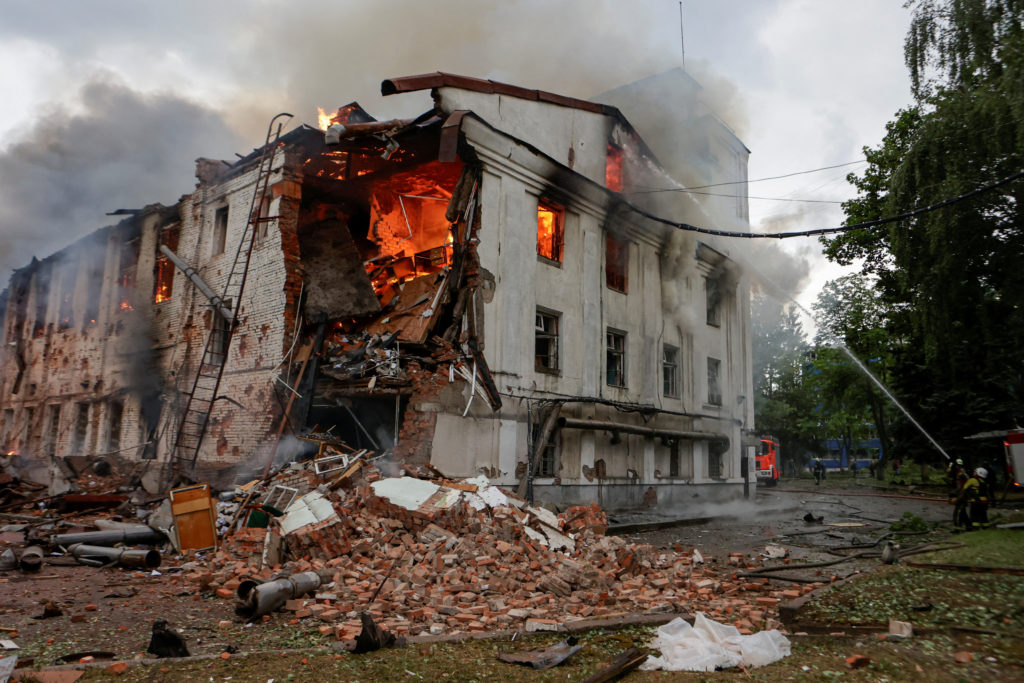
Explosions echoed across Kyiv shortly after midnight as air defenses engaged incoming threats, with residents reporting the sounds of both missiles and unmanned aerial vehicles over the city. The strikes came amid near-record cold, with nighttime temperatures falling close to minus 20 degrees Celsius (minus 4 Fahrenheit), compounding the impact on civilians facing power and heating disruptions.
Tymur Tkachenko, head of Kyiv’s military administration, said on Telegram that at least five districts were affected. Three apartment buildings sustained damage, along with a structure housing a kindergarten. Emergency crews responded to multiple fires, including one that engulfed an upper-floor apartment, scenes captured in videos circulating on social media. An air raid alert remained in force for more than five hours, underscoring the scale and duration of the assault.
City officials said four people were injured in Kyiv and Kharkiv, Ukraine’s second-largest city, though they warned the toll could change as damage assessments continued. The attacks marked another heavy strike against urban centers that have endured repeated bombardment since the start of the full-scale invasion nearly four years ago.
In Kharkiv, Mayor Ihor Terekhov said Russian fire struck critical energy infrastructure, forcing authorities to take emergency measures to prevent catastrophic failures in the city’s heating network. Writing on Telegram, Terekhov said coolant would need to be drained from heating systems serving 820 apartment buildings connected to a single thermal plant to keep pipes from freezing.
“The goal is obvious: to cause maximum destruction and leave the city without heat in severe cold,” Terekhov wrote, framing the attacks as an effort to weaponize winter conditions against civilians.
Ukraine’s public broadcaster Suspilne reported that Russian strikes also knocked out electricity in the towns of Izium and Balakliia in the Kharkiv region. In the northern city of Sumy, two apartment buildings were hit, adding to a growing list of residential targets affected during the overnight assault.
The renewed strikes followed a series of large-scale attacks on Kyiv since New Year’s Day that have already left hundreds of apartment blocks without stable power and heating. On Monday, emergency crews were still working to restore warmth to buildings where residents have endured days of freezing indoor temperatures.
The timing of the attacks added a diplomatic dimension to the unfolding crisis. They occurred on the eve of planned three-way talks in the United Arab Emirates focused on resolving the conflict, now approaching its fourth year. While details of the talks have not been made public, their proximity to the strikes highlighted the sharp contrast between battlefield escalation and parallel diplomatic efforts.
The bombardment also coincided with disputes over a proposed moratorium on attacks against energy infrastructure, an initiative both Moscow and Kyiv have discussed at the request of U.S. President Donald Trump. Russia said the pause expired on Sunday, while Ukrainian officials maintained that it was intended to remain in effect for a week starting Jan. 30.
On Monday, President Volodymyr Zelenskiy said Russian forces had not targeted Ukrainian energy facilities with missiles or drones in the previous 24 hours. He cautioned, however, that artillery and other forms of shelling continued to strike energy infrastructure near front-line areas, blurring the practical effect of any ceasefire understanding.
The overnight attacks appeared to challenge the spirit, if not the letter, of any temporary restraint. Ukrainian officials argued that the scale of damage to power and heating systems in major cities illustrated the vulnerability of civilian infrastructure during winter operations.
From an analytical perspective, the latest strikes fit a broader pattern seen throughout the war: intensified pressure on urban centers and utilities during cold months, when disruptions carry heightened humanitarian consequences. By targeting energy networks and residential areas simultaneously, Russian forces increase the logistical burden on Ukrainian authorities already stretched by frontline demands and limited repair capacity.
The attacks also underscore the fragile nature of informal or partial ceasefires. Without clearly defined enforcement mechanisms or mutual trust, pauses in fighting — particularly those covering specific categories such as energy infrastructure — remain susceptible to collapse amid shifting military priorities.
For Ukraine, the strikes reinforce the urgency of air defense reinforcement and decentralized energy solutions, including mobile generators and localized heating systems. Officials have repeatedly called on Western partners to accelerate delivery of air defense systems capable of intercepting both missiles and drones, arguing that layered defenses are essential to protecting cities during sustained winter campaigns.
For Russia, continued strikes on cities like Kyiv and Kharkiv serve multiple strategic purposes: degrading morale, stretching emergency response resources, and signaling leverage ahead of any negotiations. Even limited damage, when delivered consistently, can have outsized psychological and political effects during prolonged conflict.
As dawn broke over Kyiv, firefighters and utility workers moved through damaged neighborhoods, while residents assessed shattered windows and scorched walls. In Kharkiv and Sumy, local officials faced urgent decisions about how to preserve heating systems and restore electricity before temperatures dipped again overnight.
With no immediate indication that attacks would ease, the latest barrage highlighted the enduring human cost of the conflict and the precarious balance between diplomacy and continued military action. As talks loom abroad, Ukrainians braced for the possibility that winter, once again, would be fought not only on the front lines but in apartment blocks, power stations and city streets far from the battlefield.
Reuters





