

Fourteen migrants were killed early Tuesday in the Aegean Sea after a small boat carrying them collided with a Greek coast guard vessel off the eastern island of Chios, authorities said, reviving scrutiny of Greece’s maritime enforcement practices along one of Europe’s most sensitive migration corridors.
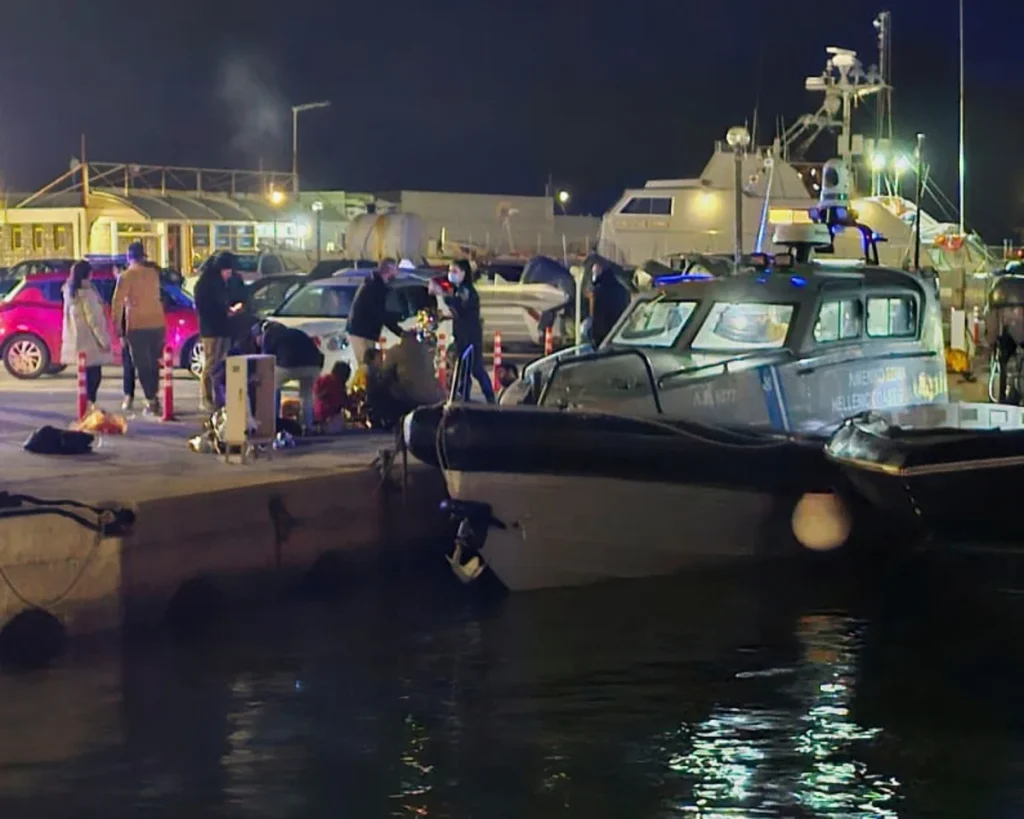
The Greek coast guard said the incident occurred when officers identified an inflatable dinghy moving toward Chios, an island just a few miles from the Turkish coast, and attempted to intercept it. A coast guard official said the migrants’ vessel was ordered to turn back but instead altered course, leading to a collision at sea.
“The smugglers manoeuvred toward the coast guard vessel, causing a collision,” the official said in an account provided to Reuters.
Reuters said it was unable to independently confirm the precise sequence of events that led to the crash. Authorities have not yet released details about the nationalities of those on board, nor the identities of the victims.
A second coast guard official told Reuters that 24 migrants were rescued from the water following the collision. Two coast guard officers were injured during the incident and taken to a hospital for treatment. A government official said witnesses estimated that between 30 and 35 people had been aboard the dinghy before the collision.
Search-and-rescue operations continued throughout the day, involving multiple coast guard vessels, private boats and divers, the coast guard said. Officials did not rule out the possibility that additional victims could still be missing as efforts continued in the surrounding waters.
The deadly incident unfolded in one of the most heavily trafficked maritime routes for migrants attempting to reach the European Union from Turkey. Chios, like several other Greek islands in the eastern Aegean, has long been a frontline destination for people fleeing conflict, poverty and instability in parts of the Middle East, Africa and Asia.
Greece sits at the southeastern edge of the EU and has for years served as a primary gateway for asylum seekers hoping to reach Europe. During the height of the migration crisis in 2015 and 2016, nearly one million people arrived on Greek islands after crossing from Turkey, overwhelming local infrastructure and prompting emergency measures across the bloc. Chios was among the islands that saw mass arrivals during that period.
In the years since, arrivals have fallen significantly as Greece tightened border controls and expanded patrols at sea. Since 2019, the country’s center-right government has pursued a policy of deterrence, reinforcing land borders with fences and increasing maritime surveillance to prevent irregular crossings.
The government maintains that its approach complies with international law and is necessary to disrupt smuggling networks and protect lives. Greek officials routinely argue that dangerous crossings encouraged by traffickers are responsible for fatalities in the Aegean, rather than enforcement actions by authorities.
Still, Greece has faced repeated criticism from human rights groups, international organizations and media investigations over its handling of migrants at sea. Allegations have included claims that asylum seekers were forcibly returned toward Turkish waters — practices commonly referred to as “pushbacks” — without being allowed to lodge asylum claims.
Those concerns intensified following a separate maritime disaster in 2023, when hundreds of migrants died after a fishing trawler sank off southern Greece. Survivors and witnesses alleged that the coast guard attempted to tow the overcrowded vessel before it capsized. Greek authorities denied wrongdoing in that case, but the incident remains one of the deadliest migrant shipwrecks recorded in the Mediterranean in recent years.
The European Union’s border agency, Frontex, said last year that it was reviewing 12 cases involving Greece for potential violations of fundamental rights, including allegations that migrants were pushed back from Greek frontiers. Greece has consistently rejected those accusations, saying it does not conduct illegal returns and that all operations are carried out in line with European and international obligations.
Tuesday’s collision is likely to add to ongoing debates within the EU over border enforcement, accountability and the balance between deterrence and humanitarian protection. While Greece argues that aggressive patrols are essential to combat organized smuggling rings, critics say such tactics increase the risk of fatal encounters at sea, especially when small, overcrowded boats are involved.
Maritime safety experts note that inflatable dinghies used by smugglers are highly unstable and vulnerable to capsizing, particularly when sudden maneuvers occur near larger vessels. Even low-speed collisions can prove catastrophic, especially at night or in rough conditions, when passengers may not be wearing life jackets.
From a broader analytical perspective, the incident underscores the structural pressures still shaping migration in the eastern Mediterranean. Despite reduced arrival numbers compared with a decade ago, economic hardship, conflict and political repression in migrants’ countries of origin continue to drive attempts to reach Europe. Smuggling networks exploit these pressures, often launching boats under unsafe conditions to evade detection.
The deaths also highlight the limited progress made toward a unified EU migration policy. Frontline states such as Greece remain responsible for border enforcement and initial reception, while broader responsibility-sharing mechanisms among EU members remain politically contested. That imbalance, analysts say, contributes to tougher national enforcement strategies that prioritize deterrence.
For residents of islands like Chios, the incident reopens painful memories of the migration crisis years, when local communities were thrust into the center of a humanitarian emergency. While arrivals have dropped, fatal accidents continue to occur, reinforcing the sense that the Aegean remains a dangerous crossing despite intensified controls.
Greek officials said an investigation into the collision is underway, though no timeline has been provided for preliminary findings. The coast guard said it would cooperate with judicial authorities to establish the circumstances of the incident.
As recovery efforts continued, humanitarian organizations renewed calls for safer migration pathways and greater transparency in maritime operations. Without such measures, they argue, tragedies like Tuesday’s collision are likely to persist.
For now, the deaths of 14 migrants off Chios stand as the latest reminder of the human cost of irregular migration and the unresolved tensions at Europe’s borders — where enforcement, humanitarian duty and political pressure continue to collide in the waters of the Aegean Sea.
Reuters





