

The death toll from coordinated attacks by armed groups on rural communities in Nigeria’s Katsina and Kwara states has climbed to nearly 200, according to accounts from lawmakers, residents, police and humanitarian groups, marking one of the deadliest episodes of violence in the country this year and deepening concerns about Nigeria’s widening security crisis.
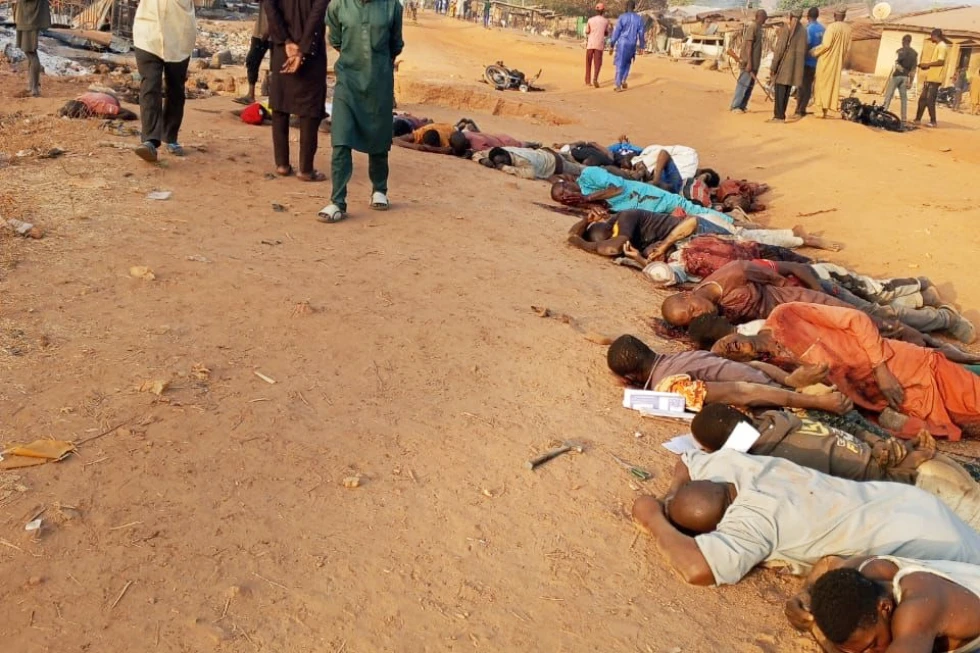
The assaults, which unfolded late Tuesday and into Wednesday, targeted isolated villages in northwestern Katsina State and north-central Kwara State, areas that have increasingly come under attack by heavily armed groups known locally as bandits. Survivors and officials said gunmen stormed villages, set homes ablaze, looted shops and executed residents, forcing hundreds to flee into surrounding forests.
In Kwara State, the deadliest violence was reported in the villages of Woro and Nuku in Kaiama Local Government Area, near Nigeria’s border with Niger and Benin. Saidu Baba Ahmed, the lawmaker representing the area, said by phone that at least 170 people were killed in Woro alone, pushing the combined death toll from the Kwara and Katsina attacks close to 200.
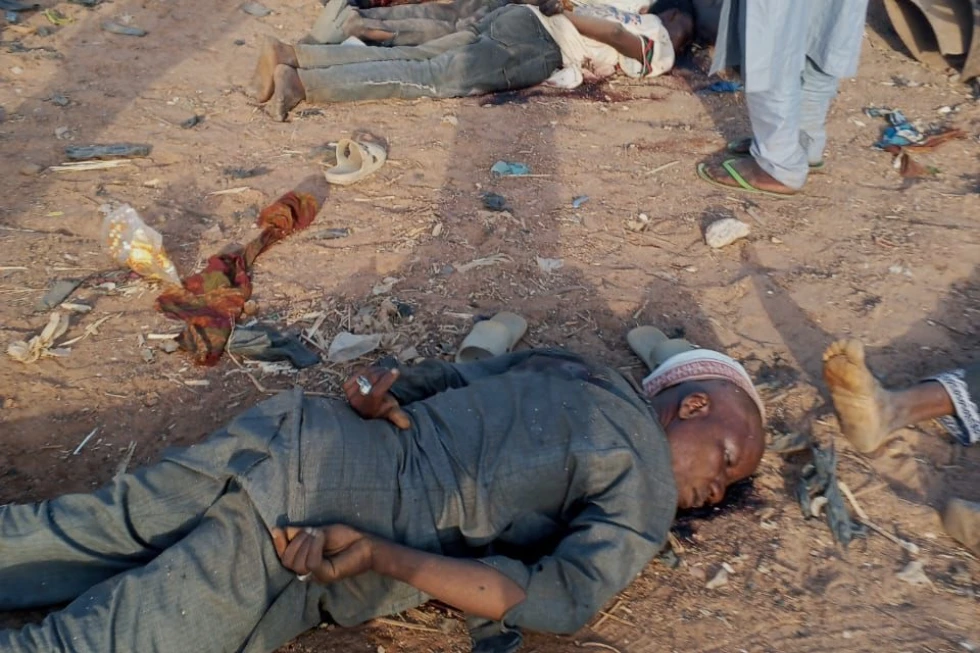
“This is the worst attack we have ever recorded in this district,” Ahmed said, describing scenes of widespread destruction. He said gunmen rounded up villagers, tied their hands behind their backs and shot them at close range. Ahmed shared photographs of bodies with Reuters, though the news agency said it could not independently verify the images.
“As I’m speaking to you now, I’m in the village with military personnel, sorting dead bodies and combing the surrounding areas for more,” Ahmed said, underscoring the scale of the killings and the difficulty of accounting for all the victims.
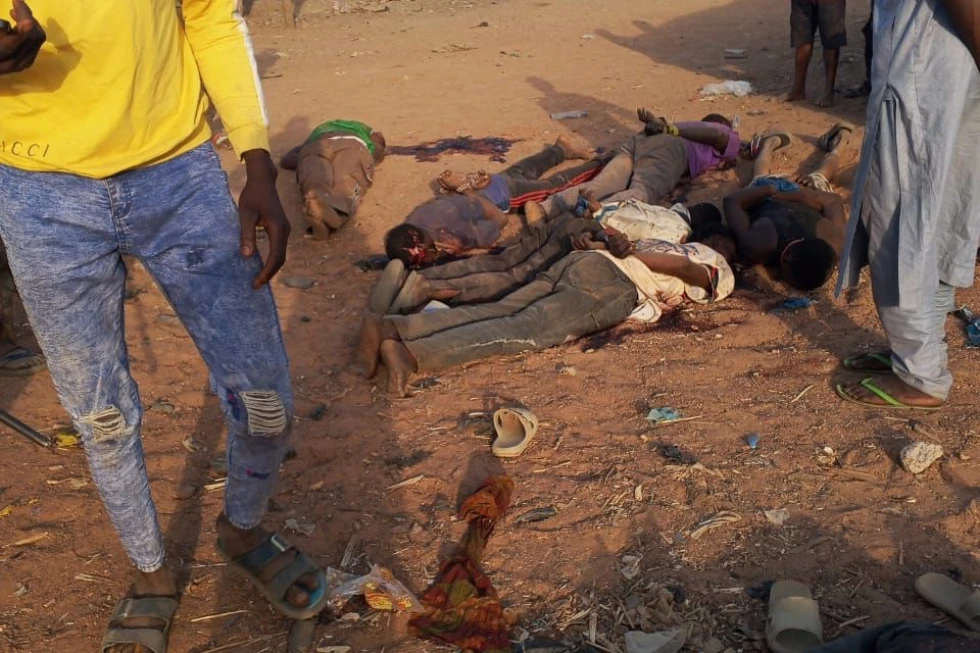
Residents who survived the attack told Reuters that the assailants, believed to be Islamist militants, had previously visited the villages to preach and demand that locals renounce allegiance to the Nigerian state and accept the imposition of Sharia law. When villagers resisted, the gunmen opened fire, witnesses said. Many residents escaped by running into nearby bushland, where some remained missing hours after the attack.
Police confirmed that “scores” of people were killed in Kwara but declined to provide a precise figure. Kwara State police spokesperson Adetoun Ejire-Adeyem said security forces had been deployed alongside the military to carry out search-and-rescue operations and pursue the attackers.
Humanitarian organizations and rights groups warned that the toll could rise further. Amnesty International said in a statement that more than 170 people were killed in the Kwara attacks, adding that homes were burned and shops looted. The group said the gunmen had been sending warning letters to villagers for more than five months, pointing to serious security lapses.
“The failure to act on these warnings is unacceptable,” Amnesty said, calling for an independent investigation and better protection for vulnerable rural communities.
The Nigerian Red Cross said it had been unable to reach the affected villages because of their remoteness. Ayodeji Emmanuel Babaomo, the Red Cross secretary in Kwara State, said the communities are about eight hours’ drive from the state capital and lie close to international borders, complicating access for emergency responders.
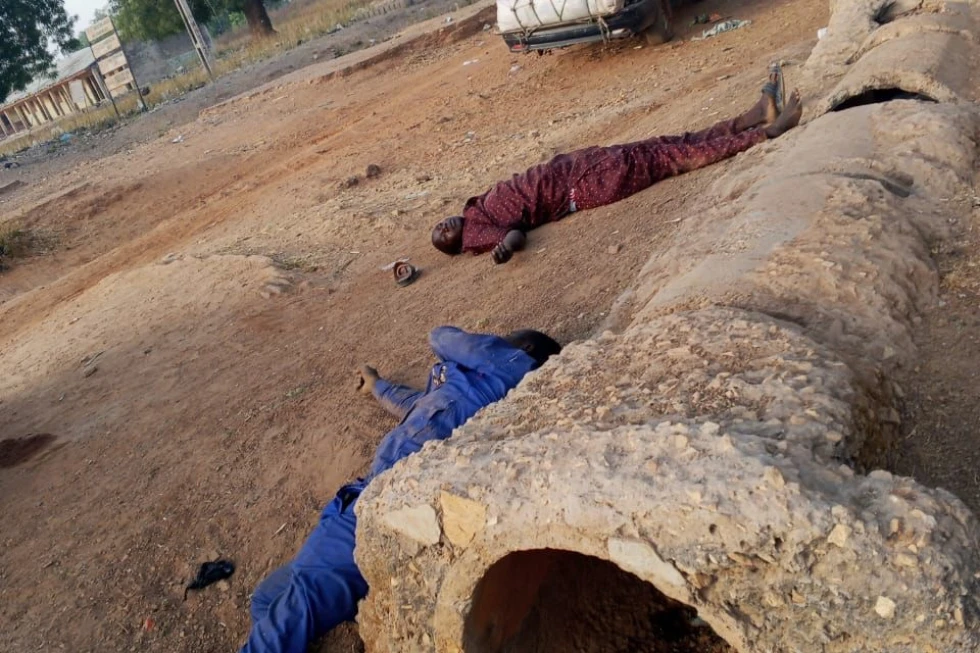
In Katsina State, a separate attack unfolded around the same time in Doma community, Tafoki Ward, Faskari Local Government Area. Residents and local officials said gunmen moved from house to house, shooting villagers and burning property. Earlier accounts put the death toll at around 20, but local sources said additional bodies were later recovered, contributing to the overall figure nearing 200.
The Katsina attack shattered a fragile peace pact that had held for about six months between the community and armed groups. Such informal truces, in which villagers provide food or money to avoid attacks, have become increasingly common in parts of northern Nigeria where state security presence is limited.
A police spokesperson in Katsina, Abubakar Sadiq Aliyu, confirmed the attack but said investigations were ongoing. No group immediately claimed responsibility for the killings.
The Kwara State government condemned the violence, with Governor Abdulrahman Abdulrazaq describing it as a “cowardly expression of frustration by terrorist cells” responding to ongoing military operations against armed groups in the state. His office said security agencies had been ordered to intensify operations to prevent further attacks.
Analysts and lawmakers say the attacks highlight the growing reach and brutality of armed groups operating across Nigeria’s northwest and north-central regions. While banditry in the northwest initially centered on cattle rustling and kidnappings for ransom, recent assaults have increasingly taken on ideological overtones, with some groups linked to extremist organizations.
A member of parliament representing the affected Kwara area, Mohammed Omar Bio, told The Associated Press that the attacks were carried out by Lakurawa, an armed group believed to be affiliated with the Islamic State group. The Nigerian military has previously said Lakurawa has roots in neighboring Niger and became more active in Nigeria’s border communities after a 2023 military coup there.
James Barnett, a researcher at the Washington-based Hudson Institute, said the Kwara massacre was most likely carried out by Jama’atu Ahlis Sunna Lidda’awati wal-Jihad, or JAS, a Boko Haram faction that has been blamed for other mass killings in the region. Nigeria hosts multiple armed groups, including Boko Haram and its offshoot, the Islamic State West Africa Province, as well as the lesser-known Islamic State Sahel Province, known locally as Lakurawa.
The violence comes as Nigeria faces mounting international scrutiny over its ability to protect civilians. U.S. President Donald Trump accused Nigeria last year of failing to protect Christians amid repeated Islamist attacks and mass kidnappings. In December, U.S. forces carried out airstrikes on what they described as terrorist targets in Nigeria, and on Tuesday the head of U.S. Africa Command said a small team of U.S. military officers had been sent to the country to support security efforts.
Nigerian authorities have denied claims of systematic persecution of Christians and say they are working closely with international partners to improve security. Still, the scale of the latest attacks has renewed debate over the effectiveness of military campaigns and the lack of state presence in remote areas.
Beyond the immediate loss of life, the attacks have triggered a humanitarian emergency. Entire villages have been emptied, with survivors seeking refuge in neighboring communities that are themselves struggling with poverty and insecurity. Burned homes, destroyed farms and looted shops mean many families have lost their livelihoods overnight.
Security experts say the near-simultaneous attacks in Katsina and Kwara point to a worrying level of coordination and underscore how armed groups exploit Nigeria’s vast forests, porous borders and limited rural policing. They warn that without sustained security deployments, intelligence-led operations and economic support for vulnerable communities, such massacres could become more frequent.
For residents of Woro, Nuku and Doma, the immediate concern is burying the dead and finding the missing. As soldiers and police continue combing surrounding bushland, families wait anxiously for news of loved ones, while community leaders fear that fear and displacement will further erode already fragile social structures.
With the death toll now approaching 200, the attacks rank among the deadliest in Nigeria in recent months, adding urgency to calls for a comprehensive response to a security crisis that shows little sign of easing.
AP/Reuters





