

At least 31 people were killed and nearly 170 others wounded after a suicide bomber attacked a Shi’ite Muslim mosque in Pakistan’s capital on Friday, authorities said, in the deadliest assault in Islamabad in more than a decade. The Islamic State group claimed responsibility, underscoring renewed fears about sectarian violence and militant resurgence in the country.
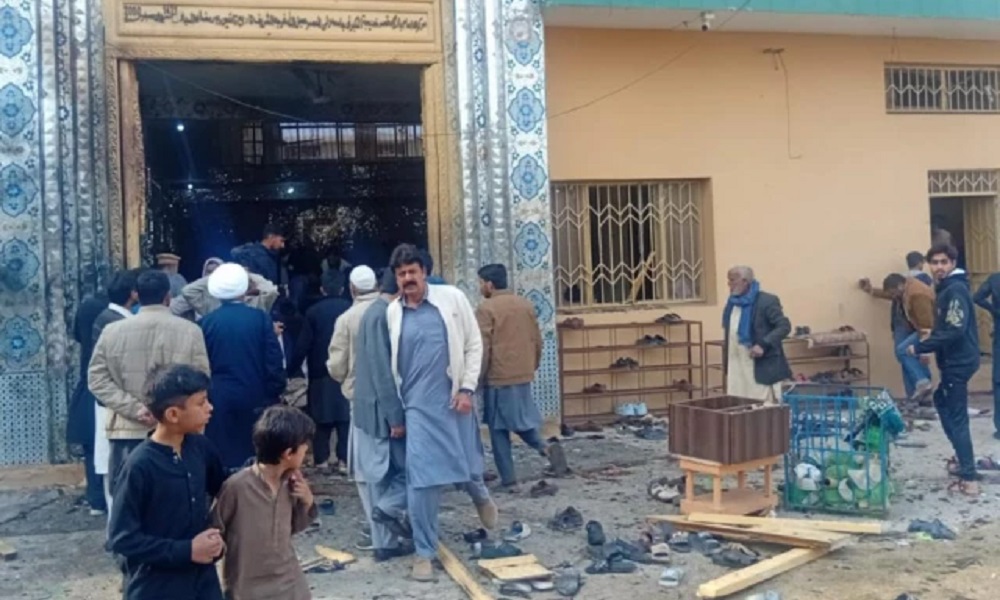
The attacker opened fire at the entrance of the Khadija Tul Kubra Imambargah on the outskirts of Islamabad before detonating explosives inside the mosque compound shortly after Friday prayers began, officials said. Worshippers were gathered in large numbers when the blast tore through the prayer hall, scattering debris, shattered glass and bodies across the carpeted floor.
Islamabad Deputy Commissioner Irfan Memon said 31 people were confirmed dead and at least 169 others injured, many of them critically. Hospitals across the capital were placed on emergency footing as ambulances ferried the wounded from the scene.
The Islamic State group announced responsibility in a statement circulated on its Telegram channel, saying the attacker carried out the operation after breaching mosque security. The group also released an image it claimed depicted the assailant holding a firearm, his face obscured. Reuters said it could not independently verify the authenticity of the image.
Survivors described moments of terror as gunfire erupted, followed seconds later by a massive explosion. Sarfraz Shah, 46, said he was praying alongside his younger brother when the violence unfolded.
“I heard shots, and before I could understand what was happening, there was a huge blast,” Shah said at Islamabad’s Pakistan Institute of Medical Sciences hospital. “People were thrown everywhere. There was smoke, confusion, and blood all over the place.” Shah later learned that his brother, Manzar, 39, was among those killed.
Defense Minister Khawaja Muhammad Asif said in a post on X that security guards attempted to intercept the attacker, who then detonated explosives among worshippers standing in the last rows. Asif alleged the bomber had traveled repeatedly to Afghanistan and accused India of backing the attack, though he did not present evidence.
India’s Ministry of External Affairs swiftly rejected the allegation, calling it “baseless” and saying Pakistan should address its internal security challenges rather than shifting blame. “India rejects any and every such allegation, which is as pointless as it is unfounded,” the ministry said.
Afghanistan’s Foreign Ministry also condemned the bombing, reiterating that it does not provide sanctuary to militants targeting Pakistan and describing attacks on mosques as contrary to Islamic values.
The blast shattered a sense of security in Islamabad, a city known for tight surveillance and heavy security. According to conflict monitoring group ACLED, the attack marked the deadliest suicide bombing in the capital in over ten years.
Police official Shahid Malik, who helped transport victims, said the scale of devastation was overwhelming. “I have worked many crime scenes, but this was something else entirely,” he said, estimating that between 600 and 700 worshippers were present at the time of the explosion.
Shi’ite Muslims, who are a minority in Pakistan’s predominantly Sunni population of about 241 million, have long been targeted in sectarian attacks. Militant organizations including Islamic State and Tehreek-e-Taliban Pakistan have repeatedly singled out Shi’ite communities, particularly amid a broader resurgence of extremist violence in recent years.
The bombing occurred as Islamabad was already under heightened security due to the visit of Uzbek President Shavkat Mirziyoyev. Roads were blocked, checkpoints erected and security forces deployed across the city, raising questions about how the attacker was able to carry out such a deadly assault despite the precautions.
Pakistan’s President Asif Ali Zardari and Prime Minister Shehbaz Sharif condemned the attack and offered condolences to the victims’ families. “Targeting innocent civilians is a crime against humanity,” Zardari said in a statement. Sharif ordered a full investigation and pledged that those responsible would be identified and punished.
Sky News reported that the bomber fired on guards before detonating his explosives, triggering chaos during morning prayers. Video footage showed police officers and residents rushing the wounded to hospitals, some carried on makeshift stretchers.
While the Islamic State’s claim of responsibility places the attack within a global extremist framework, security analysts say the bombing also reflects Pakistan’s internal vulnerabilities. Sectarian fault lines, long-standing insurgencies and economic strain have created fertile ground for militant groups seeking to reassert relevance and influence.
The choice of Islamabad as a target carries symbolic weight. Analysts note that striking the capital is intended to project strength, undermine public confidence and embarrass the state’s security apparatus. The attack also risks inflaming sectarian tensions nationwide, particularly as Shi’ite communities already face persistent threats.
Regionally, the incident adds strain to already fraught relations between Pakistan, India and Afghanistan, with accusations and denials threatening to overshadow cooperation on counterterrorism. Experts warn that without sustained intelligence coordination and domestic reforms, Pakistan may continue to see cycles of violence even in areas once considered secure.
For grieving families and a shaken capital, the bombing served as a stark reminder that militant violence remains an enduring challenge, with consequences reaching far beyond a single mosque or city.





