

Iranian authorities imposed more than seven additional years of imprisonment on Nobel Peace Prize laureate Narges Mohammadi, her legal representatives disclosed Sunday, extending incarceration for the prominent human rights defender as Tehran escalates suppression of political opposition following nationwide demonstrations and intensifying international pressure over its nuclear program.
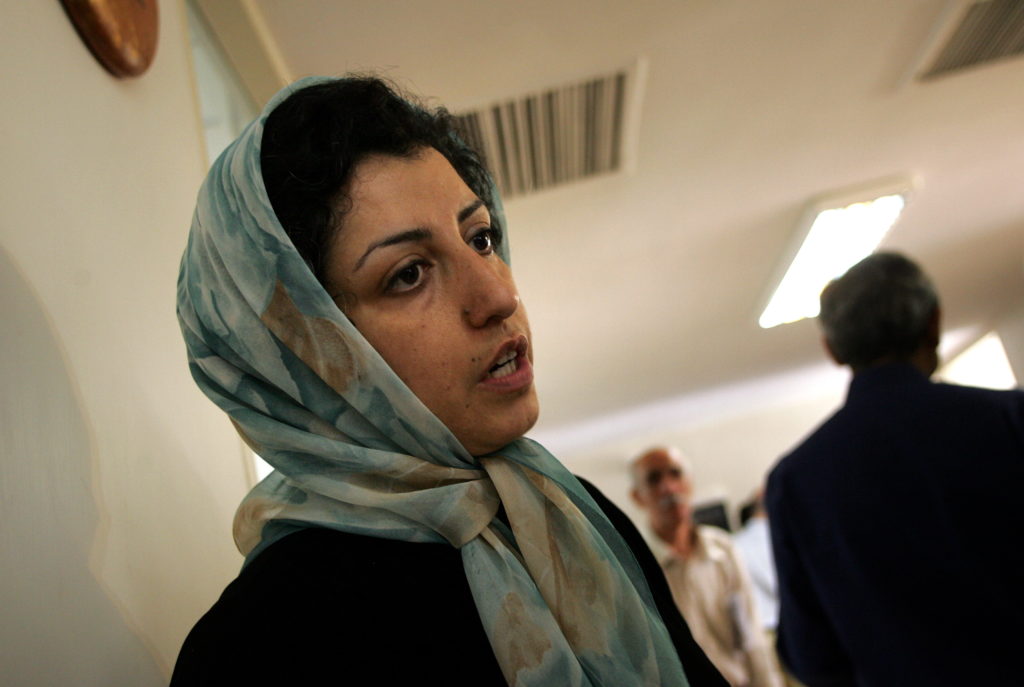
Mohammadi, 53, concluded a week-long hunger strike Sunday that she initiated February 2 to protest detention conditions and restrictions preventing telephone communication with legal counsel and family members, the Narges Foundation announced in a statement. The activist informed her attorney Mostafa Nili during a Sunday phone call from prison that she received notification of her sentence Saturday.
“She has been sentenced to six years in prison for gathering and collusion to commit crimes,” Nili disclosed to AFP news agency, detailing the primary conviction underlying the extended imprisonment.
Authorities additionally handed Mohammadi a one-and-a-half-year prison term for propaganda activities and ordered two years of internal exile to Khosf city in the eastern province of South Khorasan, the lawyer explained. She also faces a two-year prohibition on departing the country following completion of her sentences.
Nili emphasized that the verdict was not final and could be contested through appellate procedures, expressing optimism that judicial review might enable Mohammadi’s temporary “release on bail to receive treatment” given her deteriorating medical condition.
“Narges Mohammadi ended her hunger strike today on its 6th day, while reports indicate her physical condition is deeply alarming,” the foundation stated, conveying profound concern about the activist’s health status following the prolonged food refusal.
Mohammadi informed Nili that prison authorities transferred her to a hospital just three days earlier “due to her deteriorating health,” the foundation disclosed. “However, she was returned to the Ministry of Intelligence’s security detention centre in Mashhad before completing her treatment,” the organization added, characterizing the premature return as jeopardizing her survival.
“Her continued detention is life threatening and a violation of human rights laws,” the foundation declared, appealing to international human rights mechanisms to intervene on Mohammadi’s behalf.
Mohammadi became the second Iranian woman to capture the Nobel Peace Prize when she received the 2023 honor, following Shirin Ebadi who earned the distinction in 2003 for democracy and human rights promotion efforts. The Nobel Committee characterized Mohammadi’s two-decade struggle for women’s rights as establishing her as a freedom symbol, recognizing sustained activism despite repeated imprisonment and persecution.
A distinguished writer and journalist, Mohammadi serves as deputy director of the Defenders of Human Rights Center, an organization maintaining long-standing commitment to defending political prisoners and advancing comprehensive human rights reforms throughout Iran. Beyond gender equality advocacy, she campaigns vigorously against capital punishment and governmental corruption that undermines rule of law.
Mohammadi was apprehended December 12 after publicly denouncing the suspicious death of attorney Khosrow Alikordi, a 46-year-old Iranian lawyer and human rights advocate based in Mashhad. Prosecutor Hasan Hematifar told reporters at that time that Mohammadi delivered provocative remarks at Alikordi’s memorial ceremony in the northeastern city and encouraged attendees “to chant norm-breaking slogans” and “disturb the peace.”
Video documentation from the demonstration captured Mohammadi shouting and demanding justice for Alikordi and others whose deaths under questionable circumstances have generated suspicion of state involvement. Her willingness to publicly challenge official narratives at a memorial service demonstrates the confrontational activism that has repeatedly resulted in criminal prosecution.
The December arrest came after Mohammadi received a medical furlough in December 2024 due to serious health concerns. While the temporary release was initially authorized for only three weeks, Mohammadi’s time outside prison lengthened, possibly as activists and Western governments pressured Iranian authorities to maintain her freedom. She remained at liberty even during the 12-day June war between Iran and Israel that threatened regional conflagration.
Mohammadi continued activism throughout her temporary release through public protests and international media appearances, including demonstrating in front of Tehran’s notorious Evin prison where she had been detained. This brazen defiance of authorities who could revoke her furlough at any moment underscored her commitment to human rights advocacy regardless of personal consequences.
Prior to the December arrest, Mohammadi was serving 13 years and nine months on charges of collusion against state security and propaganda against Iran’s government. She publicly supported nationwide protests sparked by 22-year-old Mahsa Amini’s September 2022 death in morality police custody, demonstrations that witnessed women openly defying governmental authority by removing mandatory hijab coverings in public spaces.
Mohammadi suffered multiple cardiac arrests while imprisoned before undergoing emergency surgery in 2022, her supporters maintain. Her attorney revealed in late 2024 that physicians discovered a bone lesion initially feared cancerous that subsequently underwent surgical removal. These medical crises underscore physical toll that prolonged imprisonment under harsh conditions has exacted on the activist’s health.
“Considering her illnesses, it is expected that she will be temporarily released on bail so that she can receive treatment,” Nili wrote, appealing to authorities to prioritize medical humanitarian concerns over punitive objectives.
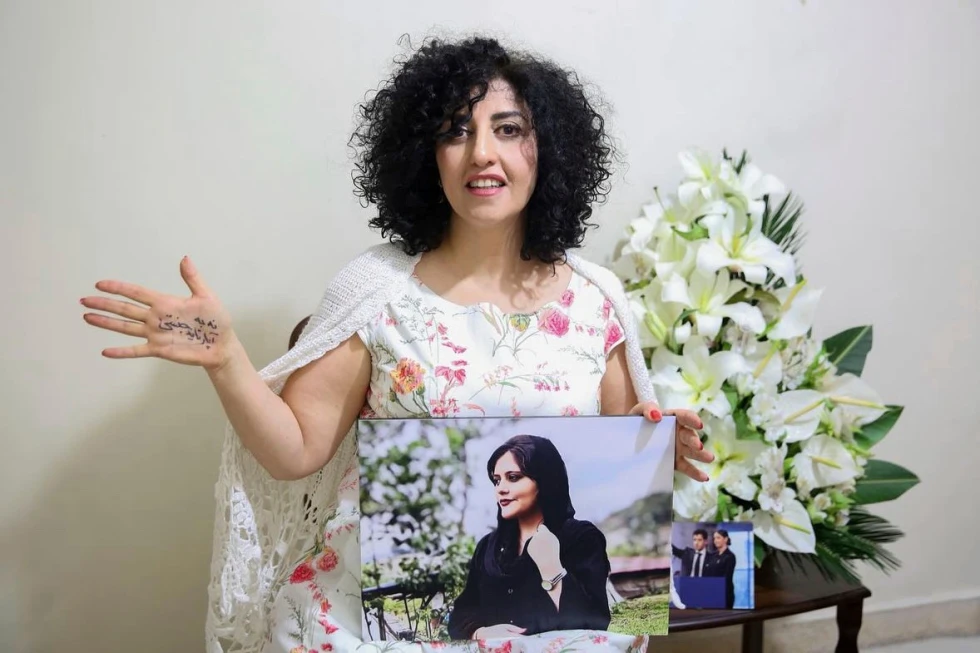
However, Iranian officials have signaled increasingly rigid positions against all dissent following the Amini protests that represented the most significant challenge to the Islamic Republic since its 1979 establishment. Speaking Sunday, Iranian judiciary chief Gholamhossein Mohseni-Ejei delivered comments suggesting harsh prison sentences awaited many opposition figures.
“Look at some individuals who once were with the revolution and accompanied the revolution,” Mohseni-Ejei stated. “Today, what they are saying, what they are writing, what statements they issue, they are unfortunate, they are forlorn (and) they will face damage.”
These ominous warnings indicate that authorities view even formerly supportive voices who have expressed criticism as targets for prosecution, dramatically expanding the definition of punishable dissent beyond traditional opposition activists.
The Mohammadi sentencing coincides with Iranian diplomatic efforts to negotiate with the United States regarding Tehran’s nuclear program to forestall threatened military strikes by President Donald Trump, who bombed Iranian atomic facilities in June during the Iran-Israel conflict. Foreign Minister Abbas Araghchi signaled Sunday that Iran would maintain its position demanding ability to enrich uranium—a central point of contention with the Trump administration.
Speaking to diplomats at a Tehran summit, Araghchi asserted that Iran’s strength derives from its capacity to “say no to the great powers,” adopting a maximalist negotiating stance immediately following discussions in Oman with American representatives.
“I believe the secret of the Islamic Republic of Iran’s power lies in its ability to stand against bullying, domination and pressures from others,” Araghchi declared. “They fear our atomic bomb, while we are not pursuing an atomic bomb. Our atomic bomb is the power to say no to the great powers. The secret of the Islamic Republic’s power is in the power to say no to the powers.”
Araghchi’s deliberate invocation of an “atomic bomb” as rhetorical device likely constituted calculated messaging. While Iran has consistently maintained its nuclear program serves peaceful purposes, Western governments and the International Atomic Energy Agency assert Tehran operated an organized military program pursuing weapons capability until 2003.
Iran has been enriching uranium to 60 percent purity—a short technical step from weapons-grade 90 percent levels—making it the only non-weapons state achieving such advanced enrichment. Iranian officials in recent years have increasingly threatened that the Islamic Republic could pursue nuclear weapons development, even while diplomats reference Supreme Leader Ayatollah Ali Khamenei’s religious edict prohibiting such weapons as binding constraint.
President Masoud Pezeshkian, who authorized Araghchi to pursue American dialogue after likely obtaining Khamenei’s approval, characterized Friday’s Oman talks as “a step forward” via social media platform X on Sunday.
“The Iran-U.S. talks, held through the follow-up efforts of friendly governments in the region, were a step forward,” Pezeshkian wrote. “Dialogue has always been our strategy for peaceful resolution. … The Iranian nation has always responded to respect with respect, but it does not tolerate the language of force.”
The timing and location of potential second-round negotiations remain unclear. Trump offered minimal details following Friday’s discussions but assessed: “Iran looks like they want to make a deal very badly — as they should.”
Israeli Prime Minister Benjamin Netanyahu is expected to travel to Washington this week, with Iran anticipated as the predominant discussion subject, his office disclosed. The United States has deployed aircraft carrier USS Abraham Lincoln along with supporting vessels and warplanes to the Middle East to pressure Iran toward agreement while positioning military assets for potential strikes should Trump authorize action.
The juxtaposition of Mohammadi’s harsh sentencing with ongoing nuclear diplomacy reveals the Iranian government’s calculation that domestic repression and international negotiation constitute complementary rather than contradictory strategies. By demonstrating unwillingness to tolerate internal dissent while simultaneously engaging external powers, Tehran signals that foreign pressure will not compel liberalization of domestic policies.
For international human rights advocates and Western governments that celebrated Mohammadi’s 2023 Nobel Prize as recognition of courageous activism, the additional seven-year sentence represents a profound setback and challenges assumptions that global attention provides meaningful protection for imprisoned activists. The Nobel Committee’s honor evidently did not deter Iranian authorities from continued prosecution and harsh sentencing.
The case illuminates fundamental tensions between Iran’s theocratic governance structure and universal human rights principles. Mohammadi’s advocacy for women’s rights, opposition to capital punishment, and demands for governmental accountability directly challenge pillars of the Islamic Republic’s political and social order, making her activism particularly threatening to authorities.
As Mohammadi begins serving additional years in detention under alarming medical circumstances, her plight will continue testing international community resolve to pressure Iran regarding human rights alongside nuclear negotiations. Whether Western powers maintain focus on individual activists’ fates while pursuing strategic agreements remains uncertain as geopolitical calculations compete with humanitarian concerns.
Aljazeera/AP





