

A 25-year-old man admitted guilt Monday to attempted murder charges stemming from a brutal stabbing attack on a uniformed British Army officer outside military barracks in Kent, concluding a case delayed repeatedly due to psychiatric concerns about the defendant’s mental fitness to enter pleas.
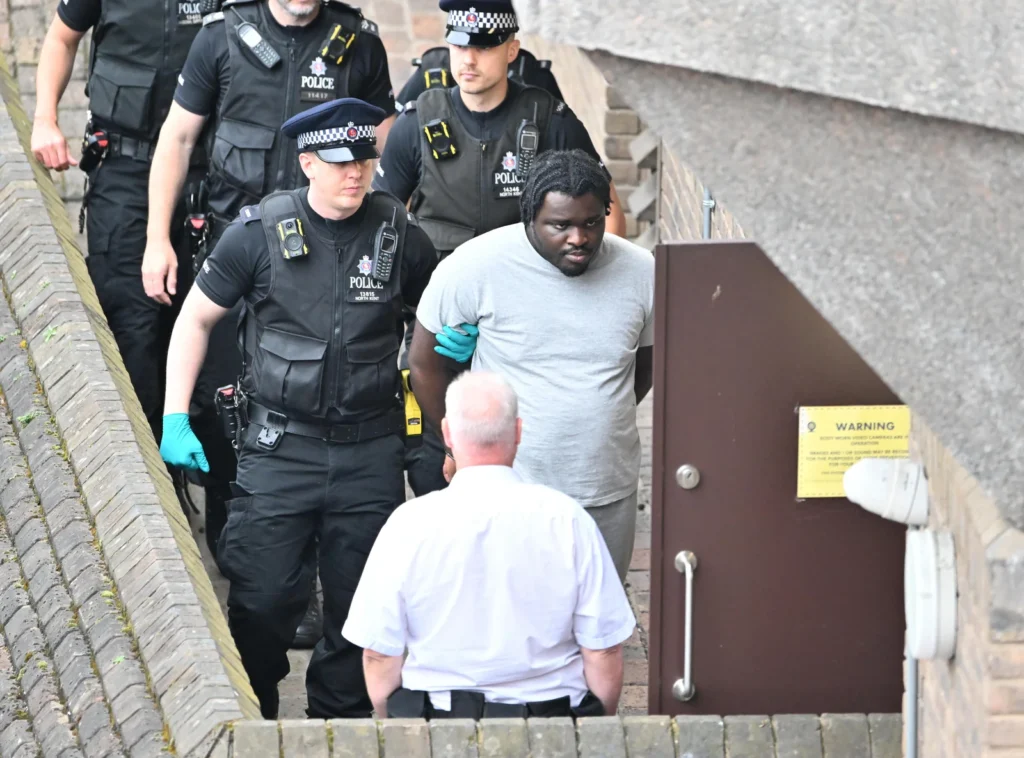
Anthony Esan, appearing via video link from the high-security psychiatric hospital Broadmoor in Berkshire while wearing a blue and white jumper, pleaded guilty to stabbing 47-year-old Lieutenant Colonel Mark Teeton in July 2024. The defendant, who immigrated to London from Nigeria in 2009 at age nine, also entered guilty pleas to two counts of possession of bladed weapons.
Maidstone Crown Court scheduled sentencing for February 9 in proceedings expected to extend three days as the tribunal weighs complex questions of culpability and appropriate disposal given Esan’s documented mental health struggles. Prosecutor Alison Morgan KC characterized the matter as “plainly a sentencing exercise with some measure of complexity,” noting that options include a discretionary life sentence, determinate prison term or mental health disposal.
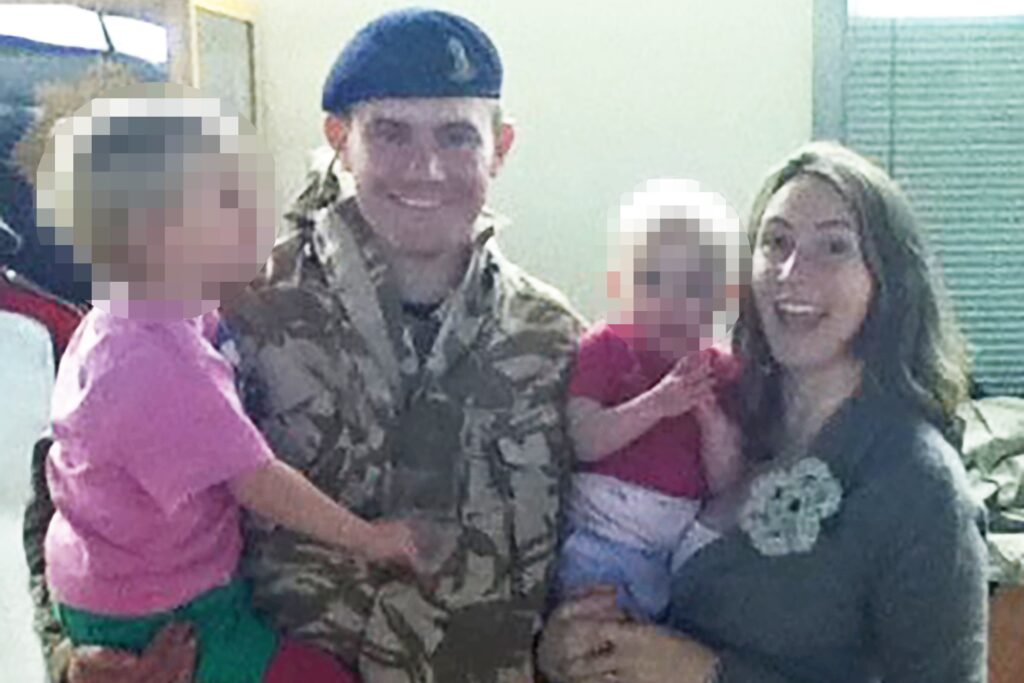
Lt-Col Teeton, who dedicated 25 years to British Army service including two tours each in Iraq and Afghanistan, was attacked mere yards from his residence near Brompton Barracks on July 23, 2024. The chief instructor at the British Army’s school of military engineering sustained serious injuries described as life-threatening before medical intervention at a nearby hospital, where he underwent multiple surgeries addressing wounds to his neck, chest, abdomen and groin.
The father of two teenage daughters appeared in court alongside his wife Eileen to witness Esan’s guilty pleas, providing closure to a traumatic ordeal that profoundly altered their family’s sense of security. Lt-Col Teeton was discharged from hospital several weeks following the attack but continues receiving rehabilitation for lasting physical effects.
Prosecutor Rajni Prashar disclosed at a previous Medway Magistrates’ Court hearing in 2024 that a member of the public telephoned emergency services to report a male had been stabbed, subsequently clarifying “the victim was a soldier in uniform.” Witnesses observed a man “running up behind” the army officer before he “pulled the soldier to the ground” and stabbed him “repeatedly” prior to fleeing on a moped.
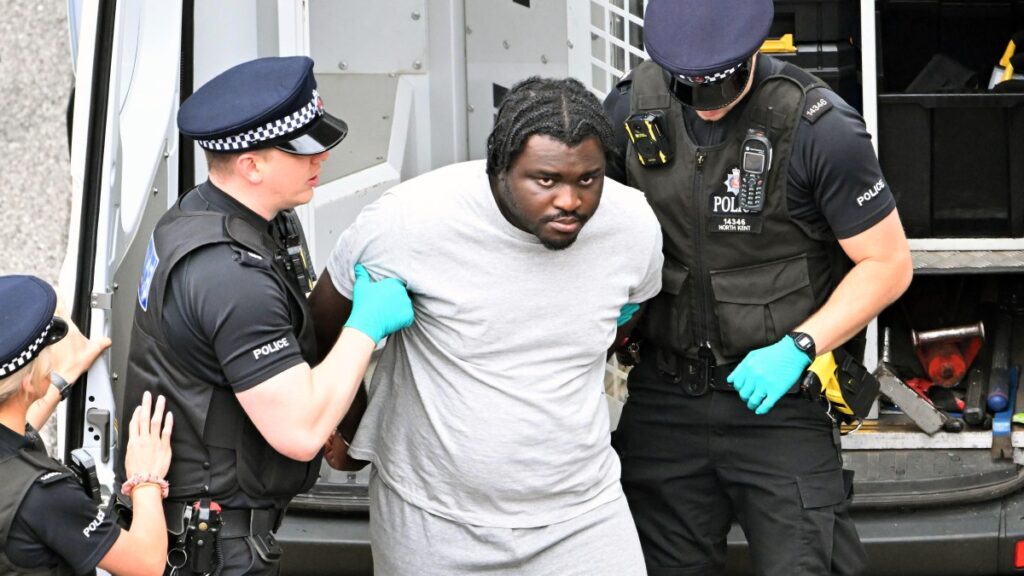
Two knives were abandoned at the crime scene, with investigators recovering three additional blades stored on the motorcycle. Esan was apprehended near his Rochester home just 25 minutes after the assault, his hands visibly stained with blood.
The case experienced repeated postponements due to concerns about the defendant’s mental health and capacity to participate meaningfully in legal proceedings. However, leading defense barrister Richard Barraclough KC confirmed this morning that the defense was “satisfied he has the capacity to plead to the indictment and we expect he will plead guilty to the entire indictment when it is put to him.”
Video documentation presented to the court captured the attack’s horrifying progression. Footage shows Esan parking his moped near Lt-Col Teeton’s home before approaching the officer walking past and requesting to use his telephone, claiming his vehicle had broken down. As Teeton responded, Esan launched the assault, stabbing him repeatedly.
Dashboard camera video from a passing vehicle recorded the attack unfolding in the roadway. Esan is visible stabbing Lt-Col Teeton, who stumbles, regains footing and attempts escape in the opposite direction. The assailant pursues and continues stabbing until Eileen Teeton, alerted by disturbance sounds in the street, rushes from their home and physically drags the attacker off her wounded husband.
“Mrs Teeton came out of the home address, having heard shouts for help, and the defendant’s attack was trained on Mr Teeton. Mrs Teeton only realised it was her husband being attacked when she got right beside the defendant,” Morgan explained to the court, crediting the wife’s intervention with potentially saving her husband’s life.
A doorbell recording captured Eileen Teeton’s piercing screams as she confronted the assailant. “Get off him. What are you doing? What the f*** are you doing?” she demanded while pushing Esan away. The delivery driver briefly locked eyes with her before resuming his attack on the soldier. One witness claimed Esan ran his finger along the blade before licking it as his victim lay bleeding.
“His wife tried pulling the attacker off. [Esan] didn’t want her though, he just wanted the soldier,” a witness observed. “Nobody else in the vicinity was in danger. The only person he was targeting was the soldier he attacked.”
Lt-Col Teeton disclosed in a victim impact statement read in court that medical personnel characterized his survival as miraculous given the severity and location of his injuries. The statement detailed internal damage to his voice box, right lung, liver and abdominal wall alongside external wounds to neck, chest, abdomen and groin.
“I did not imagine for a moment that I would be attacked in such a way on the streets of Britain, in a place where I felt safe. The consequences have been massive,” he expressed, reflecting on a 26-year military career spanning combat deployments and international training assignments.
“The fine line between life and death was highlighted by the attack and murder of four girls in Southport, the stabbing of an Australian girl in London and a little-reported fatal stabbing of a bus driver in London, all of which occurred during the first three weeks following the attack,” he continued. “I sometimes reflect on this fine line and probably will every time another knife attack occurs in the UK.”
The officer acknowledged being unconscious for substantial portions of the assault, characterizing this as a blessing “as it means that I am unable to remember a large part of being attacked.” He credited his wife and strangers who intervened with demonstrating extraordinary courage. “They are all heroes, and I am forever in gratitude to them,” he declared while visibly emotional.
Eileen Teeton’s victim impact statement described experiencing “a wave of terror” after rushing to push Esan away from the soldier lying on the ground, a scene she said she could “not stand by” and watch unfold. “He chose not to come after me and, as I became frozen, I watched horrified by his continued savage attack, and realised it was my husband on the ground and he was carving at his face and neck,” she recounted.
During hospital visits, her husband revealed his understanding of the attack’s intent. “Do the people at work know what he tried to do to me?” he asked. When she inquired what the attacker attempted, he replied: “Cut my head off! Like Lee Rigby.”
The reference invokes the 2013 murder of Fusilier Lee Rigby by Islamist terrorists near the Royal Artillery Barracks in Woolwich—an incident that shocked Britain and became synonymous with targeted attacks on uniformed military personnel. Court testimony revealed that days before assaulting Lt-Col Teeton, Esan searched “Woolwich soldier murdered” on the internet, demonstrating premeditation and awareness of the Rigby precedent.
Esan also sought information about Enoch Powell and a terrorist attack in West Africa, while viewing TikTok videos depicting knife attacks in other countries. He conducted reconnaissance of the area one day before the assault, suggesting calculated planning rather than impulsive violence.
The attack bore disturbing similarities to the Rigby murder, characterized as a “deliberate attack on a serving member of the armed forces” targeting a soldier specifically because of his military uniform. This pattern distinguishes the assault from random violence, positioning it within a category of ideologically or symbolically motivated attacks on military personnel.
Esan’s background reveals a trajectory marked by mental health struggles and frustrated military aspirations. Born in Nigeria, he relocated to the UK in 2009 with his mother and two elder siblings. His mother worked multiple jobs including as a cleaner, frequently departing early morning and returning late evening in hopes her sacrifices would provide her children with opportunities for success.
Neighbors in Rotherhithe, southeast London, where Esan spent formative years, recalled a reclusive child with mental health difficulties heavily reliant on his mother and frequently observed jogging around the local area. “He was quiet. He had just come to London. It was a massive culture shock for him. His mother was a strict Christian, so she would always do her best to keep him straight and narrow,” a relative disclosed to The Times.
During this period, Esan played football in the same group as Callum Wheeler, who lived a street away and would later receive a life sentence for murdering Police Community Support Officer Julia James in Kent in 2021. One resident who participated in football with both described Esan as a “calm” and “decent” forward with a heavy Nigerian accent. “He was super quiet but definitely louder than Callum,” the resident observed.
Esan struggled with social interaction and remained heavily dependent on his mother. “We thought he had mental health problems,” a neighbor confirmed. “Their mother always looked after him and I remember his mum telling him all the time what he needed to do. He was always looking down. He’d never look into your eyes even when he spoke to people. He had difficulties communicating with people.”
Yahya Puladi, 52, described Esan as an unnervingly quiet regular customer at his chicken shop. “He wasn’t all there. He was only about 30 per cent there mentally,” Puladi assessed. “He just used to sit there and barely anyone could get a reaction out of him.”
Esan relocated to Kent following his stepfather David Fairfield’s death from lung cancer in 2013. His mental health deteriorated subsequently, he reeked of cannabis odor and was frequently observed purchasing rolling papers, residents disclosed.
By 2023, Esan’s mother began flagging concerns about her son’s behavior to police and mental health services. Esan was receiving community treatment from Greenwich mental health services following a psychosis diagnosis. Police characterized it as “organic psychosis”—a state caused by medical illnesses rather than substance abuse.
The warnings eerily paralleled Wheeler, the “highly sexualised” recluse whose father claimed pleas for help were “ignored by mental health teams for seven years” before his son’s fatal attack on PCSO James.
Esan’s condition deteriorated in months preceding the attack. A source disclosed that he stopped engaging with family members, who believed he had ceased taking prescribed medication. He had previously been arrested for drugs offenses, though no further action was taken due to insufficient evidence, and for driving violations.
Court testimony revealed Esan made several unsuccessful attempts to join the British Army in the year before the attack. In 2020, he was rejected due to eczema and a nut allergy. That same year, he was referred to mental health services as he appeared unwell and reported auditory hallucinations.
Esan applied to the Army for a second time in April 2021 but was rejected, with medical reasons cited as “psychotic disorder” and eczema. His subsequent appeal was denied, and he initiated another application in June 2021, which was abandoned. In March 2023, Esan commenced yet another application but withdrew for “health reasons” without completing the process.
The court heard that he was discharged from Medway Early Intervention Services to the Medway Low-Intensity Support Community Mental Health Team on June 21, 2024. He attended an appointment with the same service on July 19, 2024, having purchased knives from Argos in Strood that day.
A care worker noted “no obvious signs of psychosis” and disclosed that Esan requested cessation of his antipsychotic medication administered as long-lasting injectable, seeking to switch to tablet form. The care worker rejected this request and administered the drug by injection.
On July 19, four days before the attack, Esan purchased a five-knife set from the Argos retail location. CCTV captured him at 4:31 p.m. on July 23 riding his red moped in the area where the attack would later unfold. Just over an hour later, Esan—dressed in a navy bomber jacket, grey T-shirt and black ski mask—stopped his motorcycle and initiated contact with Lt-Col Teeton.
Following the assault, Esan fled the scene, abandoning a shoe and the two kitchen knives, each featuring 19-centimeter blades. Officers traced the moped to Esan’s Rochester home address, just two and a half miles distant. His arrest occurred one hour after the attack, with officers discovering three additional knives in the motorcycle’s pannier from the pack purchased days earlier.
On multiple occasions while in police custody, Esan inquired if he was “on the news.” When charged with attempted murder, he asked: “Am I free now?”—questions suggesting disconnection from the gravity of his actions and potential delusional thinking.
Lt-Col Teeton previously expressed gratitude for the “overwhelming” generosity of strangers who contributed to his recovery. A GoFundMe page raised nearly £50,000 to support him and his family. “We took strength and comfort from all the messages when we had just been through the most horrific experience,” he acknowledged. “Our family cannot thank those people enough.”
Residents described Teeton as a “well-liked” and “easygoing” officer from a distinguished military family. They have not seen the officer and his family around their home since the attack, suggesting the trauma has prompted relocation or extended absence from the area.
Investigators have not identified a definitive motive for the attack beyond Esan’s targeting of a uniformed soldier, though they believe he traveled to the area specifically because he knew military personnel would be present. Esan and Teeton had no prior acquaintance.
The case raises troubling questions about mental health system capacity to identify and manage individuals experiencing psychotic symptoms who pose potential violence risks. Esan’s repeated military recruitment attempts despite documented psychotic disorder suggest determination to engage with military institutions, whether through legitimate service or symbolic violence against uniformed personnel.
The February 9 sentencing will determine whether Esan receives life imprisonment, a determinate sentence or mental health disposal to a secure psychiatric facility. His current placement at Broadmoor—Britain’s highest-security psychiatric hospital housing individuals deemed both mentally ill and dangerous—suggests expert assessment concludes he requires psychiatric treatment alongside secure confinement.
TheTimes/GBNews





