

(AP)- A passenger ferry carrying dozens of people overturned on the Nile River in northern Sudan on Wednesday, leaving at least 15 people dead and several others missing, a medical monitoring group confirmed.
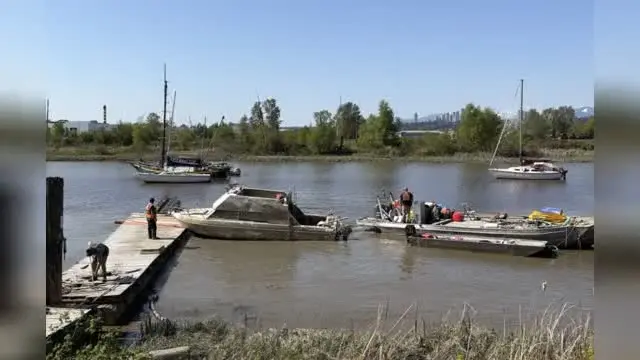
The vessel sank in the Shendi district of Nile River province, an area north of the capital, Khartoum, as it transported at least 27 passengers, including women and children. The Sudan Doctors Network, a medical organization that monitors casualties linked to Sudan’s ongoing conflict, indicated that recovery teams had retrieved 15 bodies from the river.
The group further indicated that at least six people survived the accident, while search operations continued for others believed to be missing. Residents and volunteer rescuers joined emergency teams along the riverbanks in an effort to locate the unaccounted passengers.
The Sudan Doctors Network appealed to authorities to dispatch specialized rescue units equipped with proper diving gear and search tools to accelerate recovery efforts, emphasizing the urgency of coordinated intervention.
Details surrounding the cause of the capsizing were not immediately available. Local officials had not issued a comprehensive statement by late Wednesday regarding the circumstances leading to the incident, including whether the vessel was overloaded or whether mechanical failure or strong currents contributed to the disaster.
River transport remains a vital means of travel across large parts of Sudan, particularly in rural and semi-urban regions where infrastructure has been degraded by years of economic hardship and armed conflict. In many communities, ferries provide the only practical route across the Nile and its tributaries, linking markets, schools and medical facilities.
Fatal boat accidents are not uncommon in Sudan and other African nations where aging vessels, minimal regulatory enforcement and overcrowding frequently combine to create hazardous conditions. Safety standards are often loosely applied, and passengers sometimes board boats without life jackets or adequate emergency provisions.
Wednesday’s tragedy unfolded against the backdrop of Sudan’s protracted internal conflict, which has strained public institutions and weakened oversight across key sectors, including transportation and emergency response. The Sudan Doctors Network has emerged as one of the few independent groups consistently documenting casualties and humanitarian developments amid limited access to official data.
The Nile River, one of the world’s longest waterways, serves as a lifeline for millions in Sudan. It supports agriculture, trade and daily commuting. However, the river’s significance also brings risk, particularly in areas where ferry services operate without stringent safety inspections or modern navigation systems.
Residents in the Shendi district described scenes of panic as word spread that the vessel had gone down. Families gathered along the banks awaiting updates as divers and volunteers searched the waters. With limited equipment available locally, rescue efforts often depend heavily on community participation.
The call by the Sudan Doctors Network for specialized rescue teams underscores broader concerns about Sudan’s emergency preparedness capacity. Prolonged instability and resource shortages have hindered investment in disaster response infrastructure. In many regions, first responders lack modern boats, sonar devices or trained divers capable of conducting swift underwater searches.
While authorities have not formally attributed a cause to the capsizing, analysts note that overcrowding frequently plays a role in similar incidents across the region. Economic pressures often compel ferry operators to maximize passenger loads, sometimes exceeding recommended capacity limits. Combined with fluctuating water levels and unpredictable currents, such conditions can quickly become deadly.
The humanitarian dimension of the tragedy is compounded by Sudan’s fragile health system. Hospitals in parts of the country continue to grapple with shortages of medical supplies and personnel, a situation worsened by ongoing violence between rival military factions. Survivors of the accident may face challenges accessing sustained medical and psychological support.
Beyond the immediate loss of life, the incident highlights the broader infrastructure vulnerabilities confronting Sudan. Years of political upheaval have left regulatory institutions under-resourced. River transportation oversight, in particular, has received limited attention amid competing national priorities.
International maritime and river safety experts have long emphasized the need for improved vessel inspections, mandatory life jacket distribution and stricter passenger capacity enforcement to reduce fatalities. In countries where waterways serve as primary transportation corridors, modest investments in safety training and equipment can significantly lower accident rates.
For families affected by Wednesday’s disaster, however, such reforms come too late. As search operations continue, community leaders in Shendi have urged both national and provincial authorities to launch a thorough inquiry into the circumstances surrounding the sinking.
The Sudan Doctors Network reiterated its appeal for coordinated rescue deployment, warning that delays could reduce the chances of recovering missing passengers. The group’s involvement reflects the growing role of civil society organizations in filling information gaps during Sudan’s ongoing crisis.
The capsizing serves as a stark reminder of the risks embedded in everyday travel for many Sudanese citizens. As long as river crossings remain essential and safety enforcement remains inconsistent, similar tragedies may continue to occur.
In the aftermath of the accident, attention is likely to focus not only on the immediate recovery operation but also on systemic reforms aimed at preventing future losses along the Nile. Whether those reforms materialize will depend largely on political stability and the availability of resources in a nation already grappling with profound challenges.
For now, residents of Shendi await further developments as rescue teams press on along the riverbanks, searching for the missing and mourning those whose lives were cut short in the waters of the Nile.
AP





