

Independent journalist Don Lemon is scheduled to appear in federal court Friday for arraignment on charges stemming from a protest at a Minnesota church that unfolded during heightened tensions over the Trump administration’s immigration enforcement campaign.
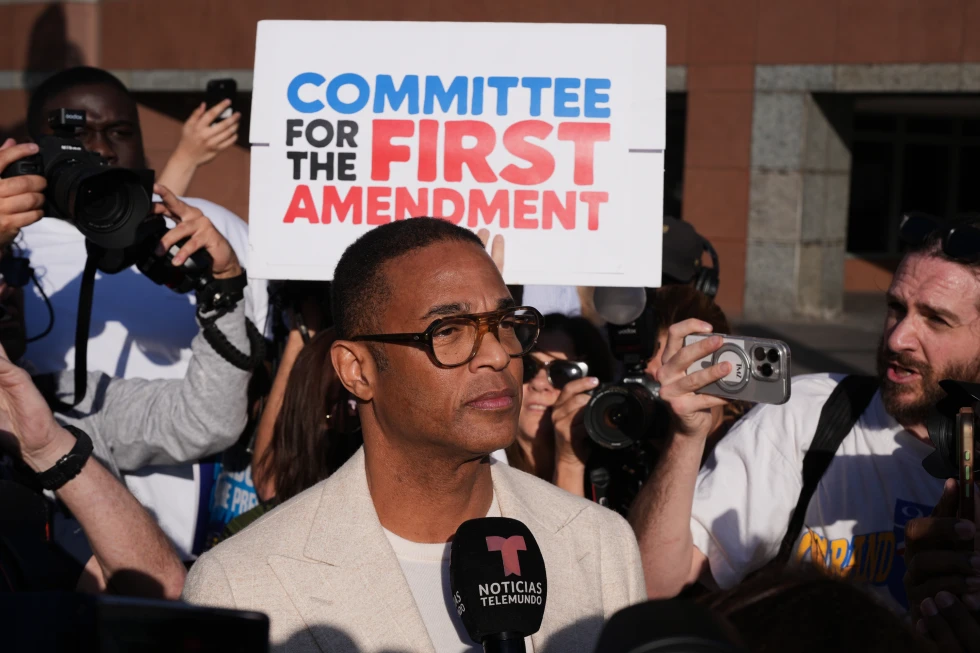
Lemon, the former CNN anchor who now hosts an independent livestream news program, was indicted along with four others for their alleged involvement in disrupting a January worship service at Cities Church in St. Paul. Federal prosecutors allege the defendants interfered with religious services while an Immigration and Customs Enforcement official — who serves as a pastor there — was presiding.
Also slated for arraignment is civil rights attorney Nekima Levy Armstrong, whose arrest gained national attention after an altered image circulated on an official White House social media account purporting to show her crying. The image was later identified as digitally manipulated, one of several AI-altered visuals that have spread online since federal officers fatally shot Renee Good and Alex Pretti during enforcement operations in Minneapolis.
Arraignments in federal court typically involve the formal reading of charges, the entry of pleas and the scheduling of future proceedings. It was not immediately clear whether Lemon would attend in person or appear through counsel. His attorney, Joe Thompson, did not respond to inquiries seeking comment.
Two additional defendants, including independent journalist Georgia Fort, are scheduled to face arraignment next week. In total, nine individuals have been charged in connection with the protest.
Through prior counsel, Marilyn Bednarsk, Lemon signaled that he intends to contest the charges and enter a plea of not guilty. The indictment alleges violations of the federal Freedom of Access to Clinic Entrances Act, a 1994 statute that prohibits the use of force, threats or physical obstruction to interfere with individuals exercising their First Amendment right to worship at a place of religious assembly. Convictions under the statute can carry penalties of up to one year in prison and fines of up to $10,000.
The demonstration at Cities Church took place Jan. 18. Protesters interrupted the service with chants of “ICE out” and “Justice for Renee Good,” invoking the 37-year-old mother of three who was fatally shot by an ICE officer during a Minneapolis enforcement operation weeks earlier.
Lemon has maintained that he attended as a journalist covering the event for his livestream broadcast and was not affiliated with protest organizers.
“I have spent my entire career covering the news. I will not stop now,” Lemon said following his arrest. “There is no more important time than right now for a free and independent media that shines a light on the truth and holds those in power accountable.”
The protest drew swift condemnation from conservative religious leaders and political officials. White House press secretary Karoline Leavitt wrote on social media at the time that “President Trump will not tolerate the intimidation and harassment of Christians in their sacred places of worship.” Even some clergy critical of federal immigration tactics expressed unease about staging demonstrations inside sanctuaries.
The case unfolds against the broader backdrop of President Donald Trump’s immigration crackdown in Minnesota, where thousands of federal agents were deployed in what the Department of Homeland Security described as its largest enforcement operation to date. The surge led to more than 4,000 arrests, according to federal officials, and sparked widespread protests after the fatal shootings of Good and Pretti.
Joe Thompson, now part of Lemon’s defense team, recently resigned from the Minnesota U.S. Attorney’s Office. He had been leading complex investigations into public program fraud cases before stepping down. Several former prosecutors have left the office in recent weeks, citing disagreements over how the Justice Department handled aspects of the immigration surge and its response to the shootings.
The Trump administration has pointed to alleged fraud cases — many involving defendants from Minnesota’s Somali community — as part of its justification for intensifying immigration enforcement in the state.
The prosecution of Lemon and other defendants underscores the legal and constitutional tensions emerging from protests that blur the line between civil disobedience and protected journalistic activity. The Freedom of Access to Clinic Entrances Act, enacted primarily to safeguard abortion clinics and houses of worship from blockades or violence, is being applied here in a politically charged immigration context.
Legal scholars note that while the statute clearly protects worshippers from intimidation, cases involving journalists who claim they were present for coverage rather than participation can complicate prosecutions. The court will likely examine whether Lemon’s actions constituted active obstruction or fell within protected newsgathering.
The circulation of altered images of Armstrong adds another dimension, reflecting how digital misinformation can inflame already polarized debates. AI-manipulated content has increasingly accompanied high-profile arrests and protests, shaping public perception before facts are established in court.
Politically, the case may further entrench divisions. Supporters of the administration argue that places of worship must remain insulated from protest activity. Critics contend that houses of worship have historically served as venues for moral and political expression, particularly during civil rights struggles.
The Minnesota crackdown itself has already prompted national scrutiny, with an AP-NORC poll indicating that many Americans believe immigration enforcement has exceeded reasonable bounds. Legal proceedings tied to protests could become symbolic battlegrounds over the scope of dissent in the Trump era.
For Lemon, the arraignment marks a pivotal moment in his transition from network anchor to independent journalist operating in volatile political terrain. For federal authorities, the case represents a test of how aggressively to enforce statutes designed to protect religious freedom while navigating the constitutional protections afforded to speech and press.
As the court process begins, broader questions linger about the intersection of immigration policy, protest rights and media freedom — issues that are likely to reverberate well beyond Minnesota.





