

The U.S. Department of State has directed certain nonprofit public libraries across the country to stop processing passport applications, ending a service that many communities have relied upon for years and prompting bipartisan concern in Congress.
In notices issued beginning in late fall, the department informed not-for-profit libraries that they were no longer authorized to participate in the federal Passport Acceptance Facility program. The change took effect Friday, effectively barring affected libraries from continuing to collect passport applications and related fees.
According to The Associated Press, a department spokesperson explained that the action stems from federal statutes and regulations that “clearly prohibit non-governmental organizations” from collecting and retaining fees tied to passport applications. Libraries operated directly by municipal or county governments remain eligible to provide the service.
The spokesperson did not elaborate on why enforcement of the rule intensified now or specify the number of institutions affected. In a written statement, the department said its passport services network includes more than 7,500 acceptance facilities nationwide and that the libraries deemed ineligible account for less than 1% of that total.
Yet the scope of potential impact appears broader when viewed through the lens of library governance. The American Library Association estimates that roughly 1,400 mostly nonprofit public libraries could be affected, depending on how many currently offer passport processing. That figure represents about 15% of public libraries nationwide.
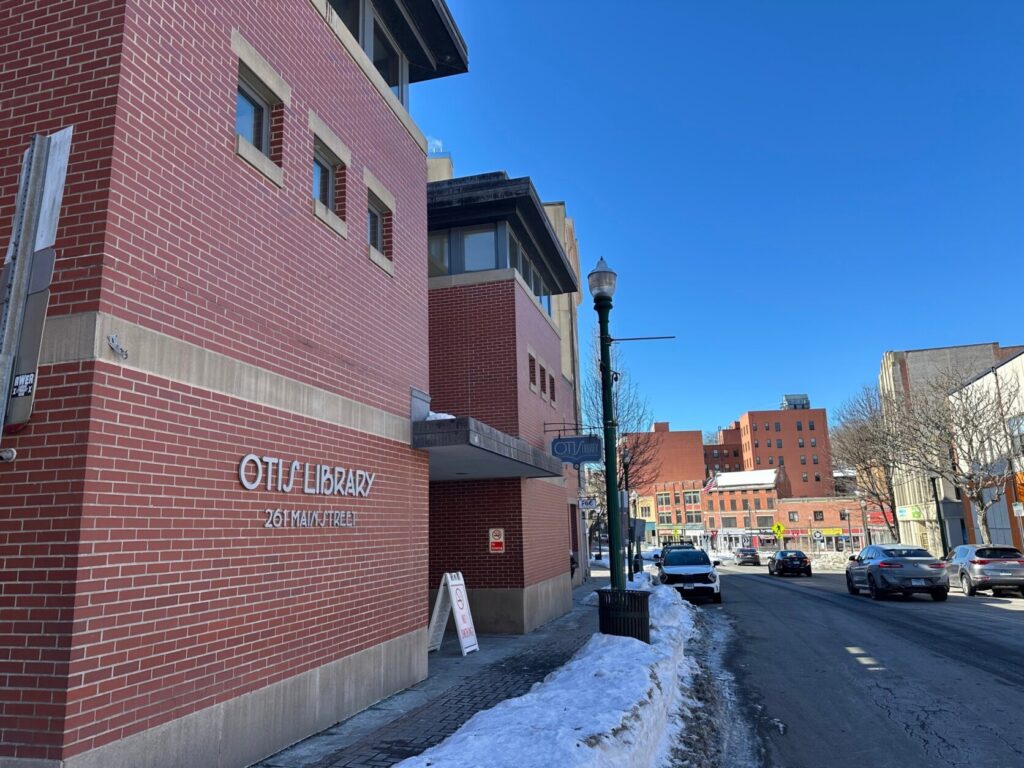
At the Otis Library in Norwich, Connecticut, passport services had been available for 18 years before staff received a cease-and-desist letter in November. Cathleen Special, the library’s executive director, said residents continue to call seeking appointments.
“Our community was so used to us offering this,” Special said, describing daily inquiries even after the service ended.
Members of Congress from Connecticut, Pennsylvania, New York, New Jersey and Maryland — spanning both parties — have urged the department to reconsider. In a letter sent this month to Secretary of State Marco Rubio, lawmakers requested that the existing arrangement remain in place until Congress can enact a permanent legislative fix.
They argued that libraries often serve as among the most accessible passport acceptance facilities, particularly for working families and residents of rural communities. With demand for passports climbing amid enforcement of Real ID requirements, they warned that limiting local options could force applicants to travel farther, take unpaid leave or delay obtaining travel documents.
The letter also referenced broader anxieties driving passport demand, including heightened immigration enforcement and concerns about documentation requirements for civic participation. Lawmakers contended that the change would be especially disruptive in states where many public libraries are organized as nonprofit entities rather than municipal departments.
Library governance varies widely by state. In Pennsylvania, approximately 85% of public libraries operate as nonprofit organizations rather than as arms of local government. The share is 56% in Maine, 54% in Rhode Island, 47% in New York and 46% in Connecticut, the American Library Association said.
In Pennsylvania, Democratic Rep. Madeleine Dean and Republican Rep. John Joyce have introduced bipartisan legislation to amend the Passport Act of 1920 to explicitly allow 501(c)(3) nonprofit public libraries to continue serving as passport acceptance facilities. A companion proposal has been introduced in the Senate.
Dean, who learned of the policy shift after a library in her district that had processed passports for two decades received notice, described the department’s interpretation of the statute as misguided. Joyce highlighted the implications in his largely rural district in south-central Pennsylvania, where the Marysville-Rye Library had been one of only two passport facilities serving Perry County’s 556 square miles. With the library’s removal from the program, the county courthouse now stands as the sole remaining option.
The State Department has emphasized that 99% of the U.S. population lives within 20 miles of a designated passport processing location, such as a post office or county clerk’s office. The agency indicated it would seek alternative eligible partners in areas where service gaps emerge.
But librarians say proximity alone does not capture the practical role libraries play. Special noted that the Norwich post office frequently directed residents to the library, particularly when appointments were needed outside regular business hours or when families required a more accommodating setting. Library staff, she added, often assisted applicants with language barriers and helped parents manage paperwork while children remained occupied.
“And now the burden falls on them to do all of it,” she said of the post office. “I don’t know how they’re keeping up, to be honest, because it was such a popular service with us.”
The dispute underscores the increasingly complex intersection of federal regulation and local service delivery. While the department’s legal rationale rests on longstanding statutory language, critics question why the rule is being enforced now after years of nonprofit library participation without apparent controversy.
The financial dimension is also significant. Passport processing fees have provided a modest but meaningful revenue stream for some libraries, helping to offset staffing and programming costs. In smaller communities, the loss of that income could compound budgetary pressures already facing public institutions.
At the same time, the department’s assertion that the ineligible libraries represent less than 1% of its national network suggests a limited administrative footprint. Whether that percentage translates into negligible real-world impact depends heavily on geography. In densely populated areas with multiple nearby facilities, alternatives may be plentiful. In rural counties, however, a single library’s withdrawal can materially reduce access.
The episode also highlights Congress’s role in clarifying statutory ambiguities. The Passport Act of 1920 predates modern library governance structures and the expansion of community-based passport services. Lawmakers now face a choice between reaffirming the department’s interpretation or modernizing the law to reflect contemporary practice.
As travel demand continues to rebound and identification requirements tighten, access to passport services has become more than a convenience; for some Americans, it is intertwined with employment, education and personal security considerations. Whether the current standoff yields legislative reform or a recalibrated enforcement approach may determine how communities navigate those pressures in the months ahead.
For now, nonprofit libraries that once helped residents navigate the passport process are left waiting — and so are many of the patrons who depended on them.
The Associated Press original





