

The Department of Justice delivered a contentious six-page letter to Congress Saturday listing hundreds of prominent figures mentioned in millions of documents related to convicted sex offender Jeffrey Epstein, immediately triggering bipartisan condemnation from lawmakers who accused Attorney General Pam Bondi’s department of deliberately obscuring genuine connections to the disgraced financier.
The catalog of “politically exposed persons” includes more than 300 names spanning presidents, business magnates, government officials, and cultural icons—many of whom appear to have no actual association with Epstein beyond incidental references in emails, news articles, or investigative materials. The indiscriminate compilation places deceased celebrities like Marilyn Monroe, who died when Epstein was nine years old, and singer Janis Joplin, who died in 1970 when Epstein was seventeen, on the same roster as individuals with documented ties to the convicted predator.
Deputy Attorney General Todd Blanche signed the letter addressed to senior members of the House and Senate Judiciary Committees, stating the department had “released ‘all records, documents, communications and investigative materials in possession of the Department’ that relate to” Epstein. The communication signals what the Justice Department characterizes as its final disclosure under the Epstein Files Transparency Act, legislation Congress passed compelling release of investigative materials.
CNN obtained a copy of the letter, which provides no contextual information distinguishing between individuals who maintained extensive direct contact with Epstein and those whose names appear merely because they were mentioned in tangential documents, press clippings, or routine law enforcement communications unrelated to Epstein’s criminal activities.
“Names appear in the files released under the Act in a wide variety of contexts,” the Justice Department letter acknowledges. “For example, some individuals had extensive direct email contact with Epstein or Maxwell while other individuals are mentioned only in a portion of a document (including press reporting) that on its face is unrelated to the Epstein and Maxwell matters.”
Representative Ro Khanna, a co-author of the transparency legislation, delivered scathing criticism of the Justice Department’s approach, characterizing it as a deliberate strategy to protect powerful individuals with genuine Epstein connections by diluting the list with irrelevant names.
“The DOJ is once again purposefully muddying the waters on who was a predator and who was mentioned in an email,” Khanna declared on social media platform X. “To have Janis Joplin, who died when Epstein was 17, in the same list as Larry Nassar, who went to prison for the sexual abuse of hundreds of young women and child pornography, with no clarification of how either was mentioned in the files is absurd.”
Khanna demanded the Justice Department “stop protecting predators” and release complete files with only survivor identities redacted, arguing the current approach serves to shield rather than expose those who enabled or participated in Epstein’s criminal enterprise.
Republican Representative Nancy Mace, a vocal advocate for Epstein’s victims, condemned the disclosure in a Saturday evening social media post, alleging “missing names on the list disclosed this evening.” Mace has emerged as one of Congress’s most persistent voices demanding comprehensive transparency around Epstein investigations and prosecution decisions.
The list includes numerous high-profile figures with previously documented associations with Epstein, including President Donald Trump, former President Bill Clinton, former Trump adviser Steve Bannon, former White House Counsel Kathy Ruemmler, and billionaire retail magnate Les Wexner. Trump maintained social connections with Epstein during the 1990s and early 2000s but has stated he severed contact before Epstein’s 2008 Florida conviction on solicitation charges.
However, the compilation also incorporates deceased cultural figures including Princess Diana, Elvis Presley, Michael Jackson, Cher, and Beyoncé—individuals whose inclusion appears to stem from their names appearing in emails, newsletters, or news articles within the vast document trove rather than any actual interaction with Epstein or involvement in his activities.
Current lawmakers also appear on the list because their names surfaced in Justice Department press briefings or FBI daily news summaries that happened to be included in the released files, despite having no connection to Epstein investigations. This inclusion of sitting members of Congress based on routine law enforcement communications further illustrates the list’s lack of discriminating criteria.
No individual listed beyond Epstein himself and his accomplice Ghislaine Maxwell has ever faced criminal charges connected to Epstein’s sex trafficking enterprise. Maxwell is currently serving a 20-year federal prison sentence following her 2021 conviction on charges including sex trafficking of minors and conspiracy.
The Justice Department defended its compilation approach by noting that Congress never defined what constitutes a “politically exposed person” in the transparency legislation, leaving the department to interpret the requirement broadly. This explanation has failed to satisfy lawmakers who authored the legislation with the explicit intent of exposing individuals who facilitated, enabled, or participated in Epstein’s crimes.
According to The Independent, lawmakers who championed the document release remain deeply dissatisfied with the Justice Department’s latest disclosure, believing officials are deliberately employing vague presentation to protect powerful figures with substantive Epstein connections. The bipartisan criticism suggests the controversy transcends typical partisan divisions, uniting progressive and conservative members around demands for genuine transparency.
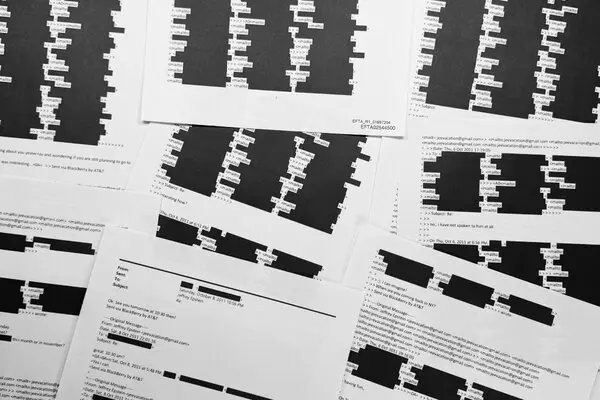
The department has faced sustained criticism from Epstein victims and congressional members since beginning file releases over what critics characterize as inconsistent redaction standards that appear to protect certain individuals while exposing others. Some lawmakers who reviewed unredacted document versions subsequently claimed the Justice Department was shielding powerful men, prompting them to publicly disclose additional names the department had obscured.
As in previous congressional correspondence, the Justice Department cited rationales for redacting information extending beyond statutory requirements in the transparency legislation. Officials invoked privileges protecting deliberative processes, attorney work product, and attorney-client communications—legal doctrines that, while established in other contexts, appear to contradict the transparency law’s intent.
The millions of released documents represent materials accumulated during federal investigations spanning years and involving multiple jurisdictions. Epstein’s 2008 Florida conviction resulted from a controversial non-prosecution agreement with federal prosecutors that allowed him to plead guilty to state solicitation charges while avoiding federal sex trafficking charges that could have resulted in life imprisonment.
That agreement, negotiated when Alexander Acosta served as U.S. Attorney for the Southern District of Florida, sparked outrage when details became public, ultimately forcing Acosta’s resignation as Trump’s Labor Secretary in 2019. The deal’s terms, which were concealed from victims in potential violation of the Crime Victims’ Rights Act, exemplify the preferential treatment wealthy, connected defendants sometimes receive within the criminal justice system.
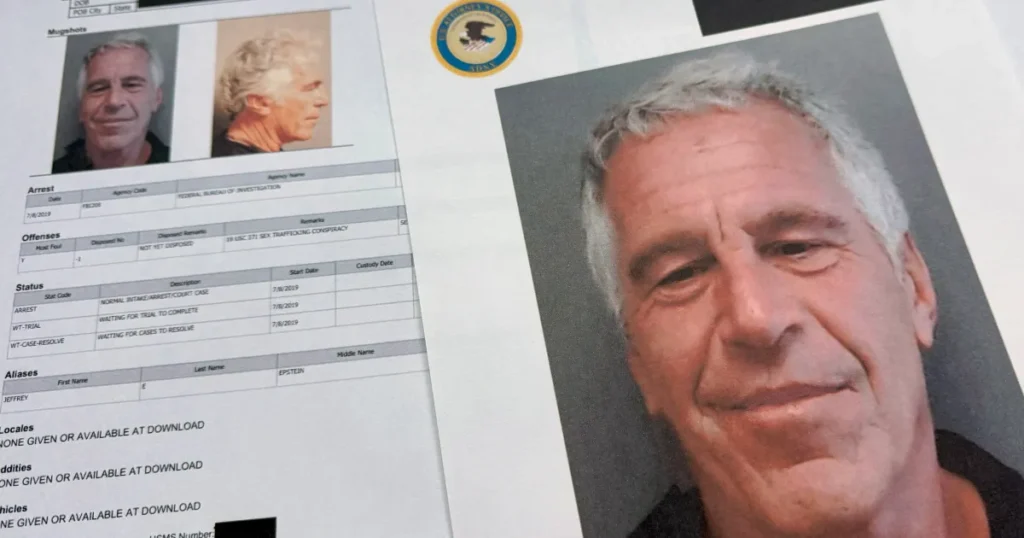
Epstein faced new federal sex trafficking charges in New York in July 2019 following investigative journalism that exposed the extent of his abuse and the protection he’d received from law enforcement. However, he died by apparent suicide in his Manhattan jail cell in August 2019 while awaiting trial, eliminating the possibility of courtroom testimony that might have implicated other individuals in his trafficking network.
His death under suspicious circumstances while housed in a federal detention facility sparked conspiracy theories and intensified demands for investigating others who may have participated in or enabled his crimes. The subsequent prosecution and conviction of Ghislaine Maxwell provided some measure of accountability but left unresolved questions about other potential conspirators.
Epstein’s extensive connections to political, business, and cultural elites—documented through flight logs, telephone records, and witness testimony—have fueled speculation about a broader network of powerful individuals who either participated in his crimes or maintained relationships despite awareness of his predatory behavior. However, distinguishing between social acquaintances and criminal accomplices requires evidence that remains largely sealed or unreleased.
The Justice Department’s document release, mandated by congressional legislation, was intended to provide transparency around federal investigative efforts and potentially expose individuals who escaped accountability. However, the indiscriminate listing of names without contextual information appears to have achieved the opposite effect, creating confusion that obscures rather than clarifies genuine Epstein associations.
Victims’ advocates have consistently demanded comprehensive disclosure of investigative materials, arguing that survivors deserve full knowledge of how federal authorities handled cases involving their abuse and why certain individuals avoided prosecution despite potential evidence of involvement. The advocacy groups view transparency not merely as historical accountability but as essential to preventing future institutional failures that enable predators.
The controversy illustrates broader tensions between legitimate privacy interests, investigative confidentiality requirements, and public demands for transparency in cases involving powerful figures. While protecting innocent individuals from unfounded association with criminal activities represents a valid concern, critics argue the Justice Department’s approach prioritizes protecting the reputations of elites over serving justice for victims.
As congressional committees review the Justice Department’s submission, lawmakers face decisions about whether to accept the disclosure as satisfying transparency legislation requirements or to pursue additional investigative avenues compelling more discriminating information release. Some members have suggested subpoenaing Justice Department officials to testify about redaction decisions and document handling.
The dispute may ultimately require judicial intervention if Congress determines the Justice Department failed to comply with statutory disclosure requirements. Courts would then balance transparency mandates against privacy interests and investigative privileges, potentially establishing precedents affecting future document releases in high-profile cases.
For Epstein’s victims, the document controversy represents another chapter in a lengthy struggle for accountability and recognition. Many survivors have criticized federal authorities for prioritizing institutional interests over victim rights throughout investigations and prosecutions, viewing the current disclosure dispute as consistent with patterns of official indifference to their suffering.
The Saturday letter’s release ensures the Epstein files will remain a subject of political controversy and public fascination, with each revelation prompting renewed speculation about who knew what and when. Whether the Justice Department’s approach represents appropriate balancing of competing interests or deliberate obfuscation protecting powerful wrongdoers will continue dividing lawmakers, victims’ advocates, and the public as the documents receive ongoing scrutiny.
CNN/Independent





