

LOS ANGELES (BN24) — Robert Duvall, the Oscar-winning actor whose understated intensity and commanding presence defined some of the most enduring films of the 20th century, has died at 95.
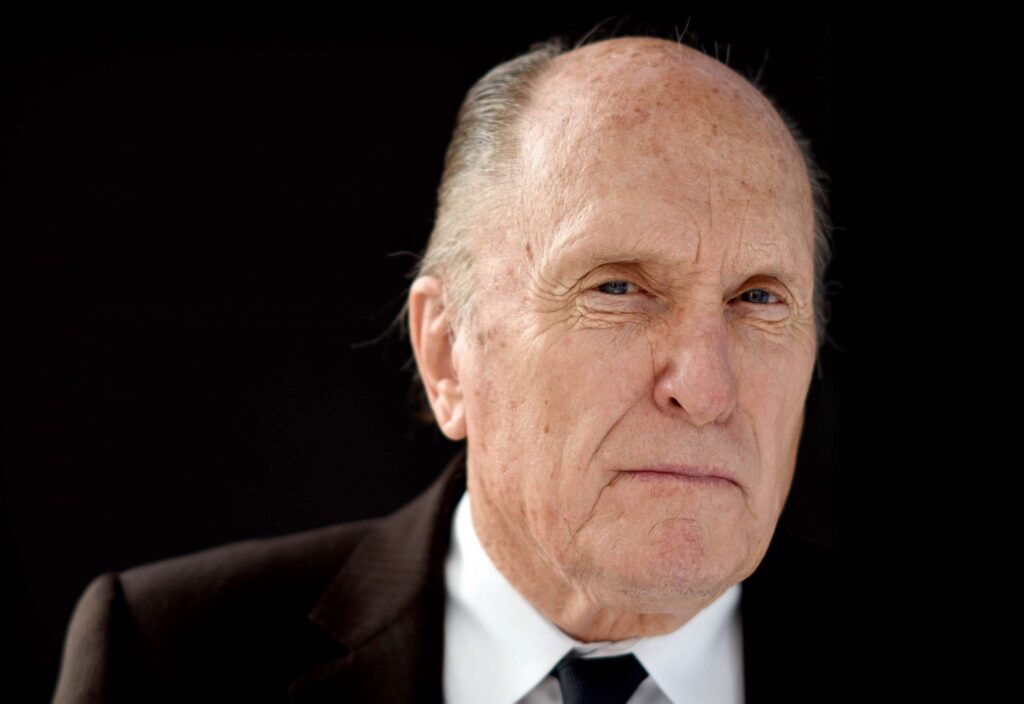
His death was announced in a statement shared on Facebook by his wife, Luciana Duvall.
“Yesterday we said goodbye to my beloved husband, cherished friend, and one of the greatest actors of our time,” she wrote. “Bob passed away peacefully at home, surrounded by love and comfort. To the world, he was an Academy Award-winning actor, a director, a storyteller. To me, he was simply everything.”
She added that his devotion to acting was matched by his affection for everyday pleasures and deep personal connections. “For each of his many roles, Bob gave everything to his characters and to the truth of the human spirit they represented,” she wrote, thanking supporters for their years of encouragement and requesting privacy for the family.
Over a career that spanned nearly six decades, Duvall moved seamlessly between leading and supporting roles, bringing tightly wound intensity and quiet authority to a wide range of characters. He earned Academy Award nominations for performances in films including The Godfather, Apocalypse Now, and The Great Santini.
He captured the best actor Oscar in 1984 for his portrayal of washed-up country singer Mac Sledge in Tender Mercies, directed by Bruce Beresford. The performance, restrained and deeply humane, showcased Duvall’s ability to communicate emotional turmoil through subtle gestures rather than theatrical display.
In Network, he embodied a calculating television executive with chilling conviction. Two decades later, he wrote, directed, and starred in The Apostle, delivering a fervent turn as a Pentecostal preacher grappling with guilt and redemption. The film underscored his willingness to explore morally complex territory and to take creative risks beyond acting.
Born Robert Seldon Duvall on Jan. 5, 1931, in San Diego, California, he was the son of an amateur actress and a U.S. Navy rear admiral. His upbringing on naval bases across the country, including time in Annapolis, Maryland, exposed him to a disciplined, itinerant lifestyle that would later inform many of his performances portraying military and authority figures.
He graduated from Principia College in Elsah, Illinois, in 1953 and served two years in the U.S. Army during the Korean War. After returning home, he pursued formal acting training at the Neighborhood Playhouse in New York, studying under the influential teacher Sanford Meisner. Among his classmates were future stars Dustin Hoffman, Gene Hackman, and James Caan.
During those lean early years, Duvall supported himself with odd jobs while sharing an apartment with Hoffman and Hackman. He appeared in Broadway and Off-Broadway productions, including stagings of The Crucible and A View from the Bridge by Arthur Miller, and secured guest roles on television programs such as The Twilight Zone.
Duvall made his film debut at age 31, portraying the reclusive Arthur “Boo” Radley in the 1962 adaptation of To Kill a Mockingbird. Though his screen time was limited, the performance left a lasting impression and signaled the arrival of a distinctive talent.
Throughout the 1960s, he steadily built his reputation, appearing alongside John Wayne in True Grit and collaborating with Francis Ford Coppola in The Rain People. His partnership with Coppola would soon yield one of his most celebrated roles: Tom Hagen, the composed consigliere in The Godfather, a performance that anchored the epic crime saga with quiet loyalty and measured intelligence.
By the 1970s, Duvall had emerged as a central figure in the “New Hollywood” era, a transformative period marked by director-driven projects and morally ambiguous protagonists. Alongside contemporaries such as Al Pacino and Robert De Niro, he helped redefine leading-man archetypes, favoring psychological depth over glamour.
Duvall’s legacy rests not only on the awards he accumulated, seven Academy Award nominations and seven Golden Globe nominations, but on the particular style of masculinity he projected onscreen. At a time when Hollywood often equated heroism with bravado, Duvall specialized in restraint. His characters frequently conveyed authority through stillness, suggesting inner lives simmering beneath controlled exteriors.
Film historians have often credited the New Hollywood generation with dismantling the polished studio-era image of stardom. Duvall embodied that shift. He did not conform to traditional matinee-idol standards; instead, his appeal lay in authenticity. Whether as a military officer, a crime family adviser, or a broken-down musician, he conveyed a lived-in realism that resonated with audiences navigating a rapidly changing America.
His Oscar-winning performance in Tender Mercies illustrated a broader cultural appetite in the 1980s for intimate, character-driven storytelling amid blockbuster spectacles. Meanwhile, his later work in The Apostle demonstrated a willingness to explore faith and moral reckoning at a time when such themes were rarely foregrounded in mainstream cinema.
Duvall’s influence can be traced in subsequent generations of actors who prize nuance over flash. His career serves as a case study in longevity built on craft rather than celebrity. Even in supporting roles, he often became the emotional center of a film, elevating ensemble casts through disciplined precision.
As tributes emerge from across the film community, Duvall’s body of work stands as a testament to the power of subtlety in an industry frequently drawn to excess. From Boo Radley’s silent watchfulness to Tom Hagen’s composed counsel, he created characters that endure not because they were loud, but because they were profoundly human.
He is survived by his wife, Luciana Duvall.





