

Nigeria’s Defence Headquarters has confirmed the arrival of approximately 100 United States military personnel and associated equipment at Bauchi Airfield, describing the deployment as part of an expanded security partnership between Abuja and Washington.
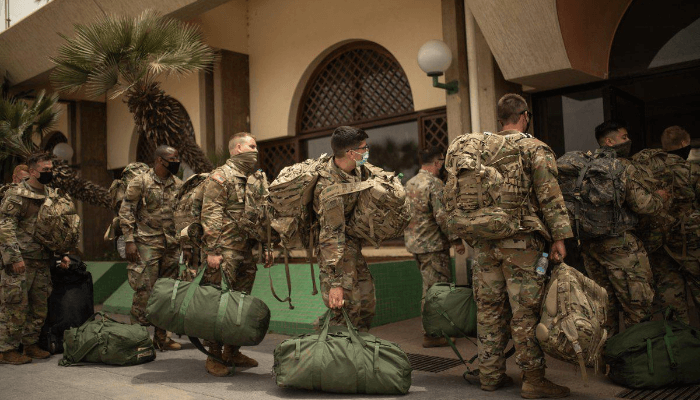
In a statement issued Monday and signed by Major General Samaila Uba, Director of Defence Information, the Defence Headquarters said the American personnel were deployed following a formal request by the Federal Government of Nigeria for support in specific training, technical and intelligence areas.
The statement characterized the deployment as “planned and deliberate,” noting that it stems from prior working group discussions between Nigerian officials and their U.S. counterparts. It said the arrangement is intended to address clearly defined military training requirements and to enhance intelligence-sharing mechanisms between the two nations’ armed forces.
According to the Defence Headquarters, the U.S. personnel are technical specialists serving strictly in advisory and instructional roles. They are not combat forces, the military emphasized.
“All training activities will be conducted under the authority, direction and control of the Nigerian Government and in close coordination with the Nigerian Armed Forces,” the statement said, underscoring that operational sovereignty remains with Abuja.
The Defence Headquarters indicated that Nigerian troops will soon begin joint engagements with the American advisers, focusing on coordinated training exercises and intelligence-centered cooperation initiatives. The objective, it said, is to strengthen the ability of Nigerian forces to identify, disrupt and neutralize extremist groups seeking to destabilize the country.
Reuters reported that roughly 100 U.S. military personnel had already arrived in Nigeria as Washington intensifies efforts aimed at countering Islamist insurgents. The news agency cited Nigeria’s defence spokesperson as confirming that the American troops would train and advise local forces but would not participate in combat operations.
Earlier, Sahara Reporters had indicated that as many as 200 U.S. troops were expected to deploy to Nigeria to provide training and technical assistance. The report said both governments had stressed that the American personnel would not engage directly in fighting.
Major General Uba previously told AFP that the United States would assist Nigeria with training and technical support. The Wall Street Journal later wrote that additional troops could supplement a small U.S. team already present in Nigeria to assist with air strike targeting and intelligence coordination. The reinforcements, the newspaper said, would focus on improving synchronization between air operations and ground forces.
Flight tracking data reviewed by Reuters showed several aircraft carrying U.S. personnel and equipment heading toward Nigeria’s northern states in recent days, suggesting a phased buildup of advisory capabilities.
Presidential spokesperson Sunday Dare has said Nigeria requires substantial U.S. assistance, particularly in advanced military hardware such as fighter aircraft and munitions, though he declined to specify quantities or delivery timelines.
The expanded cooperation comes as Nigeria confronts persistent security threats from insurgent and extremist groups operating primarily in the north and northeast. Although the government has recorded territorial gains against militants over the past decade, sporadic attacks continue, including assaults on military formations and civilian communities.
In December, U.S. forces carried out strikes targeting Islamic State-linked militants in the region, and a small American team has been operating in Nigeria to bolster intelligence capabilities. The new arrivals appear to formalize and enlarge that advisory footprint.
The security partnership also unfolds against a backdrop of diplomatic tension. President Donald Trump has accused Nigeria of failing to adequately protect Christians from Islamist violence in parts of the country. Nigeria’s government rejects allegations of religious bias, maintaining that its security forces confront armed groups regardless of faith and that both Christians and Muslims have been victims of extremist attacks.
Nigeria, Africa’s most populous nation with roughly 240 million people, is religiously diverse, with Christians concentrated largely in the south and Muslims predominantly in the north. Authorities acknowledge serious security challenges but deny claims of systematic persecution based on religion.
The Defence Headquarters sought to reassure Nigerians that the cooperation with Washington will be transparent and confined to training and intelligence functions. It pledged to provide “clear, accurate and timely information” regarding ongoing military collaboration.
Security analysts say the advisory deployment signals a recalibration of U.S.–Nigeria defense ties after periods of fluctuating engagement. In recent years, Nigeria has diversified its military procurement and partnerships, acquiring equipment from multiple countries while seeking broader intelligence-sharing arrangements to confront insurgent networks.
From a strategic standpoint, the arrival of U.S. advisers may enhance Nigeria’s operational planning and inter-service coordination, particularly in complex missions requiring simultaneous air and ground operations. Improved targeting protocols and intelligence integration could reduce civilian casualties and increase mission effectiveness — areas that have drawn scrutiny in past campaigns.
However, analysts caution that external training and technical support alone cannot resolve the structural drivers of insecurity, including poverty, weak local governance, porous borders and community grievances. Sustained progress, they say, will depend on complementary reforms in policing, justice administration and regional cooperation within the Lake Chad Basin.
For Washington, the deployment aligns with broader counterterrorism priorities in West Africa, where Islamist groups have expanded their reach across parts of the Sahel. Strengthening Nigeria’s military capacity is seen as critical to preventing further regional spillover.
Whether the advisory mission expands beyond its current scope remains unclear. For now, Nigerian officials stress that the American personnel are present strictly as trainers and advisers, with operational command firmly in Nigerian hands.
The Defence Headquarters said the Armed Forces of Nigeria remain committed to degrading and defeating terrorist organizations that threaten national sovereignty and the safety of citizens, framing the U.S. deployment as one component of a broader, ongoing security strategy.
SaharaReporters/TheGuardianngr





