

(Reuters)-Iran’s Supreme Leader, Ayatollah Ali Khamenei, warned Tuesday that U.S. naval vessels operating near Iranian waters could be sent “to the bottom of the sea,” escalating rhetoric as American and Iranian officials met for a second round of negotiations over Tehran’s nuclear program.
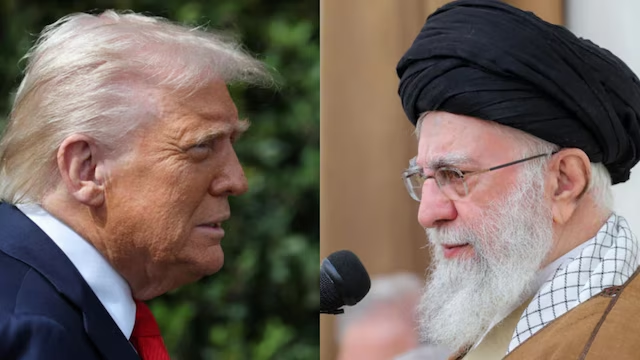
In posts published on the social platform X, Khamenei responded to reports of increased U.S. naval deployments in the region. “The Americans constantly say that they’ve sent a warship toward Iran,” he wrote, calling such vessels “dangerous pieces of military hardware.” He added that “more dangerous than that warship is the weapon that can send that warship to the bottom of the sea.”
The remarks came as delegations from Washington and Tehran convened in Geneva for renewed discussions aimed at curbing Iran’s uranium enrichment activities. U.S. officials are seeking a revised framework after President Donald Trump, during his first term, withdrew the United States from the 2015 Joint Comprehensive Plan of Action, the multilateral agreement that limited Iran’s nuclear activities in exchange for sanctions relief.
President Donald Trump has signaled optimism about reaching an accord but coupled that with pointed warnings. Speaking to reporters last week, he said failure to secure a deal would be “a bad day for Iran, very bad,” reiterating that the United States would not tolerate an expansion of Tehran’s enriched uranium program.
The president also confirmed that the USS Gerald R. Ford — the world’s largest aircraft carrier — is being deployed to the Middle East. The carrier strike group is set to operate alongside other U.S. warships already stationed within the area of responsibility of U.S. Central Command, the military command overseeing American operations across much of the Middle East.
The deployment underscores mounting tensions as both sides test the boundaries of diplomacy and deterrence. Trump has repeatedly stated that the United States is prepared to use military force if Iran continues advancing its nuclear capabilities or intensifies internal crackdowns. Activist groups in January estimated that more than 6,000 people had died during protests that erupted late last year amid economic turmoil and a sharply declining national currency. Iranian authorities have not released official casualty figures.
Tehran, for its part, has sought to project military readiness. Iranian forces have conducted maritime drills in recent days in the Strait of Hormuz, a strategic chokepoint through which a significant portion of the world’s oil supply passes. The exercises reportedly included live-fire missile components. U.S. Central Command had earlier cautioned Iran against what it described as unsafe maritime conduct in the region.
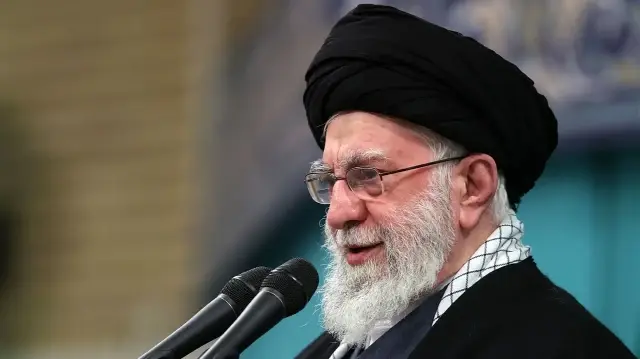
In a separate message Tuesday, Khamenei dismissed assertions of overwhelming U.S. military dominance. “The U.S. president keeps saying that they have the strongest military force in the world,” he wrote. “The strongest military force in the world may at times be struck so hard that it cannot get up again.”
The sharp language reflects a broader pattern of brinkmanship that has defined U.S.-Iran relations in recent years. While negotiators meet in conference rooms, both governments are addressing domestic audiences — projecting strength abroad while navigating political pressures at home.
The 2015 nuclear accord, negotiated under President Barack Obama, imposed caps on uranium enrichment levels and stockpiles, along with intrusive international inspections. In 2018, President Donald Trump withdrew from the agreement, arguing that it failed to address Iran’s ballistic missile program and regional activities. Since then, Iran has incrementally expanded its enrichment levels beyond the limits set by the original deal.
Diplomats familiar with the Geneva talks say the discussions are focused on establishing stricter verification measures and potentially broader restrictions on enrichment, while exploring phased sanctions relief. However, Tehran has maintained publicly that it will not abandon its uranium enrichment program altogether, framing it as a sovereign right under international law.
The presence of additional U.S. naval assets adds a layer of military pressure that analysts say could either strengthen Washington’s negotiating leverage or complicate delicate diplomacy. Aircraft carriers serve not only as combat platforms but also as potent symbols of U.S. resolve.
At the same time, Iran’s warnings are consistent with its longstanding strategy of asymmetric deterrence. By emphasizing its missile capabilities and its ability to threaten maritime traffic in the Strait of Hormuz, Tehran signals that any direct confrontation would carry regional and global economic consequences.
Energy markets and regional allies are watching closely. Disruption in the Strait of Hormuz could affect global oil prices and shipping routes, heightening concerns among European and Asian economies dependent on Middle Eastern energy supplies.
Despite the heated rhetoric, diplomatic channels remain open. Neither side has announced a breakdown in talks, and officials have indicated that additional rounds are expected. Whether the negotiations can yield a durable framework — or whether escalating military gestures will overshadow diplomacy — remains uncertain.
For now, the exchange between Ayatollah Ali Khamenei and President Donald Trump highlights the fragile balance between negotiation and confrontation, with warships at sea and nuclear centrifuges at the center of a high-stakes standoff.





