

Former Prince Andrew was arrested and detained for approximately 11 hours Thursday by British authorities investigating suspected misconduct in public office connected to his relationship with convicted sex offender Jeffrey Epstein, marking the first time in nearly four centuries that a senior British royal has faced arrest—an extraordinary development in a nation where law enforcement traditionally shielded the monarchy from public embarrassment.
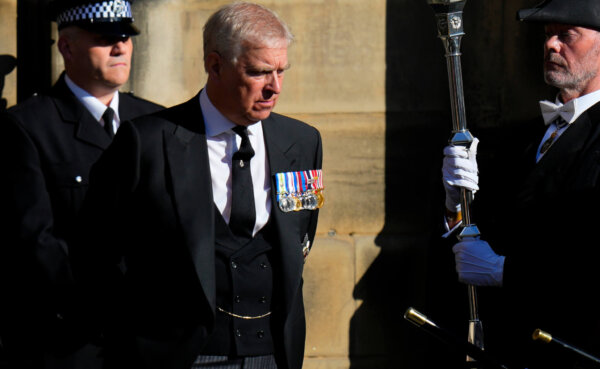
Thames Valley Police confirmed that Andrew Mountbatten-Windsor, as he is now legally known following King Charles III’s decision to strip him of royal titles, was taken into custody Thursday morning at his residence on the royal Sandringham Estate in eastern England. He was released Thursday evening without charges, though authorities emphasized he remains under investigation and has neither been exonerated nor formally accused.
The arrest represents a spectacular fall from grace for Queen Elizabeth II’s second son, who once served as Britain’s special representative for international trade and investment. His detention underscores how profoundly public deference toward the monarchy has eroded in recent years as Britons increasingly demand that wealth and aristocratic lineage provide no immunity from legal accountability.
King Charles III, whose late mother famously governed by the principle “never complain, never explain,” took the unusual step of issuing a public statement addressing his brother’s arrest—a departure from traditional royal silence regarding family legal troubles.
“Let me state clearly: the law must take its course,” the monarch declared. “As this process continues, it would not be right for me to comment further on this matter.” The statement signals Charles’s determination to distance the institution of monarchy from his brother’s legal jeopardy while maintaining minimal public commentary that might prejudice ongoing investigations.
The Associated Press confirms that police detained Mountbatten-Windsor, 66, for approximately 11 hours before releasing him under investigation—a legal status indicating authorities have not gathered sufficient evidence to file formal charges but have not eliminated him as a suspect. He was photographed departing the police station in a vehicle, concluding an ordeal that captivated Britain and reverberated internationally.
Thames Valley Police, which covers regions west of London including Windsor and areas where Mountbatten-Windsor previously resided, confirmed Thursday that a man in his sixties from Norfolk had been arrested and remained in custody. Police declined to identify the suspect by name, adhering to standard British procedures protecting suspects’ identities until formal charges are filed.
Mountbatten-Windsor relocated to the monarch’s private Norfolk estate following his recent eviction from Royal Lodge near Windsor Castle, where he had resided for more than two decades. The forced relocation represented another humiliation orchestrated by King Charles as the monarch worked aggressively to insulate the royal family from escalating scandal.
Assistant Chief Constable Oliver Wright confirmed that authorities opened a formal investigation after conducting a “thorough assessment” of allegations that Mountbatten-Windsor transmitted confidential trade information to Epstein in 2010, when the former prince served as Britain’s special envoy for international trade and investment.
“Following a thorough assessment, we have now opened an investigation into this allegation of misconduct in public office,” Wright stated, confirming that the inquiry focuses on whether Mountbatten-Windsor violated legal obligations protecting government information by sharing classified material with a convicted criminal.
The investigation centers on correspondence between Mountbatten-Windsor and Epstein released by the U.S. Justice Department late last month as part of millions of pages of documents from American investigations into Epstein’s sex trafficking enterprise. Email exchanges appear to show Mountbatten-Windsor forwarding reports from a two-week Southeast Asia tour he conducted in 2010—including confidential details about investment opportunities in Singapore, Hong Kong, and Vietnam—to Epstein, who by that time had already been convicted of soliciting a minor for prostitution.
Official terms of reference for British trade envoy positions explicitly state the role “carries with it a duty of confidentiality in relation to information received,” establishing clear legal obligations that prosecutors will examine in determining whether Mountbatten-Windsor’s conduct constitutes criminal misconduct.
Police executed search warrants at two properties: Mountbatten-Windsor’s current Sandringham residence and his former home at Royal Lodge in Windsor. Images circulating online appeared to show unmarked police vehicles at Wood Farm on the Sandringham Estate with plainclothes officers gathering outside—visual evidence of the investigation’s serious nature and the extraordinary spectacle of law enforcement searching royal properties.
Mountbatten-Windsor has consistently denied wrongdoing in his association with Epstein, maintaining that his relationship with the disgraced financier was limited and that he severed contact following Epstein’s 2008 conviction. However, the released correspondence directly contradicts those claims, revealing ongoing communication including Epstein offering to arrange a meeting between Mountbatten-Windsor and a young Russian woman in 2010, and the former prince inviting Epstein to dinner at Buckingham Palace.
Thursday’s arrest addresses allegations separate from those made by Virginia Giuffre, who claimed she was trafficked to Britain and forced to have sexual relations with the prince in 2001 when she was 17 years old. Giuffre died by suicide last year, but her family issued a statement praising the arrest as vindication that accountability extends even to royalty.
“Our broken hearts have been lifted at the news that no one is above the law, not even royalty,” the Giuffre family stated. “He was never a prince. For survivors everywhere, Virginia did this for you.”
Craig Prescott, a royal expert at Royal Holloway, University of London, characterized the arrest as unprecedented in modern royal history. “This is the most spectacular fall from grace for a member of the royal family in modern times,” Prescott observed, comparing its severity to the constitutional crisis precipitated by Edward VIII’s 1936 abdication to marry American divorcée Wallis Simpson. “And it may not be over yet,” he cautioned.
The last arrest of a senior British royal occurred nearly 400 years ago during the turbulent reign of King Charles I, when escalating tensions between crown and Parliament erupted into civil war. After Charles I attempted to arrest lawmakers in the House of Commons in 1642, conflict intensified into the English Civil War, concluding with parliamentary forces’ victory under Oliver Cromwell. Charles I was subsequently arrested, tried, convicted of high treason, and beheaded in 1649—a historical parallel that underscores the gravity of Thursday’s events even if contemporary consequences will differ dramatically.
Thursday’s arrest followed an announcement by the National Police Chiefs’ Council that it had established a coordination group to assist forces across the United Kingdom assessing whether Epstein and his associates committed crimes in Britain. Beyond concerns about Mountbatten-Windsor’s correspondence, documents released by American authorities suggest Epstein utilized his private aircraft to traffic women to and from Britain, potentially implicating additional individuals in criminal activity on British soil.
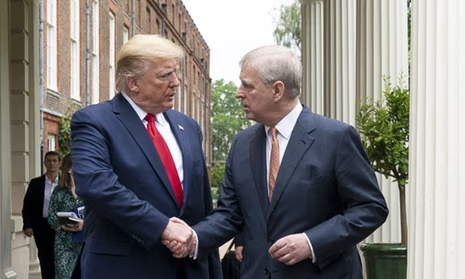
U.S. President Donald Trump commented on the arrest, characterizing it as “a shame” and “very sad.” “I think it’s so bad for the royal family,” Trump told journalists in Washington, expressing sympathy for an institution facing unprecedented public scrutiny over the scandal.
The Epstein files have similarly rocked British politics. Prime Minister Keir Starmer faced persistent questioning about his judgment after documents revealed that Peter Mandelson—whom Starmer appointed as ambassador to the United States—maintained a longer and closer relationship with Epstein than previously disclosed. London’s Metropolitan Police Service announced investigations into allegations of misconduct in public office related to Mandelson’s correspondence with Epstein. Starmer subsequently dismissed Mandelson as ambassador in September, though the former diplomat denies wrongdoing.
However, Mountbatten-Windsor’s relationship with Epstein has brought scandal directly to Buckingham Palace’s doorstep, threatening to undermine public support for the monarchy at a moment when republican sentiment is gaining traction, particularly among younger Britons questioning hereditary privilege’s continued relevance.
Concerns about Mountbatten-Windsor’s Epstein connections have plagued the royal family for more than a decade. Queen Elizabeth II forced her second son to relinquish royal duties and terminate charitable work in 2019 following a catastrophic BBC interview in which he attempted to explain away his friendship with Epstein. His claim that he could not have been at a London nightclub with Giuffre because he was dining at a Pizza Express in Woking—combined with his assertion that a medical condition prevented him from sweating, contradicting Giuffre’s account—became subjects of widespread ridicule and intensified public skepticism.
As concerns mounted about what additional Epstein files might reveal, King Charles moved decisively to distance the institution from his brother’s conduct. Since October, Charles has stripped Mountbatten-Windsor of the right to be called prince, forced his relocation from Royal Lodge after more than 20 years of occupancy, and issued public statements supporting women and girls abused by Epstein—measures designed to demonstrate the monarchy’s alignment with victims rather than alleged perpetrators.
Last week, Buckingham Palace announced its readiness to cooperate fully with police investigations into Mountbatten-Windsor, signaling institutional commitment to transparency that represents a significant departure from historical royal practice of resisting external scrutiny.
Danny Shaw, a British law enforcement expert, told the BBC that Mountbatten-Windsor would receive no preferential treatment during detention. “He would likely be placed in a cell in a custody suite with just a bed and a toilet, where he will wait until his police interview,” Shaw explained. “There’ll be no special treatment for him.”
The BBC confirms that both the Prince and Princess of Wales are supporting King Charles’s statement, while Prince Harry’s representatives indicated they would not comment. The King and Queen maintained their scheduled public engagements Thursday, with Charles attending an event in central London—a deliberate signal that royal duties continue despite family turmoil.
Anti-monarchy organization Republic confirmed it filed the police report that triggered the investigation, based on BBC News reporting about emails disclosed in American Epstein files. The group has advocated for years that hereditary monarchy is incompatible with democratic values and that royals should face identical legal scrutiny as ordinary citizens.
The investigation’s outcome will profoundly impact both Mountbatten-Windsor’s personal future and the monarchy’s institutional standing. If prosecutors determine evidence warrants criminal charges, a trial would subject the royal family to sustained negative publicity and potentially devastating testimony about relationships with a convicted sex offender. Conversely, if authorities conclude insufficient evidence supports prosecution, republican critics will likely characterize the decision as preferential treatment protecting the privileged.
For King Charles, the crisis presents an excruciating dilemma balancing familial loyalty against institutional preservation. His decisive actions distancing the monarchy from his brother demonstrate recognition that public tolerance for royal misconduct has fundamentally shifted. In an era when deference must be earned rather than assumed, even princes face accountability that previous generations of royals successfully evaded.
As the investigation proceeds, Britain confronts uncomfortable questions about how thoroughly Epstein’s criminal network penetrated British elite circles and whether authorities adequately responded to earlier warnings about his activities. The scandal has already claimed political casualties including Ambassador Mandelson and threatens additional revelations that could implicate other prominent figures in British society.
For Mountbatten-Windsor, Thursday’s 11-hour detention in a provincial police station represents a humiliation unimaginable during his mother’s reign, when royal scandal was carefully managed and legal jeopardy for senior royals remained inconceivable. Whether he ultimately faces criminal charges or eventual exoneration, his reputation lies irreparably damaged and his once-privileged life reduced to legal jeopardy and public disgrace.
AP/BBC





