

A 21-year-old North Carolina man fatally shot by law enforcement after breaching the perimeter of President Donald Trump’s Mar-a-Lago estate early Sunday had recently expressed fixation on the so-called “Epstein files” and urged others to “raise awareness,” according to messages obtained by TMZ and accounts from family members.
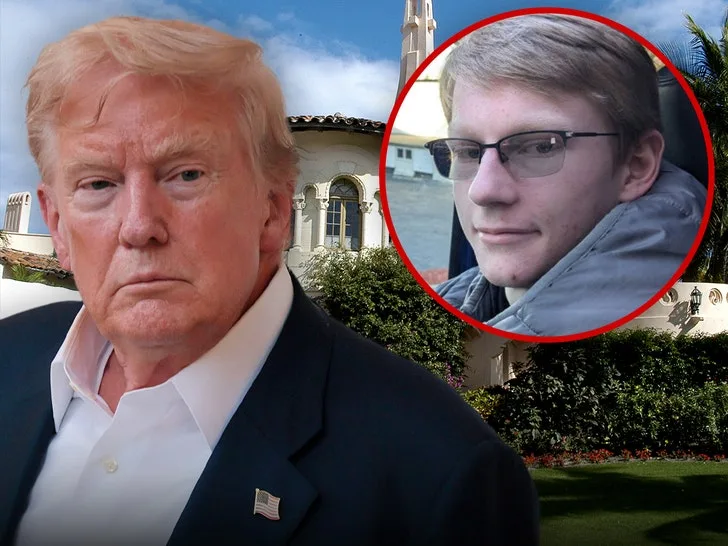
Authorities identified the man as Austin Tucker Martin. Law enforcement officials in Florida said Martin was shot and killed after he entered the inner security perimeter of Mar-a-Lago around 1:30 a.m. while carrying a shotgun and a gas canister. Security personnel confronted him, and officers responded after he allegedly raised the weapon into what authorities characterized as a “shooting position.”
President Donald Trump and First Lady Melania Trump were in Washington at the time of the incident.
The Moore County Sheriff’s Office in North Carolina indicated that a relative had approached a deputy shortly before 2 a.m. Sunday to report Martin missing. In a statement, the office said that at approximately 1:38 a.m., a family member informed authorities that Martin had disappeared. He was entered into a national missing persons database before North Carolina officials were notified that federal authorities were conducting an active investigation in Florida involving him. At the request of federal investigators, local officials transferred the missing persons case information to them.
Family members expressed shock at the chain of events. Martin’s cousin, Braeden Fields, 19, told The Associated Press that his cousin was “very quiet” and had never shown interest in firearms. Fields emphasized that Martin “doesn’t even know how to use a gun” and had been around weapons during hunting trips without ever firing one beyond a BB gun. In remarks to ABC station WTVD, Fields reiterated that Martin disliked guns, saying they hurt his ears and that he refused to handle them even when given the opportunity.
“He wouldn’t even hurt an ant,” Fields told The Associated Press, describing the behavior alleged by authorities as entirely out of character.
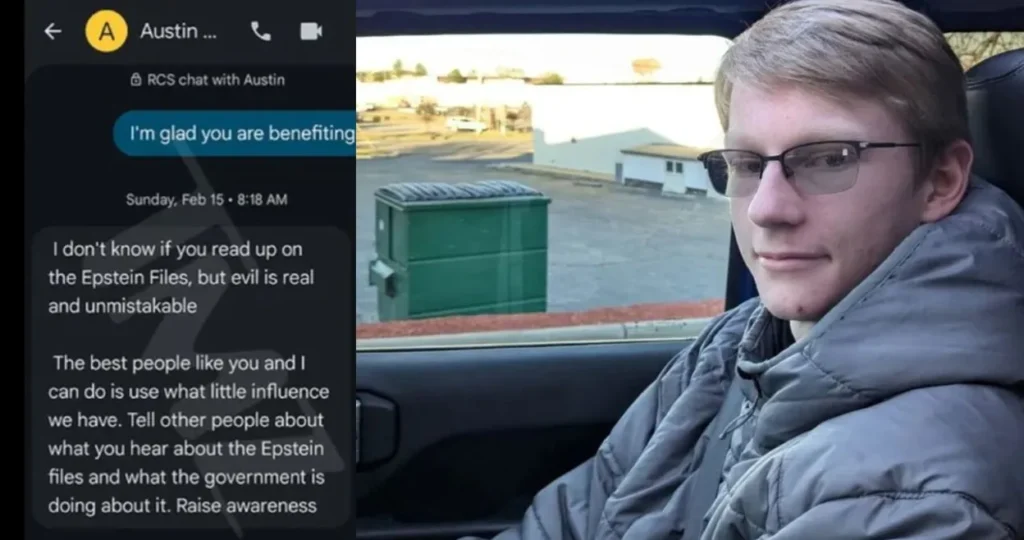
Martin worked at Pine Needles Lodge & Golf Club in North Carolina, roughly 15 miles from his hometown of Cameron, where he lived with his parents. Colleagues cited by TMZ described him as preoccupied in recent weeks with what he believed was government concealment of files related to convicted sex offender Jeffrey Epstein. In text messages dated Feb. 15 and reviewed by the outlet, Martin wrote to a coworker that “evil is real and unmistakable” and encouraged sharing information about the Epstein files to inform others about what “the government is doing about it.”
The coworker did not respond to the message at the time. On Sunday morning, before news of Martin’s death became public, the coworker sent a follow-up message asking his whereabouts.
Additional coworkers told TMZ that Martin had voiced frustration about economic pressures facing young people and had unsuccessfully attempted to organize a union at his workplace to advocate for higher wages. They also characterized him as a vocal supporter of President Donald Trump.
Fields told ABC that the family broadly supports Trump and said Martin rarely engaged in political discussions. “He didn’t want to get into politics,” Fields said, adding that there had been no indication Martin would travel approximately 700 miles to Florida on any political mission.
A website registered to Martin featured watercolor and ink artwork of golf courses and described a mission focused on evoking “the hopeful feeling of being on a golf course.” Fields said Martin often donated portions of his paycheck to charity and had been preparing golf courses for the upcoming season.
Federal and local authorities have not publicly detailed a motive. The investigation remains ongoing, and officials have asked residents in South Florida to review security camera footage that might show Martin’s movements before the breach.
The security response unfolded swiftly. Florida authorities said Mar-a-Lago security detected an individual within the inner perimeter and confronted him before law enforcement discharged their weapons. The Secret Service, responsible for protective operations at sites associated with the president, has not released additional specifics about the engagement, citing the continuing inquiry.
The episode marks the latest security scare involving high-profile political properties in the United States, underscoring the challenges facing federal protective services amid a polarized political climate and the proliferation of conspiracy theories online.
Original analysis: While authorities have not established a definitive motive, the intersection of conspiracy-driven narratives and personal grievance appears to form part of the broader context surrounding Martin’s actions. References to the Epstein files — a subject that has generated sustained online speculation and distrust of government institutions — illustrate how unresolved public controversies can become focal points for individuals grappling with frustration or alienation. Experts who study radicalization have noted that fixation on perceived cover-ups, combined with economic dissatisfaction, can contribute to a distorted sense of urgency or mission, even among individuals without prior histories of violence.

At the same time, the stark contrast between Martin’s alleged actions and his family’s depiction of him highlights the complexities investigators often face in reconstructing intent. Relatives and coworkers frequently describe suspects in such cases as quiet or apolitical, a dynamic that can obscure internal turmoil or escalating online engagement. The rapid shift from a missing persons report in North Carolina to a fatal confrontation in Florida within hours underscores how quickly such situations can unfold, leaving families and communities struggling for answers.
As federal investigators continue to examine Martin’s communications, travel history and digital footprint, officials have refrained from drawing conclusions about whether the breach was politically motivated, personally driven or influenced by online content. For now, authorities have emphasized that the protective response was triggered by an armed individual inside a restricted perimeter, and that the matter remains under active review.
NYPost/ABC7





