

Mexico’s top defense official struggled to contain his emotions Monday as he confirmed that 25 members of the National Guard were killed in coordinated retaliatory attacks carried out by the Jalisco New Generation Cartel following the military operation that left its leader dead.
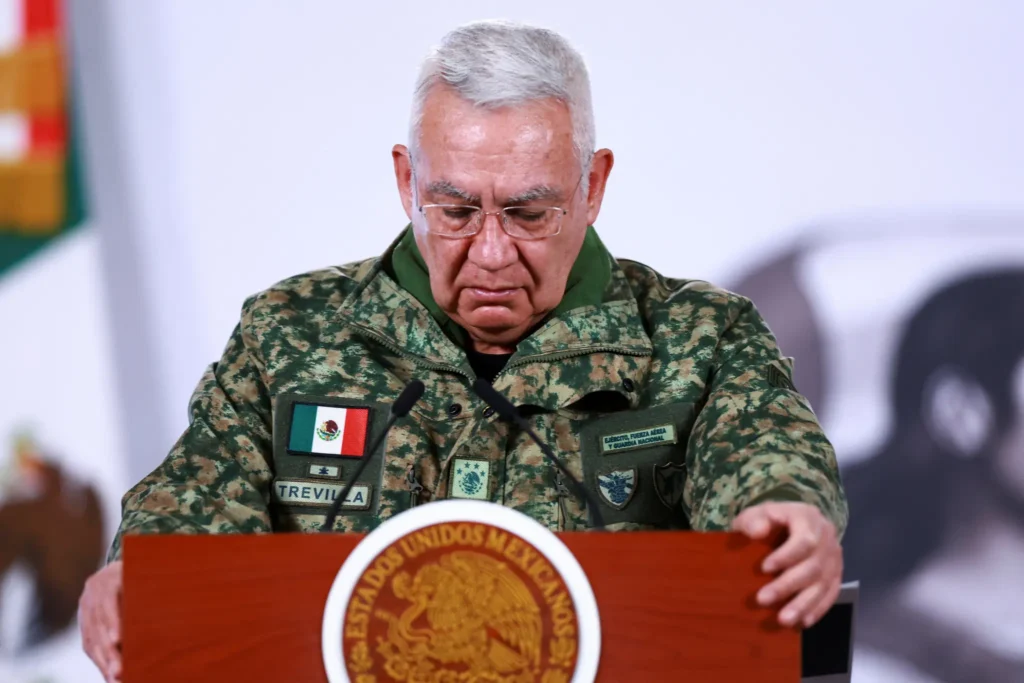
Defense Minister Ricardo Trevilla’s voice cracked and he paused repeatedly as he addressed reporters about what he described as an unprecedented wave of violence targeting Mexican security forces in the western state of Jalisco.
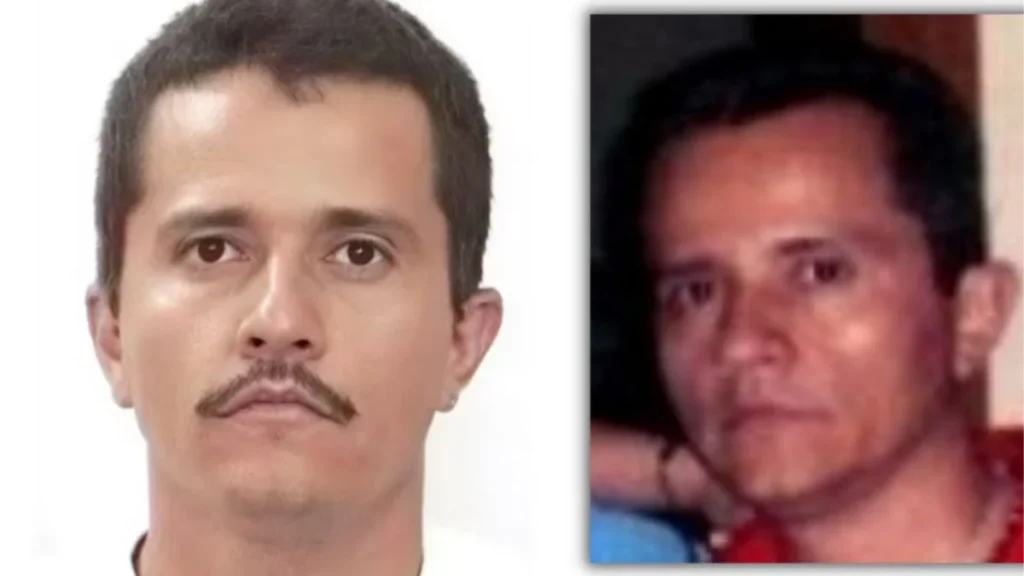
The deadly assaults unfolded after Nemesio “El Mencho” Oseguera Cervantes, head of the Jalisco New Generation Cartel, was killed during a military raid at a property in the state on Sunday. Authorities said Oseguera and six associates died during the operation, setting off a swift and violent backlash from cartel gunmen.
Mexico’s Security Secretary Omar García Harfuch said 25 National Guard personnel lost their lives in what he characterized as “27 cowardly attacks against authorities in Jalisco.” He added that at least 30 suspected cartel members were also killed during the clashes.
According to García Harfuch, the violence extended beyond direct confrontations with federal forces. A prison guard, an agent from the state prosecutor’s office and a civilian woman were also killed amid the unrest. The attacks included ambushes and armed confrontations directed at military and law enforcement patrols.
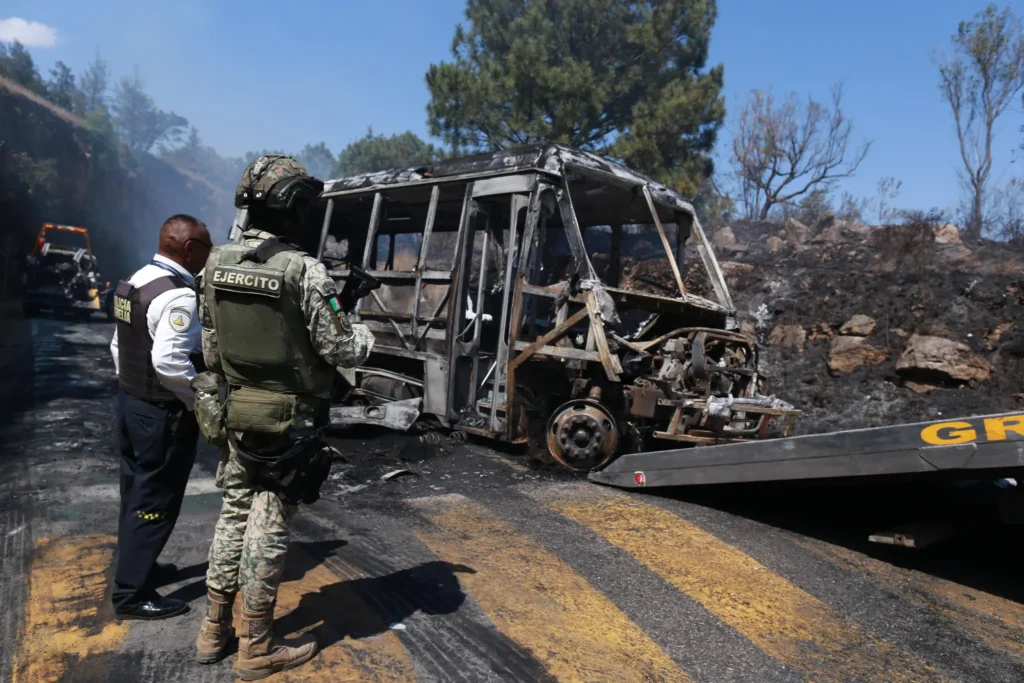
Authorities said cartel operatives erected more than 250 roadblocks across at least 20 states, using burning vehicles and debris to obstruct highways and disrupt the movement of security forces. The coordinated nature of the retaliation underscored the operational reach of the Jalisco New Generation Cartel, commonly known as CJNG.
The cartel has long been regarded by Mexican and U.S. officials as one of the country’s most powerful and heavily armed criminal organizations, with access to military-grade weapons, rocket launchers, drones and improvised explosive devices.
President Claudia Sheinbaum said federal forces had cleared the roadblocks and regained control in affected areas. She indicated that more than 70 individuals had been detained across seven states as part of a sweeping security response aimed at restoring order.
“We are closely monitoring for any kind of reaction or restructuring within the cartel that could lead to violence,” García Harfuch told journalists, signaling concern that the group could attempt to reorganize or launch additional attacks following the death of its leader.
Foreign governments reacted swiftly to the escalation. The U.S. Embassy urged its personnel in eight cities and in the state of Michoacán to shelter in place and work remotely Monday. Several Mexican states suspended classes as a precaution while security forces intensified patrols.
Oseguera, widely known as “El Mencho,” had been a central figure in Mexico’s drug trade for years. Authorities accused him of overseeing the trafficking of fentanyl, methamphetamine and cocaine into the United States. A reward of up to $15 million had been offered for information leading to his capture.
The scale and coordination of the cartel’s retaliation highlight both the entrenched power of organized crime groups in Mexico and the risks associated with high-value targeting operations. While the elimination of a cartel leader can disrupt command structures, history has shown that such actions can also trigger violent fragmentation or reprisal attacks. The killing of 25 National Guard members in a concentrated period represents one of the deadliest retaliatory episodes against Mexican federal forces in recent years.
Security analysts note that CJNG has cultivated a decentralized yet disciplined network capable of launching synchronized attacks across multiple jurisdictions. The erection of roadblocks in 20 states suggests not only operational planning but also the ability to mobilize resources quickly in response to perceived threats.
For President Sheinbaum’s administration, the confrontation presents both a challenge and a defining moment. A forceful crackdown may reinforce the government’s commitment to confronting cartel violence, but it also risks provoking further bloodshed if splinter factions vie for control or attempt to demonstrate strength.
The emotional response from Defense Minister Trevilla underscored the human toll of the confrontation. Public displays of grief by senior officials are rare in Mexico’s security briefings and may reflect the depth of the losses sustained by federal forces.
In the coming weeks, authorities are likely to focus on dismantling residual CJNG networks and preventing retaliatory cells from regrouping. Whether the death of “El Mencho” weakens the cartel long term or ushers in a new phase of instability remains uncertain. What is clear is that the immediate aftermath has already exacted a heavy price on Mexico’s security forces and intensified concerns about the durability of cartel power across the country.
NYPost





