

(AP) — Senegal’s prime minister on Tuesday introduced legislation that would increase the minimum prison sentence for homosexuality from one year to five years, advancing a proposal that could further tighten restrictions in the socially conservative West African nation.
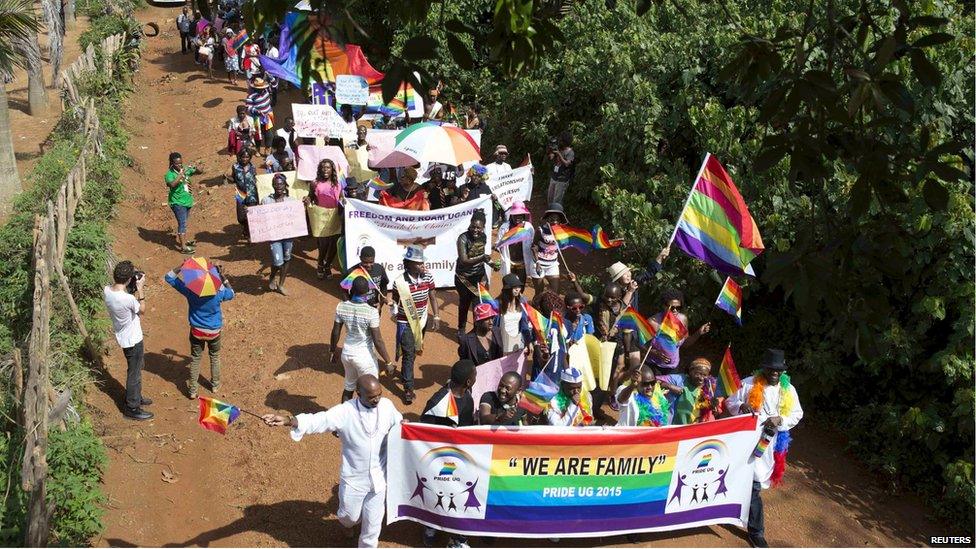
Prime Minister Ousmane Sonko presented the measure to parliament, seeking to amend existing statutes that criminalize same-sex relations. Under current law, homosexuality is punishable by imprisonment, with a minimum term of one year. The proposed bill would raise that baseline penalty to at least five years while expanding the legal definition of what constitutes “unnatural acts.”
The legislation would not reclassify the offense as a more serious category of crime, Sonko told lawmakers.
“We can achieve the intended objectives without going so far as to elevate the acts” to a higher criminal classification, Sonko said during remarks introducing the proposal.
Homosexuality has been outlawed in Senegal since the country gained independence from France in 1960. The existing legal framework treats same-sex relations as a criminal offense, and convictions can carry prison sentences and fines.
The new bill would broaden the scope of behavior subject to prosecution, though specific language detailing the expanded definition was not immediately made public. Government officials have framed the measure as an effort to clarify and strengthen enforcement without altering the offense’s misdemeanor status.
The proposal now heads to the National Assembly, where Sonko’s political party, PASTEF, holds a controlling majority. Lawmakers are expected to debate the bill in the coming weeks. If approved, it would represent one of the most significant revisions to Senegal’s laws on same-sex relations in decades.
Human rights organizations within Senegal and abroad have expressed concern over the direction of the country’s policies toward LGBTQ individuals. Advocacy groups say conditions for gay and lesbian people have worsened in recent years.
Local activists maintain that arrests tied to allegations of homosexuality have increased, with at least a dozen people detained in recent weeks. Rights groups argue that tougher penalties could embolden vigilantism and deepen social stigma in a country where public attitudes toward same-sex relationships remain largely negative.
The proposed legislation fulfills a campaign pledge made by Sonko, who took office after emphasizing socially conservative priorities during his political ascent. By advancing the bill, the government signals its intent to follow through on promises that resonated with segments of the electorate.
Senegal has long been regarded as ‘relatively stable’ compared with some neighboring states, but debates over social policy have increasingly become flashpoints in domestic politics. Religious leaders and influential civic groups have frequently called for stricter enforcement of laws governing morality, while civil society advocates have urged greater protections for minority groups.
International human rights organizations warn that expanding criminal penalties for consensual same-sex relations could place Senegal at odds with broader global trends toward decriminalization. Across Africa, laws criminalizing homosexuality remain in place in more than 30 countries, though enforcement varies widely. In some nations, recent legislative efforts have introduced harsher penalties, sparking diplomatic tensions and international condemnation.
Senegal’s government has historically defended its legal framework by citing cultural and religious values. The country’s population is predominantly Muslim, and public discourse around LGBTQ issues often reflects conservative interpretations of social norms.
Legal scholars note that increasing minimum sentences could have practical consequences beyond symbolic signaling. Higher mandatory minimums may limit judicial discretion, reduce opportunities for alternative sentencing and contribute to overcrowding in prisons. They also caution that broader statutory language could invite expansive interpretations by prosecutors.
Supporters of the measure contend that it aligns the penal code more closely with prevailing societal expectations. Opponents counter that it risks exacerbating discrimination and undermining fundamental rights.
The National Assembly’s deliberations are expected to draw significant attention both domestically and internationally. While Sonko’s party controls the chamber, debate could still illuminate divisions within Senegalese society over the balance between tradition, law and individual rights.
Should the bill pass, it would mark a substantial tightening of penalties in a country where homosexuality has already been subject to criminal sanction for more than six decades. Observers say the outcome may also influence discussions in other West African nations grappling with similar legislative pressures.
For now, the measure remains at the proposal stage, but its introduction underscores how questions of social policy continue to shape Senegal’s political landscape.





