

ABUJA, Nigeria (BN24) —President Bola Tinubu has relieved Kayode Egbetokun of his duties as Inspector-General of Police, signaling a significant shift in the leadership of Nigeria’s law enforcement establishment.
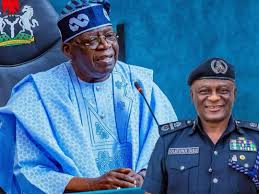
Senior presidential aides, speaking privately because they were not authorized to discuss the decision publicly, indicated Tuesday that Tinubu asked Egbetokun to step aside during a meeting at the Presidential Villa in Abuja on Monday. A formal announcement was being finalized, one aide said, adding that an official communication would be issued shortly.
The Presidency had not released a written statement as of press time. Calls and messages directed to the Force Public Relations Officer, Benjamin Hundeyin, went unanswered. Presidential spokesperson Bayo Onanuga also did not immediately respond to inquiries seeking clarification.
Officials within the upper ranks of the Nigeria Police Force suggested that a successor may already have been identified, though no public confirmation had been made. One senior officer, who requested anonymity due to the sensitivity of the matter, indicated that Tunji Disu had been approached in connection with the position. The officer characterized the outreach as preliminary, noting that the force was awaiting a formal declaration from the Presidency.
Egbetokun’s tenure began on June 19, 2023, following his appointment by Tinubu shortly after the president assumed office. His leadership period was marked by internal reforms, high-profile security operations and public scrutiny surrounding the enforcement of public order across several states.
Controversy intensified in 2024 when Egbetokun attained the statutory retirement age of 60 on Sept. 4. His continued service beyond that date drew criticism from civil society organizations and some legal analysts who questioned whether the extension aligned with established service rules. The debate subsided after amendments to the Police Act provided the legal basis for his extended stay in office.
The precise reasons for his removal were not immediately disclosed. However, the development comes amid mounting public pressure over security challenges, including violent crime, banditry in parts of northern Nigeria and persistent concerns about police accountability.
Security analysts say leadership transitions within the Nigeria Police Force often carry broader political and institutional implications. The Inspector-General oversees nationwide policing operations and plays a central role in coordinating internal security policy alongside the military and intelligence services. Any change at that level can signal recalibration within the administration’s security architecture.
While the Presidency has yet to outline the rationale behind the move, shifts in top security positions are not uncommon during the early and mid-stages of an administration. Observers note that presidents frequently seek alignment between their strategic security priorities and the operational leadership of key agencies.
Egbetokun, a career police officer, rose through the ranks over decades of service. His appointment in 2023 was viewed as part of Tinubu’s broader effort to consolidate his security team at the outset of his administration. During his tenure, the police undertook operations targeting organized criminal networks and sought to modernize certain aspects of internal command structures.
Still, public confidence in the force remained mixed. Advocacy groups repeatedly called for deeper structural reforms, including improved welfare for officers, better training and stronger accountability mechanisms to address allegations of misconduct.
The mention of Tunji Disu as a potential successor has fueled speculation about the direction of future reforms. Disu, known within policing circles for his operational roles in Lagos and other jurisdictions, is widely regarded as experienced in urban security management. If confirmed, his appointment could suggest an emphasis on tactical enforcement and rapid-response coordination.
The removal of Egbetokun arrives at a politically sensitive moment for the Tinubu administration. Nigeria continues to grapple with multifaceted security threats, ranging from insurgency in the northeast to organized kidnapping rings and communal violence in other regions. Leadership at the helm of the police force is often perceived as both symbolic and practical symbolic in terms of public trust, and practical in shaping operational outcomes.
Extending Egbetokun’s tenure beyond retirement age through legislative amendment may have resolved a legal question, but it did not fully quell debate over institutional norms. Critics argued that continuity must be balanced against transparency and adherence to established frameworks governing public service. Supporters countered that experience and stability were vital during periods of heightened insecurity.
By initiating a change now, Tinubu may be attempting to reset public perception and reinforce accountability within the security sector. Leadership transitions can serve as signals to both domestic and international observers that performance benchmarks are being reassessed.
There are also potential internal implications. Morale within the police force often fluctuates during periods of leadership uncertainty. Clear communication from the Presidency and swift confirmation of a successor could help stabilize the command structure and prevent operational disruptions.
The development underscores the broader challenge confronting Nigerian authorities: reforming policing institutions while addressing immediate security threats. Structural reforms such as improved recruitment standards, enhanced training in community policing and better resource allocation require sustained political will beyond individual appointments.
As the nation awaits formal confirmation of Egbetokun’s departure and the naming of a new Inspector-General, attention will turn to whether the change marks a substantive policy shift or a routine administrative transition.
For now, the Presidency’s forthcoming statement is expected to clarify the timeline for succession and outline the administration’s priorities for the next phase of policing leadership.





