

MEXICO CITY (BN24) — Claudia Sheinbaum on Tuesday pledged comprehensive security measures for football supporters expected in Guadalajara for upcoming World Cup fixtures, asserting there is “no risk” to visitors despite recent cartel-linked violence in the region.
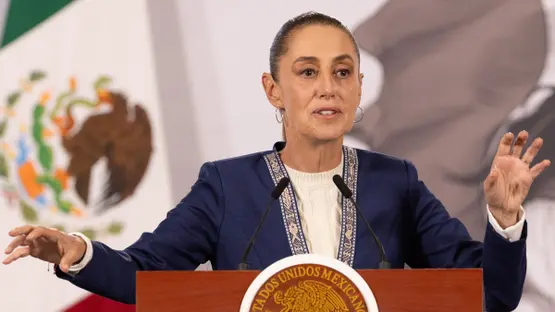
Her assurances followed a surge of unrest triggered by the killing of alleged drug kingpin Nemesio “El Mencho” Oseguera, identified by authorities as the head of the Jalisco New Generation Cartel. The military operation that led to his death occurred roughly 130 kilometers (80 miles) from Guadalajara, the capital of Jalisco state.
In the aftermath, cartel gunmen engaged security forces in a series of confrontations that left dozens dead, including members of the armed forces and suspected cartel operatives. The violence sent residents and visitors scrambling for safety and temporarily disrupted daily life across parts of western Mexico.
Sheinbaum emphasized that federal and state authorities have stabilized the situation and are coordinating efforts to ensure the safety of international guests attending matches in June. Guadalajara is scheduled to stage four games during the expanded 2026 World Cup tournament, co-hosted by Mexico, the United States and Canada.
“There is no risk,” Sheinbaum said in public remarks, adding that her administration is committed to providing full guarantees for fans traveling to the city.
FIFA, football’s global governing authority, declined to address questions regarding the recent violence.
Local officials indicated that businesses in Jalisco were set to reopen Tuesday as calm gradually returned. Schools were slated to resume classes Wednesday, signaling what authorities described as a return to normalcy.
Guadalajara is one of three Mexican host cities selected for the 2026 tournament, alongside Mexico City and Monterrey. The World Cup will mark Mexico’s third time hosting matches in the competition’s history, reinforcing the country’s longstanding role in global football.
While Sheinbaum’s security assurances are consistent with the government’s effort to project stability ahead of the World Cup, the episode underscores the persistent tension between Mexico’s international image and its domestic security challenges.
The killing of Oseguera — widely regarded as one of Mexico’s most powerful cartel figures — represents a significant tactical victory for security forces. However, history suggests that removing cartel leaders can produce short-term spikes in violence as factions compete for control. The rapid and coordinated response by gunmen following the operation illustrates the operational capacity that such groups continue to wield.
For Guadalajara, the stakes extend beyond immediate public safety. The World Cup is expected to deliver substantial economic benefits, including tourism revenue, infrastructure investment and global exposure. Any perception of instability could affect travel decisions and commercial partnerships tied to the tournament.
Mexico’s federal government has increasingly relied on the armed forces to address organized crime. Critics argue that militarization has not produced lasting reductions in violence, while supporters maintain it remains necessary against heavily armed criminal networks. The clashes near Guadalajara may renew debate over the long-term effectiveness of that strategy.
From an international perspective, tournament security will likely involve layered coordination among municipal, state and federal agencies, as well as collaboration with U.S. and Canadian counterparts given the tri-nation format of the 2026 event. Large-scale sporting events often include intelligence-sharing, crowd management planning and contingency protocols designed to mitigate both criminal and terrorist threats.
FIFA’s decision not to comment publicly aligns with its typical approach of deferring to host governments on security matters. However, behind the scenes, governing bodies routinely conduct risk assessments and maintain direct communication with local organizing committees. Ensuring fan confidence will be essential as ticket sales and travel plans accelerate.
The broader context is also political. Sheinbaum, as president, faces the dual imperative of confronting organized crime while safeguarding Mexico’s economic and diplomatic interests. The World Cup represents a showcase moment, and maintaining order in host cities will carry symbolic weight beyond the matches themselves.
For residents of Guadalajara, the swift reopening of businesses and schools may signal resilience. Yet episodes like this can leave lingering concerns about long-term stability. Whether the recent violence proves to be an isolated flare-up or part of a wider pattern will likely shape both domestic debate and international perception in the months leading up to the tournament.
As preparations intensify, authorities will aim to demonstrate that security frameworks are robust enough to protect millions of visitors. The coming weeks will test not only operational readiness but also the government’s ability to reassure a global audience that Mexico can host one of the world’s largest sporting spectacles without disruption.





