

GENEVA (BN24) —World Economic Forum President and CEO Børge Brende has stepped down following public disclosure that he previously met and communicated with convicted sex offender Jeffrey Epstein, the organization confirmed Thursday.
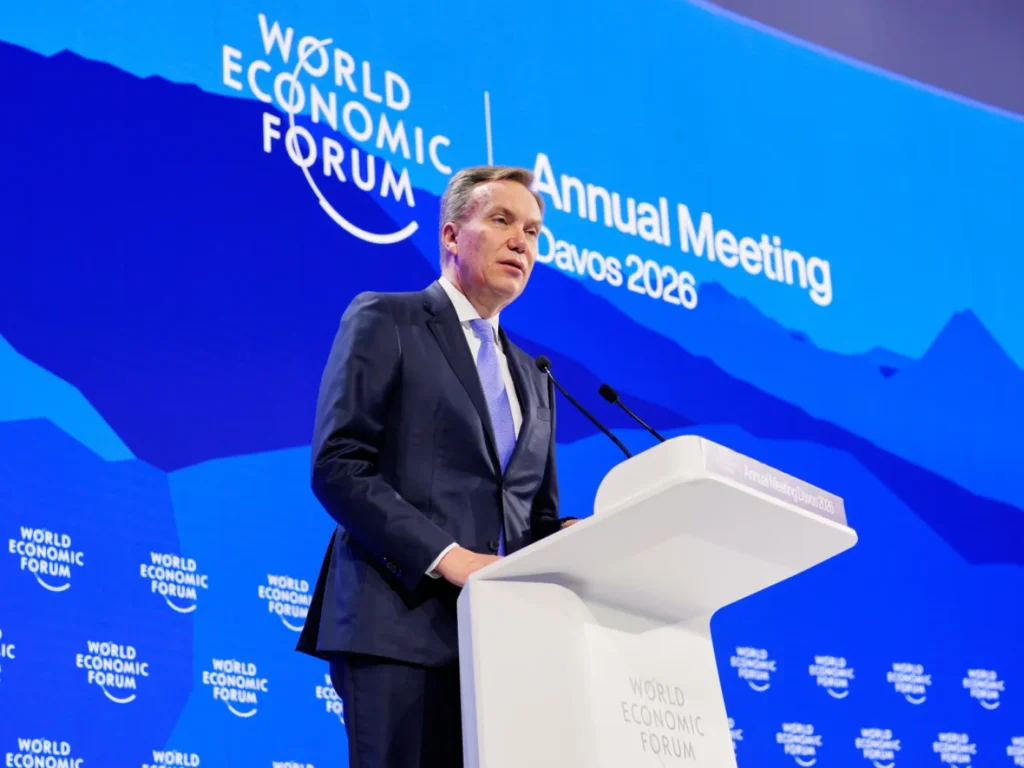
In a statement issued by Forum Co-Chairs Andre Hoffmann and Larry Fink, the governing body announced that Alois Zwinggi will assume the role of interim president and chief executive officer as the institution begins a leadership transition.
Brende, who has led the Geneva-based organization since 2017, said he decided to relinquish his position after the U.S. Justice Department disclosed that he attended three business dinners with Epstein and exchanged emails and text messages with him.
“After careful consideration, I have decided to step down as President and CEO of the World Economic Forum. My time here, spanning 8-1/2 years, has been profoundly rewarding,” Brende said Thursday.
While Brende did not reference Epstein directly in his resignation message, he emphasized the need to shield the organization from controversy.
“I am grateful for the incredible collaboration with my colleagues, partners, and constituents, and I believe now is the right moment for the Forum to continue its important work without distractions,” he added.
The Forum’s co-chairs released a separate communication confirming that an independent examination conducted by outside legal counsel into Brende’s past interactions had concluded. According to their statement, the review identified no additional issues beyond the contacts already disclosed publicly.
Earlier this month, the World Economic Forum initiated an independent inquiry to clarify the nature and scope of Brende’s relationship with Epstein. The Governing Board directed its Audit and Risk Committee to assess the matter, which then authorized the external review.
“In light of these interactions, the Governing Board requested the Audit and Risk Committee to look into the matter, which subsequently decided to initiate an independent review,” the Forum said in a prior statement, describing the move as part of its commitment to transparency and institutional integrity.
The Board of Trustees will supervise the leadership transition and oversee the process of identifying a permanent successor, the co-chairs said.
Epstein, a financier whose network once included prominent political and business figures, died in 2019 while awaiting trial on federal sex trafficking charges. His associations have drawn scrutiny across global institutions, and revelations of past contact — even in professional settings — have frequently triggered reputational fallout.
Brende’s tenure at the Forum spanned a period marked by geopolitical turbulence, including the COVID-19 pandemic, economic disruption, and heightened global tensions. Under his leadership, the annual Davos gathering remained a central venue for political leaders, executives, and civil society figures to discuss global challenges ranging from climate change to economic inequality.
The circumstances surrounding his departure underscore the reputational sensitivities confronting global organizations when historic associations with controversial figures come to light. Although the independent review found no further misconduct, the disclosure of prior contact proved sufficient to prompt leadership change.
The World Economic Forum has sought to emphasize continuity. Zwinggi, who has held senior leadership roles within the institution for years, is expected to manage day-to-day operations while trustees search for a permanent chief executive.
Governance experts note that high-profile nonprofits and international organizations often respond swiftly to reputational risk to preserve stakeholder confidence. In this case, the Forum’s decision to commission an external review before Brende’s resignation reflects an effort to demonstrate procedural transparency.
The episode also illustrates the enduring impact of Epstein’s network, years after his death. Numerous executives, academics, and political leaders have faced renewed scrutiny over past interactions that, at the time, may not have been publicly controversial but have since acquired new significance.
For the World Economic Forum, which convenes global elites and positions itself as a platform for ethical leadership and sustainable development, public trust is integral to its mission. Even limited or professional contact with a figure as widely condemned as Epstein can present reputational challenges.
Brende’s resignation reflects the heightened accountability standards applied to leaders of global institutions. In the current media and political environment, reputational risk can outweigh the findings of formal investigations, particularly when associations involve individuals convicted of serious crimes.
The Forum’s measured response, commissioning an independent review, publicly acknowledging its outcome, and facilitating an orderly transition signals a governance model designed to contain institutional damage. By separating the factual findings of the review from the broader reputational calculus, trustees appear to have concluded that leadership change would best protect the organization’s credibility.
This development may also influence how international organizations vet relationships and event participation going forward. Increased due diligence, documentation protocols, and reputational risk assessments are likely to become more stringent.
While the review found no additional concerns, the episode demonstrates how historic professional interactions can resurface years later with amplified consequences. In an era defined by digital records and retrospective scrutiny, leaders of global forums may face lower tolerance thresholds for controversial ties even when no wrongdoing is established.
The coming leadership selection process will be closely watched by governments, multinational corporations, and civil society groups that rely on the Forum as a convening platform. Stability during the transition will be critical to maintaining confidence ahead of future global summits.
As the World Economic Forum navigates this moment, the broader implication is clear: transparency alone may not fully mitigate reputational exposure in cases involving figures whose legacy remains synonymous with criminal exploitation.





