

At least one U.S. citizen was killed and another injured after Cuban forces opened fire on a Florida-registered vessel that entered Cuban waters near the island’s northeastern coast, U.S. officials said Wednesday, as Havana accused the group onboard of attempting an armed infiltration.
Two U.S. officials confirmed to NBC News that one American died in the confrontation and another was wounded. Cuban authorities earlier announced that four men were killed and six others captured following what they described as an armed incursion into territorial waters. The Cuban government alleged the men aboard the vessel initiated the exchange of gunfire.
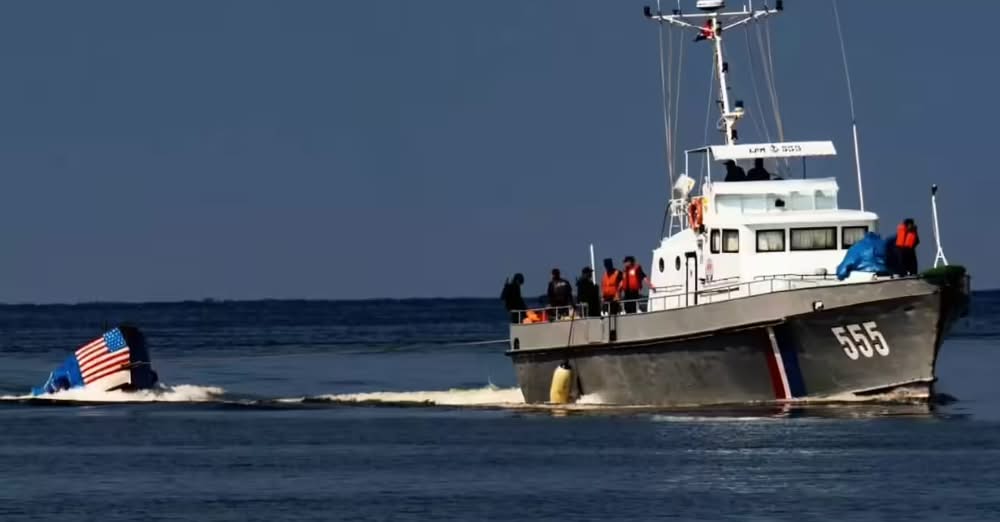
Cuban President Miguel Díaz-Canel declared Thursday that “Cuba will defend itself with determination and firmness against any terrorist and mercenary aggression that seeks to affect its sovereignty and national stability.” Cuban officials characterized the incident as a thwarted infiltration attempt organized by U.S.-based Cuban nationals.
U.S. Secretary of State Marco Rubio indicated that Washington will undertake its own review before responding. Rubio said the United States would independently verify the details provided by Havana and “reach our own conclusions.” As part of that effort, Rubio has requested access to the injured detainees held in Cuban custody, according to U.S. officials familiar with the matter.
Those officials also indicated that other individuals on the vessel may include U.S. lawful permanent residents, though that status has not been conclusively verified. A third individual aboard the boat had entered the United States on a K-1 visa, which allows foreign nationals to travel to the U.S. to marry American citizens.
A congressional aide told NBC News there is no evidence of any U.S. government connection to the individuals involved. Two people close to one of the detainees told NBC that some members of the group were affiliated with a paramilitary organization opposed to the Cuban government.
Cuba’s deputy foreign minister, Carlos Fernández de Cossío, told reporters in Havana that Cuban authorities are coordinating with the U.S. Coast Guard and the State Department as the investigation continues. “An investigation is underway to clarify the facts with the utmost rigor,” he said. “The Cuban government is willing to exchange information with the United States on this matter.”
Cuban authorities identified the four deceased men as Michel Ortega Casanova, Hector Duani Cruz Correa, Pavel Alling Peña and Ledián Padrón Guevara. In Tampa, Florida, Ortega Casanova’s brother, Misael Ortega Casanova, told Telemundo 49 that while he did not endorse his sibling’s actions, he viewed the episode through the lens of long-standing opposition to Cuba’s government. “Today it was my brother’s turn,” he said, adding that the struggle demonstrates the sacrifices made in pursuit of freedom.
Ibrahim Bosch, president of Partido Republicano de Cuba, an opposition organization, confirmed that Ortega Casanova had been a member but emphasized in a social media post that the group’s leadership had no prior knowledge of any plans connected to the maritime incident.
Florida authorities are investigating the origins of the vessel. An incident report from the Monroe County Sheriff’s Office, obtained by NBC News, indicates that the boat was reported stolen Wednesday. The owner alleged that Cruz Correa may have taken it without authorization.
Cuban officials also published the names of six men they say are detained. Two of them, Amijail Sánchez González and Leordan Cruz Gómez, had previously been designated by Cuba as wanted for alleged involvement in activities linked to terrorism, according to Cuban state media citing the Interior Ministry. NBC News said it could not independently corroborate those claims.
Complicating matters, Roberto Azcorra Consuegra, a Cuban man living in Miami, told Telemundo that his name appeared on the Cuban government’s list of detainees despite his presence in the United States. Cuba’s Foreign Affairs Ministry later acknowledged what it described as an “error in identification,” clarifying that Azcorra Consuegra was not among those captured, though it described him as someone known for past actions hostile to the Cuban state.
Family members of one detainee, Conrado Galindo Sariol, expressed shock. His daughter, María de Jesús Galindo, told Telemundo Miami that the family had no prior knowledge of his involvement. She said her father previously spent seven years imprisoned in Cuba for political activism and fears for his safety now that he is again in custody. His wife, Ana Seguí, rejected characterizations of her husband as a terrorist, describing him as a vocal critic of the government who advocated for freedom.
Miami-based activist Jorge Luis García Pérez, known as Antúnez, told NBC News that he had shared a prison cell with Galindo Sariol in Camagüey and remembered him as a disciplined and principled political prisoner.
The incident comes amid renewed strain between Washington and Havana. President Donald Trump has predicted that “Cuba will be failing pretty soon” and has acknowledged ongoing discussions with Cuban leaders. At the same time, his administration has tightened economic pressure, including restrictions affecting oil shipments to the island.
The deadly confrontation marks one of the most serious direct incidents involving U.S.-based Cuban nationals and Cuban forces in recent years. It unfolds against a backdrop of deepening economic hardship in Cuba, where fuel shortages and supply disruptions have intensified a humanitarian crisis marked by food scarcity and declining public services.
For Washington, the episode presents both diplomatic and domestic political sensitivities. Florida’s Cuban American community remains sharply divided between calls for aggressive action against Havana and caution over escalation. Any confirmed loss of American life in foreign territorial waters heightens pressure for a measured but firm response.
Havana’s swift framing of the event as a “foiled armed infiltration” underscores the Cuban government’s longstanding narrative that exile groups pose a security threat. Yet questions remain about the boat’s mission, who initiated gunfire and whether the encounter could have been avoided.
The U.S. decision to conduct an independent investigation signals a deliberate effort to prevent immediate diplomatic rupture while facts are verified. Still, the combination of criminal allegations, paramilitary affiliations and mistaken identity claims may complicate already fragile communications between the two governments.
How the investigation unfolds — and whether both nations cooperate in clarifying the circumstances — could determine whether the clash remains an isolated maritime confrontation or evolves into a broader flashpoint in U.S.–Cuba relations.





