

TUNIS, Tunisia (BN24) — A Tunisian appeals court on Thursday sentenced former Prime Minister Ali Larayedh to 24 years in prison over allegations that he facilitated the travel of Tunisian fighters to Syria during the country’s civil war, in a case that has deepened political divisions in the North African nation.
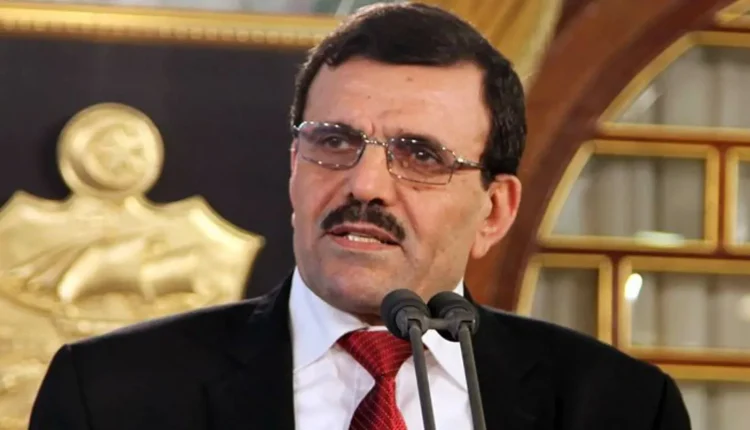
The ruling, delivered late Thursday by the Appeals Court of Tunis, reduced by 10 years the 34-year prison term previously imposed in a lower court decision in May 2025. Prosecutors had sought the 34-year sentence, which the trial court had upheld before the case moved to appeal.
Larayedh, who served as Tunisia’s prime minister from 2013 to 2014 in the turbulent period following the Arab Spring uprising, has consistently denied wrongdoing. The case — widely known in Tunisia as the “Tasfir” case, using the Arabic term referring to travel for jihad — centers on accusations that officials during his tenure enabled or failed to prevent the departure of Tunisian nationals to join armed groups in Syria.
The appeals chamber upheld Larayedh’s conviction while reducing the overall sentence. Court officials did not immediately release a detailed explanation of the judgment.
Seven other defendants were sentenced in the same proceeding, receiving prison terms ranging from three to 28 years, according to court findings announced Thursday.
Larayedh’s political party, the Islamist opposition movement Ennahda, criticized the ruling, characterizing it as politically driven. Party representatives argued that the proceedings lacked conclusive evidence and described the prosecution as part of a broader campaign targeting opposition figures.
The former prime minister’s initial trial, held last year, was marked by controversy, including disputes over the sufficiency and reliability of the evidence presented. Defense attorneys questioned whether prosecutors had established a direct link between Larayedh’s official actions and the departure of Tunisian fighters to Syria.
Tunisia was one of the largest sources of foreign fighters during the height of the Syrian conflict. Thousands of Tunisians are believed to have traveled to Syria and Iraq in the early and mid-2010s, raising long-standing questions about state oversight, border controls and the role of political actors during a period of fragile democratic transition.
Larayedh led the government during a particularly volatile chapter in Tunisia’s post-revolution history, as the country struggled to stabilize its institutions following the 2011 uprising that toppled longtime President Zine El Abidine Ben Ali. His term coincided with mounting security challenges, including political assassinations and the growing influence of extremist networks.
The “Tasfir” case has become one of the most politically sensitive judicial proceedings in Tunisia in recent years. Critics say it reflects widening tensions between the current authorities and opposition parties, particularly Ennahda, which once dominated Tunisia’s parliament and led several coalition governments after the revolution.
Government officials have maintained that the judiciary is acting independently and that the case is rooted in national security concerns rather than political calculations.
While the court’s ruling addresses specific allegations tied to the Syria conflict, the broader implications extend well beyond Larayedh’s personal fate.
Tunisia’s democratic trajectory has faced significant strain in recent years, with institutional reforms and political restructuring reshaping the balance of power. Legal actions against prominent political figures have drawn scrutiny from domestic and international observers concerned about due process and judicial independence.
The “Tasfir” proceedings also reopen unresolved questions about accountability during the chaotic years following the Arab Spring. At that time, Tunisia’s security institutions were undergoing rapid transformation, and oversight mechanisms were still evolving. Critics of the prosecution argue that decisions made during that period should be understood within the broader context of state fragility rather than viewed solely through a criminal lens.
Supporters of the verdict, however, contend that the scale of Tunisian recruitment into foreign conflicts warranted a thorough reckoning. They argue that any official negligence or complicity must be addressed to restore public trust in state institutions.
The reduction of Larayedh’s sentence on appeal may signal a degree of judicial recalibration, though it does not fundamentally alter the conviction itself. Legal analysts note that appeals courts often reassess sentencing proportionality while leaving core findings intact.
Beyond the courtroom, the ruling is likely to reverberate across Tunisia’s political landscape. Ennahda, once a central force in the country’s post-revolution governance, has seen its influence diminish amid shifting public sentiment and structural political changes. The conviction of a former prime minister further complicates the party’s efforts to reposition itself.
The case may also affect Tunisia’s international image. During the early years after the Arab Spring, the country was widely regarded as the most promising example of democratic transition in the region. Ongoing legal battles involving high-profile political figures risk reinforcing perceptions of instability or political polarization.
At the same time, the proceedings underscore Tunisia’s struggle to reconcile security imperatives with civil liberties. The Syrian conflict drew thousands of foreign recruits from across North Africa and Europe, and governments throughout the region continue to grapple with the legal and political consequences.
For Larayedh, the appeals court’s decision marks a significant chapter in a legal saga that has unfolded over several years. Whether further legal recourse remains available was not immediately clear.
As Tunisia navigates a complex political era shaped by post-revolution legacies, security concerns and evolving governance structures, the outcome of the “Takfir” case stands as a defining moment not only for a former prime minister, but for the country’s broader debate over accountability, justice and the meaning of its democratic experiment.





