

NYON, Switzerland (BN24) — The Round of 16 matchups for the 2025/26 UEFA Champions League were finalized Friday following the official draw at UEFA headquarters in Nyon, producing a series of high-profile clashes among Europe’s elite clubs.
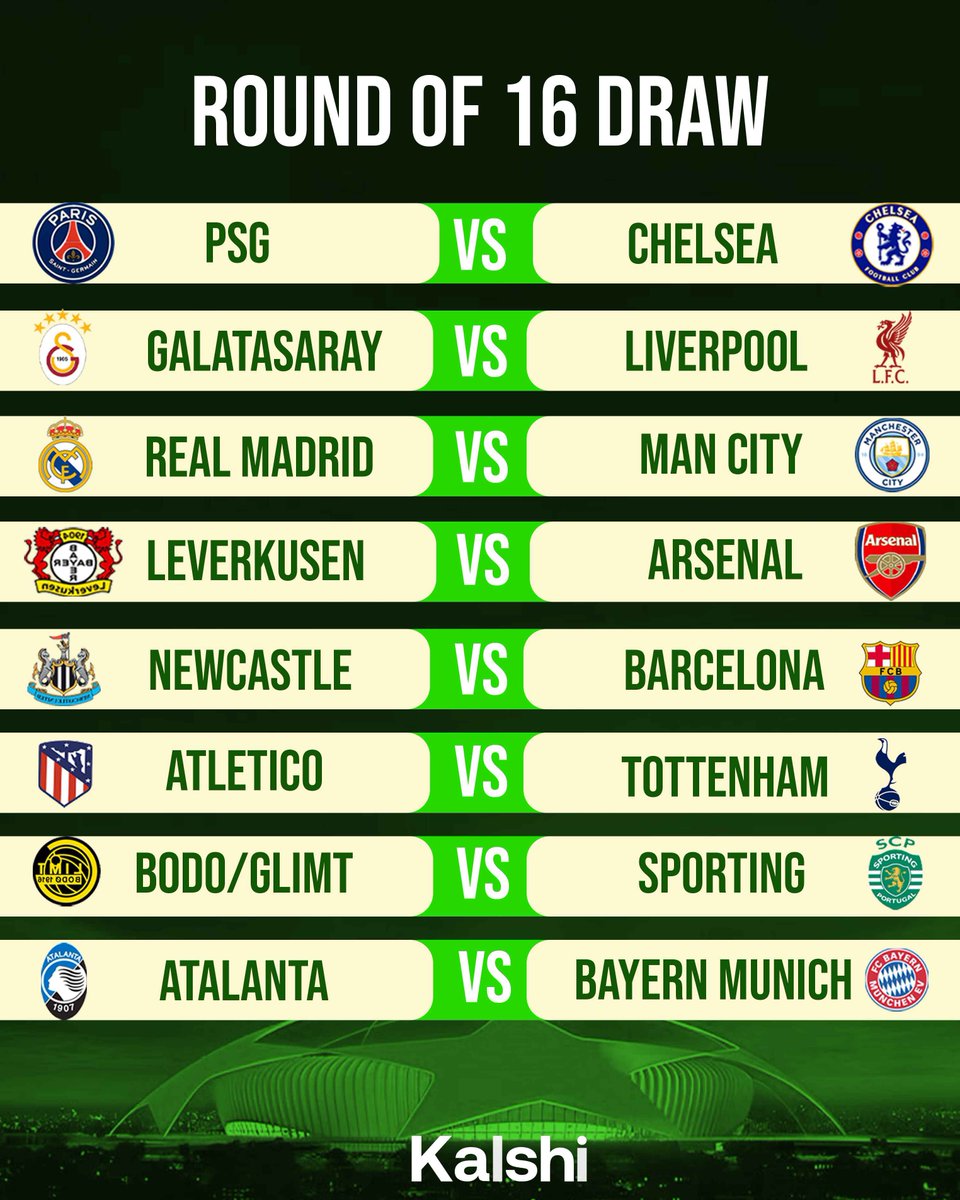
The knockout bracket features heavyweight encounters, renewed rivalries and a historic debut appearance at this stage of the competition, setting the tone for what promises to be a compelling run toward the final in May.
Among the standout pairings, Manchester City will once again face Real Madrid, continuing a recent pattern of meetings between the English and Spanish giants in the latter stages of the tournament. The two clubs have developed one of the defining rivalries of modern European football, frequently colliding in decisive knockout rounds.
Defending champions Paris Saint-Germain were drawn against Premier League side Chelsea, a tie that pits continental holders against one of England’s most resurgent squads.
In another marquee fixture, Galatasaray will meet Liverpool, while Italy’s Atalanta take on German champions Bayern Munich.
English representation remains strong in this year’s knockout field. Newcastle United are set to face Spanish powerhouse Barcelona, and Tottenham Hotspur will clash with Atlético Madrid.
Elsewhere, Norway’s Bodø/Glimt have reached the Champions League knockout stage for the first time in their history and will face Portugal’s Sporting CP. Meanwhile, Bayer Leverkusen were paired with Arsenal in what observers view as one of the most evenly matched contests of the round.
The confirmed ties are:
Paris Saint-Germain vs Chelsea
Galatasaray vs Liverpool
Real Madrid vs Manchester City
Atalanta vs Bayern Munich
Newcastle United vs Barcelona
Atlético Madrid vs Tottenham Hotspur
Bodø/Glimt vs Sporting CP
Bayer Leverkusen vs Arsenal
The Round of 16 will be contested over two legs, scheduled for March 10/11 and March 17/18, 2026. Kickoff times are set for 18:45 CET and 21:00 CET.
The quarterfinals will take place April 7/8 and April 14/15, 2026, with matches beginning at 21:00 CET. Semifinal fixtures are slated for April 28/29 and May 5/6, also at 21:00 CET.
The final is scheduled for May 30, 2026, with kickoff at 18:00 CET.
This year’s bracket underscores the competitive depth of the modern Champions League. Several ties resemble matchups more commonly associated with semifinals or finals.
Manchester City’s latest encounter with Real Madrid continues a rivalry that has shaped recent editions of the competition. Tactical evolution, squad depth and managerial adjustments will again be decisive factors. The margin between the two sides has historically been narrow, often determined by moments of individual brilliance.
PSG’s meeting with Chelsea also carries broader significance. As defending champions, PSG face immediate pressure to assert dominance against a Premier League side that thrives in transitional play and high-tempo matches. Chelsea’s European pedigree ensures the contest will test PSG’s defensive resilience.
Arsenal’s pairing with Bayer Leverkusen could prove pivotal for both clubs’ continental ambitions. Leverkusen’s disciplined structure and attacking efficiency contrast with Arsenal’s possession-based approach, suggesting a tactically balanced affair.
For Bodø/Glimt, the knockout debut marks a milestone not only for the club but also for Norwegian football. Advancing beyond the group stage reflects the increasing competitiveness of smaller-market teams capable of leveraging tactical organization and home advantage.
The broader picture reveals strong English participation, reinforcing the Premier League’s financial and competitive influence in European football. However, Spanish and German clubs remain formidable, preserving the traditional power balance within UEFA competitions.
As the tournament moves into its elimination phase, squad rotation, injury management and fixture congestion will shape outcomes. With domestic leagues intensifying simultaneously, maintaining peak performance across competitions will be critical.
The 2025/26 Round of 16 promises not only elite matchups but also narrative continuity — rivalries renewed, newcomers emerging and established powers defending legacy. With Europe’s most prestigious club trophy at stake, the path to May’s final is now clearly defined.





