

Explosions tore through the heart of the Middle East’s most stable and prosperous capitals Saturday, transforming the glittering skylines of Dubai, the strategic facilities of Bahrain, the transportation hubs of Kuwait, and the northern territories of Jordan into smoking battlegrounds as Iranian retaliation for U.S.-Israeli strikes dragged previously insulated Gulf nations into a rapidly metastasizing regional war.
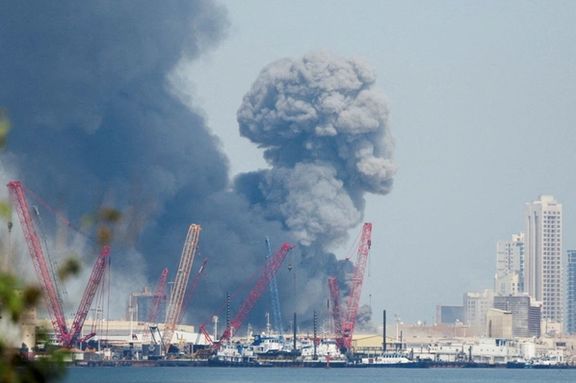
The thunderous detonations shattered decades of carefully maintained neutrality and security across Gulf monarchies that had invested fortunes building reputations as safe havens for international business, tourism, and financial services. Within hours, those investments lay threatened as missiles and drones struck civilian hotels, military installations, airports, and residential towers in coordinated Iranian attacks that crossed red lines Tehran had historically respected.
Iranian missiles slammed into Dubai’s world-renowned Fairmont hotel on the opulent Palm Jumeirah peninsula shortly after midday, setting the five-star luxury property ablaze and sending terrified residents scrambling for safety as their gleaming metropolis became a war zone. Social media footage captured flames erupting near the hotel’s entrance as four people sustained injuries—images that instantly circulated globally, demolishing Dubai’s carefully cultivated image as an oasis of stability surrounded by Middle Eastern chaos.
“Everyone is very scared,” one Dubai resident conveyed as explosions echoed across the city and air defense systems struggled to intercept incoming projectiles. “There is footage of missile interceptions all over the city. I am packing a suitcase just in case … not that we can leave, because airspace is closed. It is the thing we have all been frightened about happening, and now it has.”
The scenes represented nightmares Gulf leaders had worked desperately to prevent—their modern cities transformed overnight from showcases of development and prosperity into targets in conflicts they had attempted remaining neutral within. The attacks exposed the vulnerability of nations that had bet their futures on economic diversification and international engagement while wars raged around them.
In Bahrain, the small island nation hosting America’s Fifth Fleet headquarters, an Iranian drone deliberately flew into a high-rise building in what appeared to be a targeted strike, detonating and engulfing the skyscraper in flames that illuminated Manama’s skyline. The spectacular explosion sent residents fleeing as burning debris rained onto streets below, creating panic in a capital unaccustomed to combat.
Earlier strikes had hit Bahrain’s national security agency headquarters with missiles, demonstrating Iran’s capability to strike sensitive government facilities across the tiny nation whose strategic location in the Persian Gulf has made it invaluable to American military operations for decades. Social media footage appeared to show projectiles impacting the massive U.S. Naval Forces Central Command installation—headquarters of the Fifth Fleet that patrols vital shipping lanes through which one-fifth of global petroleum supplies transit daily.
While U.S. officials acknowledged some infrastructure damage at the Fifth Fleet headquarters, they maintained that no American casualties resulted from the Iranian bombardment. However, the successful strikes on the heavily fortified naval facility demonstrated that even America’s most protected Middle Eastern installations remained vulnerable to Iranian missile and drone capabilities that have advanced substantially over recent years.
Kuwait experienced its own trauma as a drone crashed into the nation’s primary airport, wounding several employees and damaging critical aviation infrastructure that serves as a vital hub connecting the Arabian Peninsula to global air routes. The assault forced immediate flight cancellations and sent travelers fleeing terminal buildings as sirens wailed and emergency responders converged on the facility.
The airport strike represented particularly ominous escalation, targeting civilian transportation infrastructure rather than military installations and raising prospects that commercial aviation across the Gulf region could become collateral damage in the expanding conflict. Airlines immediately began reassessing whether Gulf airports remained safe for operations, threatening economic disruption far beyond immediate combat effects.
Jordan, the Hashemite Kingdom that has maintained delicate balancing acts between Western allies and regional powers throughout decades of Middle Eastern turbulence, found itself caught in the crossfire as explosions rocked its territory. Fires blazed across the northern city of Irbid as missile debris from Iranian projectiles intercepted by Jordanian and Israeli air defenses fell from the sky and ignited, transforming residential neighborhoods into danger zones.
Jordan’s General Command military source told NBC News that two Iranian ballistic missiles targeting Israel or U.S. facilities had been shot down over Jordanian airspace, with flaming wreckage scattering across populated areas. The kingdom—which shares borders with Israel, Syria, Iraq, and Saudi Arabia—suddenly confronted the reality of becoming a battlefield in conflicts it had worked assiduously to avoid.
The attacks on Dubai, Bahrain, Kuwait, and Jordan represented a dramatic expansion of Iranian military operations beyond historical boundaries. In previous confrontations between Tehran and Western powers or Israel, Iran had generally refrained from directly striking Gulf Arab nations despite hosting substantial American military presence, apparently calculating that attacking oil-rich monarchies risked alienating potential diplomatic intermediaries and provoking military responses the Islamic Republic preferred avoiding.
Saturday’s violence demolished that restraint as Iranian missiles and drones struck multiple Gulf capitals in what Tehran characterized as self-defense against American bases but which inevitably endangered civilian populations and infrastructure across nations that had attempted maintaining cordial relations with both Iran and the United States.
The United Arab Emirates, which includes Dubai among its seven emirates, announced that at least one person died in Abu Dhabi from falling debris following an Iranian strike—the first confirmed civilian fatality from attacks on Gulf territories. The death underscored how rapidly the expanding conflict was producing casualties among populations far from the epicenters of U.S.-Israeli-Iranian confrontation.
Iran’s Islamic Revolutionary Guard Corps declared via state television that it had targeted “the headquarters of the U.S. Navy’s Fifth Fleet in Bahrain, other U.S. bases in Qatar and the UAE, as well as military and security centers.” The announcement confirmed that Iranian military planners had deliberately selected targets across multiple Gulf nations rather than concentrating retaliation exclusively on Israel or specific American installations.
Iranian Foreign Minister Abbas Araghchi told Gulf governments “we have no intention to attack them but we are actually attacking the American bases in the act of self-defence.” However, the strikes on Dubai’s Fairmont hotel—a civilian luxury property far from military facilities—and Kuwait’s commercial airport directly contradicted claims of limiting attacks to military targets, exposing the hollowness of Iranian assurances.
Qatar’s Ministry of Defense confirmed intercepting a third wave of Iranian attacks targeting its territory, while Bahraini authorities reported multiple strikes against both military and civilian locations. The small Gulf nations found their sophisticated air defense systems—purchased at enormous expense from Western suppliers precisely to prevent such scenarios—struggling to intercept the volume of incoming projectiles as Iran demonstrated capabilities exceeding previous assessments.
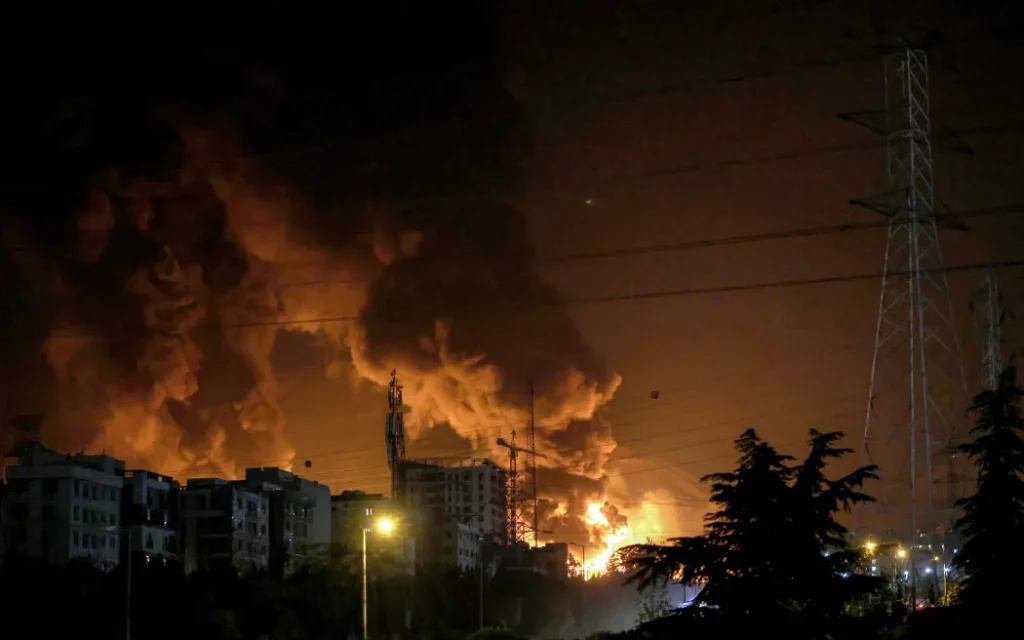
The attacks drew immediate condemnation from Gulf governments unaccustomed to foreign powers treating their territories as combat zones. Qatar characterized Iranian strikes as a “direct assault on national security,” while multiple Gulf states warned they possessed rights to respond militarily to sovereignty violations—raising the terrifying prospect of direct Gulf-Iranian warfare that could engulf the world’s most critical energy-producing region.
“The information and material circulating on social media do not correspond with any danger at the terminals, rather to the panic among passengers,” the Pacific Airport Group insisted regarding chaos at other regional airports, though their statement did little to calm populations watching explosions light up their cities’ skylines.
For residents across the Gulf, the violence represented the materialization of long-dreaded scenarios. Dubai residents who had spent Saturday morning enjoying beach clubs and shopping in air-conditioned malls found themselves by afternoon watching missile interceptions streak across skies they had always assumed remained safe. Bahraini families accustomed to evening strolls along Manama’s waterfront corniche instead huddled indoors as explosions echoed across their tiny island. Kuwaitis who had planned weekend travel suddenly confronted a disabled airport and closed airspace that trapped them in a conflict zone.
Gas stations across the region developed long lines within hours as residents rushed to fuel vehicles for potential evacuation, while grocery stores experienced runs on bottled water, canned goods, and other essentials as populations prepared for extended conflict. Banks witnessed increased activity as customers withdrew cash against possibilities that electronic payment systems might fail if infrastructure sustained additional damage.
The psychological impact extended beyond immediate danger. Generations of Gulf residents who had grown up insulated from the wars, revolutions, and violence that plagued surrounding regions suddenly confronted the reality that their wealth and modernity provided no immunity from conflicts sweeping the broader Middle East. The carefully constructed narrative that economic development and diplomatic engagement could maintain security collapsed as missiles fell on luxury hotels and commercial airports.
Gulf leaders faced catastrophic policy failures as explosions demonstrated that attempts remaining neutral in intensifying U.S.-Iranian confrontation had proven futile. Despite hosting substantial American military presence while maintaining economic ties with Iran and attempting to mediate between adversaries, the monarchies found themselves targeted anyway—suffering attacks that threatened their fundamental development models predicated on stability and security.
The economic implications stretched far beyond immediate damage costs. International corporations with regional headquarters in Dubai would reassess whether the city remained suitable for operations if missile attacks could occur without warning. Tourism industries that generated billions in revenue for Gulf economies faced potential collapse if travelers viewed the region as a war zone. Financial services sectors built on perceptions of Gulf stability confronted questions about whether markets could function normally amid armed conflict.
Energy markets reacted nervously to violence in the Persian Gulf region that produces approximately one-third of global petroleum supplies. While no strikes had yet targeted oil infrastructure—Gulf states’ most critical economic assets—traders recognized that if the conflict persisted or intensified, energy facilities could become targets either deliberately or accidentally, potentially disrupting supplies and spiking prices globally.
The attacks also exposed military vulnerabilities that Gulf nations had spent billions attempting to eliminate. Despite purchasing cutting-edge air defense systems, advanced fighter aircraft, and sophisticated radar networks, the small kingdoms discovered that determined adversaries could still penetrate their defenses and strike targets across their territories. The realization that massive defense expenditures could not guarantee security would force fundamental reassessments of Gulf military strategies.
Diplomatically, the explosions placed Gulf leaders in impossible positions. They faced pressure from Washington to support American operations against Iran while simultaneously needing to avoid further Iranian retaliation that could devastate their economies and threaten regime stability. Some Gulf ruling families maintain close relationships with figures like Jared Kushner, President Trump’s son-in-law who exercises substantial influence over Middle East policy, potentially giving them channels to advocate for de-escalation.
However, analysts cautioned that attacking Gulf territories might backfire for Iran by transforming previously sympathetic voices into adversaries demanding military responses. Gulf states that had attempted mediating between Washington and Tehran might instead join international coalitions against Iran if their populations demanded retaliation for sovereignty violations and civilian casualties.
As darkness fell Saturday across smoking Gulf capitals, residents confronted uncertain futures. Whether the explosions represented isolated incidents in a conflict that might quickly resolve or opening salvos in extended warfare that would transform the region remained unclear. Air raid sirens, burning buildings, and closed airspace had replaced the normalcy that Gulf populations had assumed represented permanent conditions rather than temporary privileges that could evaporate when great powers chose warfare over diplomacy.
The psychological transformation from security to vulnerability, from confidence to fear, from certainty about futures to doubts about survival marked Saturday as a historical turning point for Gulf societies. The explosions that rocked Bahrain, Dubai, Jordan, and Kuwait not only damaged buildings and killed people—they shattered illusions about immunity from Middle Eastern violence that had shaped Gulf identities and ambitions for generations.
NBC/Guardian





