

(Reuters) — Three U.S. Air Force F-15 fighter jets were mistakenly shot down by Kuwaiti air defenses during active combat operations over Kuwait, U.S. Central Command confirmed Monday, marking the first loss of American aircraft since the United States and Israel launched strikes against Iran.
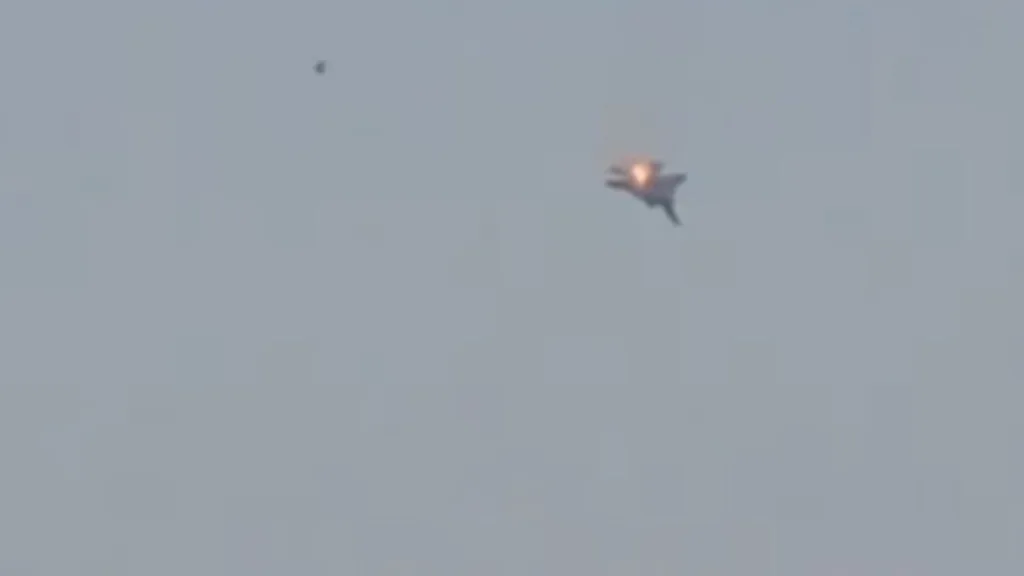
The Pentagon characterized the incident as “apparent friendly fire” during Operation Epic Fury, saying Kuwaiti air defense systems engaged the aircraft amid a barrage of Iranian missiles, drones and aircraft operating across the Gulf.
“During active combat — that included attacks from Iranian aircraft, ballistic missiles and drones — the U.S. Air Force fighter jets were mistakenly shot down by Kuwaiti air defenses,” CENTCOM said in a statement released on social media.
All six crew members aboard the three F-15D Strike Eagle aircraft ejected safely and were recovered. U.S. officials said the airmen are in stable condition. Kuwaiti authorities acknowledged the incident, and U.S. commanders expressed appreciation for what they described as Kuwait’s continued cooperation during the unfolding conflict.
The episode underscores the volatility of airspace over the Gulf as Iranian retaliatory strikes intensify in response to U.S.-Israeli operations targeting Iranian military and leadership infrastructure. It also highlights the inherent risks of coalition warfare in a densely contested environment where multiple missile, drone and aircraft threats are unfolding simultaneously.
Video footage circulating online and verified by Reuters showed a U.S. warplane spiraling downward near Al Jahra, west of Kuwait City, close to Ali Al-Salem Air Base. One clip captured a parachute descending toward the ground moments before impact. Kuwait’s Ministry of Defense earlier indicated that several American aircraft had crashed, adding that all crew members survived.
A Pentagon spokesperson said there was no additional information beyond the CENTCOM statement and comments posted by the Secretary of War on social media. CENTCOM said the cause of the incident remains under investigation and that further details would be released once the review is complete.
The friendly-fire episode occurred against the backdrop of Iranian drone and missile attacks targeting Gulf states for a third consecutive day. Kuwait’s air defenses intercepted what officials described as hostile drones over residential areas including Rumaithiya and Salwa. Sirens and loud explosions were heard across Kuwait City throughout the morning, according to Reuters witnesses.
In a separate development, smoke was seen rising from near the U.S. Embassy compound in Kuwait City. Emergency vehicles responded to the scene, though there was no immediate confirmation of casualties or structural damage. The U.S. Embassy urged American citizens to shelter in place and avoid travel to the compound, citing an ongoing threat of missile and drone attacks. The advisory recommended remaining indoors, staying on lower floors away from windows and limiting movement outdoors.
Iranian state media, citing the Islamic Revolutionary Guard Corps, asserted that Iranian forces had struck a U.S. aircraft that later crashed in Kuwait. U.S. officials have not attributed the aircraft losses to direct Iranian fire, instead identifying Kuwaiti air defenses as the source of the mistaken engagement.
The spillover extended to critical infrastructure. Kuwait National Petroleum Company announced that falling debris from intercepted drones injured two workers at the Mina Al-Ahmadi refinery. Both sustained minor injuries. Regional aviation and energy facilities across the Gulf have heightened security measures as the conflict broadens.
Explosions were also reported in Dubai and Doha early Monday, according to Reuters witnesses, reflecting the widening reach of Iranian retaliatory operations. Tehran has vowed to strike U.S. bases throughout the region following the joint American-Israeli strikes that began Saturday.
According to Reuters/Ipsos polling conducted over the weekend, roughly one in four Americans supports U.S. military strikes on Iran, with many respondents expressing concern about potential harm to U.S. service members. President Donald Trump acknowledged Sunday that additional American casualties are possible as operations continue, stating that “we may have casualties” while pledging to press forward with military objectives.
Military analysts say the downing of three U.S. aircraft by allied defenses illustrates how quickly high-intensity conflict can strain coordination among partners. Modern air defense systems are designed to respond within seconds to incoming threats. In an environment saturated with ballistic missiles, drones and combat aircraft, identification errors can occur despite advanced friend-or-foe technology.
Original analysis suggests the incident may prompt a reassessment of airspace management protocols across coalition forces in the Gulf. As Iranian retaliatory strikes expand, the risk of miscalculation increases not only between adversaries but also among allied militaries operating in close proximity. Defense experts note that rapid deconfliction and improved communication channels are essential to prevent further friendly-fire incidents.
The crash also carries symbolic weight. While no American personnel were killed, the loss of three advanced fighter jets represents a significant operational setback and underscores the unpredictable trajectory of the war. The conflict, which began with targeted U.S.-Israeli strikes on Iranian military infrastructure, has expanded to include attacks on Gulf cities, oil facilities and diplomatic compounds.
For Kuwait, a key U.S. security partner hosting American forces, the friendly-fire incident places additional pressure on coordination efforts amid escalating regional tensions. Kuwaiti officials have publicly acknowledged the error, and both governments have emphasized ongoing cooperation.
CENTCOM said its investigation would examine radar data, engagement protocols and communications between U.S. and Kuwaiti forces during the engagement. Military officials indicated that findings would be shared once operational security considerations allow.
As missile alerts continue to sound across Gulf capitals and U.S. forces remain on heightened alert, Monday’s friendly-fire incident stands as a stark reminder of the fog of war — and the fragile margin for error in an increasingly crowded and contested battlespace.





