

Donald Trump said Monday that U.S. military operations targeting Iran could continue for “four to five weeks — or longer,” underscoring the prospect of a sustained confrontation as hostilities ripple across the Middle East and unsettle global markets.
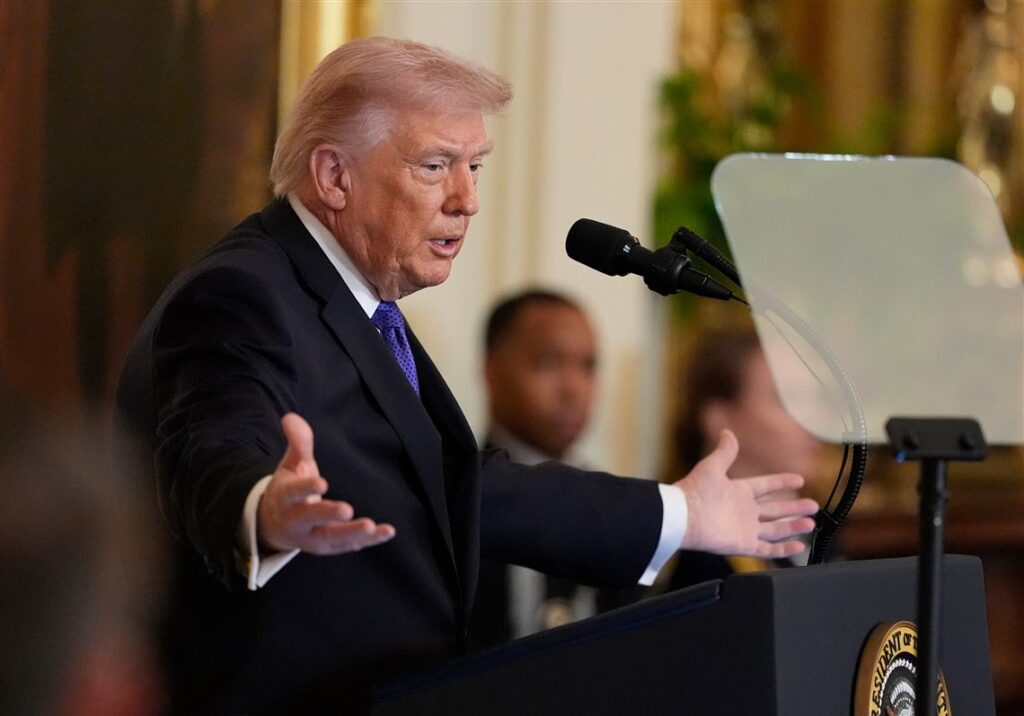
Speaking at the White House, Trump framed the expanding air and naval offensive as a decisive move to cripple Iran’s missile capabilities, neutralize elements of its naval fleet and block what he described as Tehran’s path toward acquiring a nuclear weapon. The president characterized the campaign as a strategic necessity rather than an open-ended conflict but acknowledged that its duration would depend on battlefield developments.
“This was our final opportunity to act decisively,” Trump said, signaling that U.S. forces are prepared to maintain pressure until objectives are achieved.
The remarks came as U.S. and Israeli strikes intensified across multiple fronts, drawing retaliation from Iran and allied militias and widening a war that now stretches from the eastern Mediterranean to the Persian Gulf.
Iranian state media announced the death of Supreme Leader Ali Khamenei in the initial wave of bombardment, a development that has left the country’s political structure in flux. Iranian officials vowed continued resistance, and military units launched missile and drone attacks aimed at Israeli territory and several Gulf states hosting U.S. military assets.
Lebanon’s Hezbollah, long aligned with Tehran, fired projectiles into northern Israel, prompting Israeli airstrikes on targets in southern Lebanon. Local health authorities there said dozens were killed and more than 150 wounded in the exchange. Israeli defense officials indicated operations would proceed “for as long as required” to eliminate cross-border threats.
The Pentagon confirmed additional U.S. casualties since the campaign began but did not release detailed figures. Defense Secretary Pete Hegseth cautioned that the military phase would involve “gritty, sustained engagement,” preparing Americans for further losses as the mission expands.
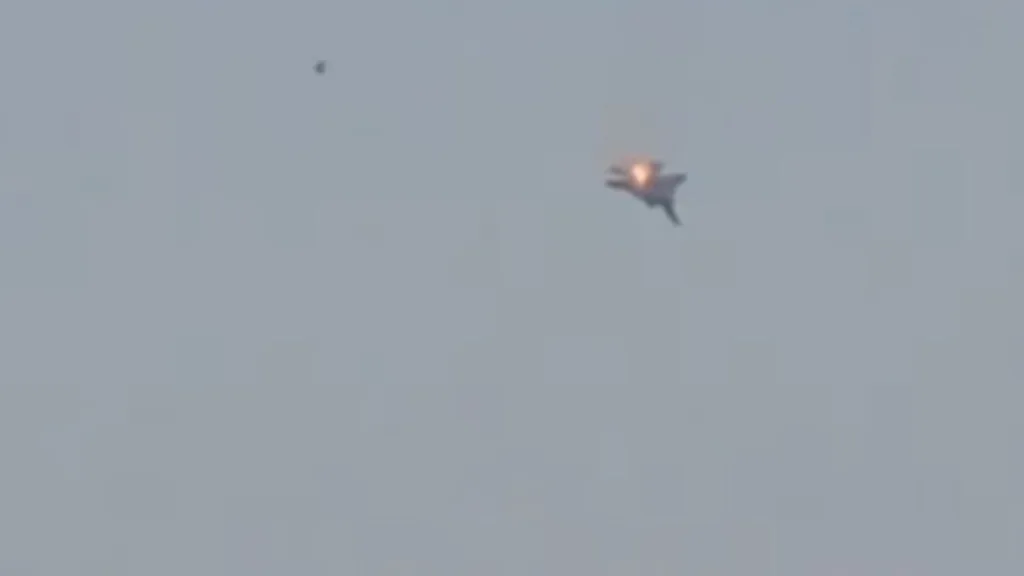
In a separate development, United States Central Command disclosed that three U.S. F-15 fighter jets were inadvertently downed by Kuwaiti air defense systems amid active combat operations. All crew members ejected and were recovered safely, officials said, and an investigation is underway.
Military analysts note that such incidents underscore the complexity of conducting multinational operations in congested airspace where allied defense systems are on heightened alert.
The conflict has spilled into strategic energy corridors. Saudi Arabia’s Ras Tanura oil refinery, one of the world’s largest processing facilities, was targeted by drone fire, though Saudi officials said air defenses intercepted the projectiles before significant damage occurred. Commercial vessels navigating the Strait of Hormuz reported impacts, raising alarm over one of the globe’s most critical oil transit chokepoints.
QatarEnergy temporarily halted liquefied natural gas production at one facility after an attempted strike, contributing to volatility in European gas markets. Traders reacted swiftly, with benchmark crude prices climbing amid fears of prolonged supply disruptions.
Iranian authorities also cited damage to infrastructure linked to the Natanz nuclear enrichment complex, though neither Washington nor Jerusalem publicly confirmed that site as a direct target.
Iranian representatives declared that negotiations with Washington are off the table, dismissing prospects for immediate talks. Trump, while emphasizing military pressure, left open the possibility of dialogue with a future Iranian leadership, suggesting that “new voices” in Tehran could pave the way for diplomacy once hostilities subside.
European allies, including Britain, France and Germany, pledged support for Israel’s defensive measures and urged restraint to prevent further escalation. Gulf nations reinforced missile defenses as sporadic attacks continued.
Beyond the battlefield, the administration’s strategy represents a high-stakes gamble. By targeting top leadership and core military assets, Washington aims to degrade Iran’s capacity to project power. Yet history suggests that regime destabilization can yield unpredictable outcomes, including fragmentation, power vacuums and prolonged insurgency.
Energy markets offer a preview of the conflict’s broader implications. The Strait of Hormuz carries roughly one-fifth of the world’s traded oil. Even limited disruptions can trigger price spikes that ripple through global economies, exacerbating inflationary pressures already confronting consumers. Analysts warn that a drawn-out campaign could test the resilience of international supply chains and strain U.S. relations with partners reliant on Gulf exports.
Domestically, Trump’s announcement of a potentially weeks-long engagement may shape political calculations in Washington. Sustained operations typically require congressional support and public backing, particularly if casualty figures rise. The president’s framing of the campaign as a preventive action against nuclear proliferation could resonate with supporters but draw scrutiny from critics questioning the scope and endgame.
In Tehran, the death of Khamenei marks a watershed moment. The Islamic Republic’s governance structure hinges on the supreme leader’s authority. A sudden transition during wartime heightens uncertainty about succession, military cohesion and internal stability. Security forces established checkpoints across parts of the capital as residents sheltered from airstrikes.
Trump’s assertion that operations could extend “as long as necessary” reflects the fluid nature of the conflict. Pentagon officials indicated that additional U.S. naval and air assets are deploying to the region, signaling preparation for sustained engagement.
As the war widens geographically and politically, the international community faces mounting pressure to contain escalation. For now, the trajectory appears set toward continued confrontation, with diplomatic pathways obscured by retaliatory strikes and hardened rhetoric on all sides.
Whether the campaign achieves its stated objectives without igniting a broader regional war remains uncertain. What is clear is that the Middle East has entered a volatile new chapter, with consequences likely to reverberate well beyond the battlefield.
AP/MSNow/TheWallStreetJournal





