

(AP) — At least six people were killed Monday when a concrete floor under construction gave way inside a building in southern Johannesburg, sending debris crashing onto workers below and triggering a high-risk rescue operation, city officials said.
Emergency crews rushed to the site in the Ormonde suburb after the upper-level floor slab collapsed, trapping multiple people beneath heavy rubble, according to the Johannesburg Emergency Management Services.
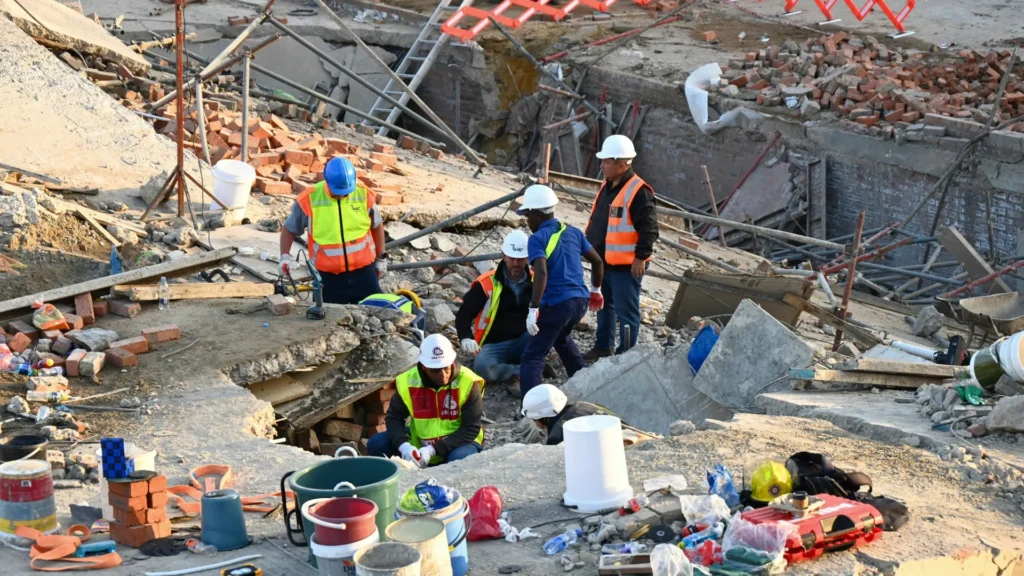
Xolile Khumalo, spokesperson for the emergency service, said six fatalities had been confirmed. Two individuals remained pinned under debris, while three others were unaccounted for as of late Monday. One person was pulled alive from the wreckage.
Khumalo told reporters at the scene that parts of the structure remained unstable, complicating rescue efforts. Sections of the building continued to shift and crumble as crews worked, creating dangerous conditions for first responders.
“It is a risky operation for our teams,” she said, explaining that the damaged structure was still “caving in” in places.
City public safety official Mgcini Tshwaku confirmed that the building was undergoing construction at the time of the incident. Authorities have not yet clarified whether all the victims were construction workers or if others were present inside the structure.
Tshwaku described one of the trapped men as being pinned by a large concrete slab that had crushed his leg. Medical teams were evaluating whether amputation might be necessary to free him safely. A surgeon from a nearby hospital was brought to the site to assess the victim’s condition, Tshwaku said.
“We just have to get everyone out,” he told reporters, underscoring the urgency of the operation.
Rescue personnel continued to comb through the debris using specialized equipment while structural engineers assessed the stability of the remaining framework.
City officials indicated that a formal inquiry would be launched to determine responsibility for the collapse. Tshwaku said investigators would examine who oversaw the project and whether building plans had been properly reviewed and approved before construction proceeded.
Authorities will also evaluate compliance with occupational health and safety regulations, a sensitive issue in South Africa’s construction sector following previous high-profile tragedies.
The collapse revived memories of a devastating 2024 incident in the coastal city of George, where a building under construction crumbled, killing 34 construction workers after a 10-day rescue effort. A subsequent investigation into that disaster uncovered multiple failures, including violations of safety standards and inadequate oversight.
The George tragedy prompted calls for stricter enforcement of building regulations nationwide. Monday’s incident is likely to intensify scrutiny once again.
South Africa’s urban centers, particularly Johannesburg, have experienced a surge in infrastructure development in recent years, driven by commercial expansion and housing demand. However, experts have cautioned that rapid growth can expose weaknesses in regulatory enforcement if oversight mechanisms fail to keep pace.
Construction-related accidents remain a concern, particularly on sites where subcontracting chains complicate accountability. Industry analysts note that insufficient inspections, rushed timelines and cost-cutting measures can heighten structural risks during critical phases such as slab casting.
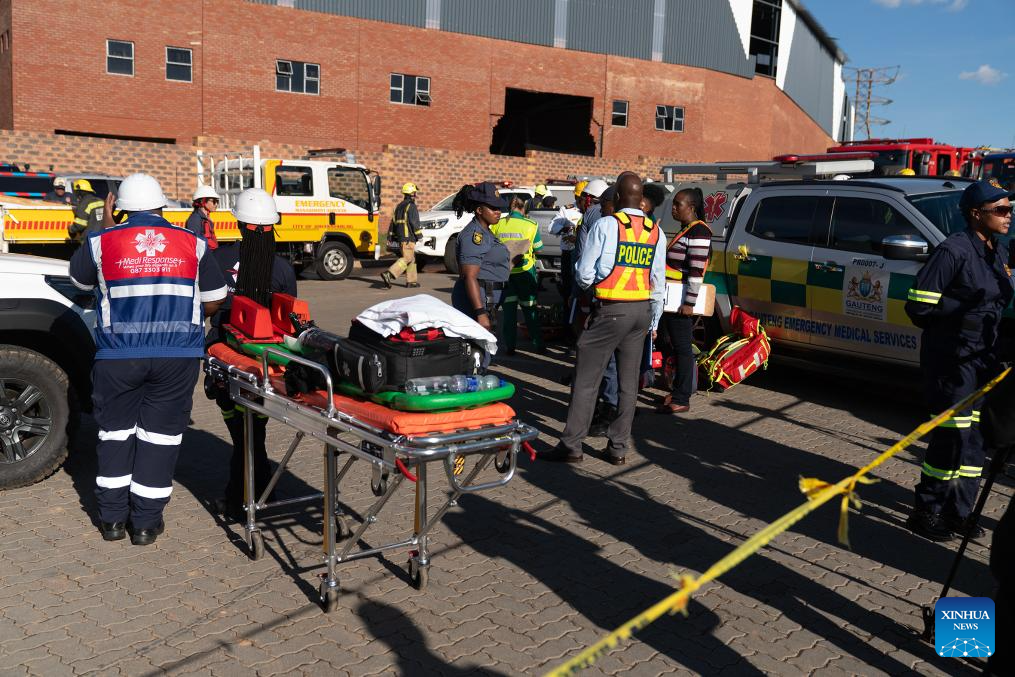
While the precise cause of the Ormonde collapse has yet to be determined, such failures often stem from issues involving load-bearing calculations, curing time for poured concrete, or inadequate temporary supports during construction.
Structural engineers not involved in the project said investigations typically focus on whether the concrete had fully set before additional weight was applied, whether scaffolding met design standards and whether professional engineers certified each stage of the build.
The incident also highlights broader socioeconomic pressures. Johannesburg remains South Africa’s economic hub, and construction projects are a significant source of employment, particularly for migrant and informal laborers who may lack union protection or adequate safety training.
If regulatory lapses are confirmed, the case could trigger renewed calls for reform in municipal inspection processes. Advocacy groups have long argued that stronger penalties are needed for contractors who fail to comply with safety codes.
Meanwhile, families of the victims are awaiting confirmation of identities as forensic teams continue recovery operations.
As rescue efforts press on, city officials say their immediate priority is stabilizing the structure and locating those still missing. The outcome of the investigation will likely shape both legal consequences and policy debates in the weeks ahead.
For now, the collapse stands as a stark reminder of the risks inherent in construction work and the potentially fatal consequences when safeguards fail.





