

As Iran grapples with war and the sudden death of its long-serving supreme leader, attention has shifted to a familiar but largely unseen figure within the Islamic Republic’s power structure: Mojtaba Khamenei.
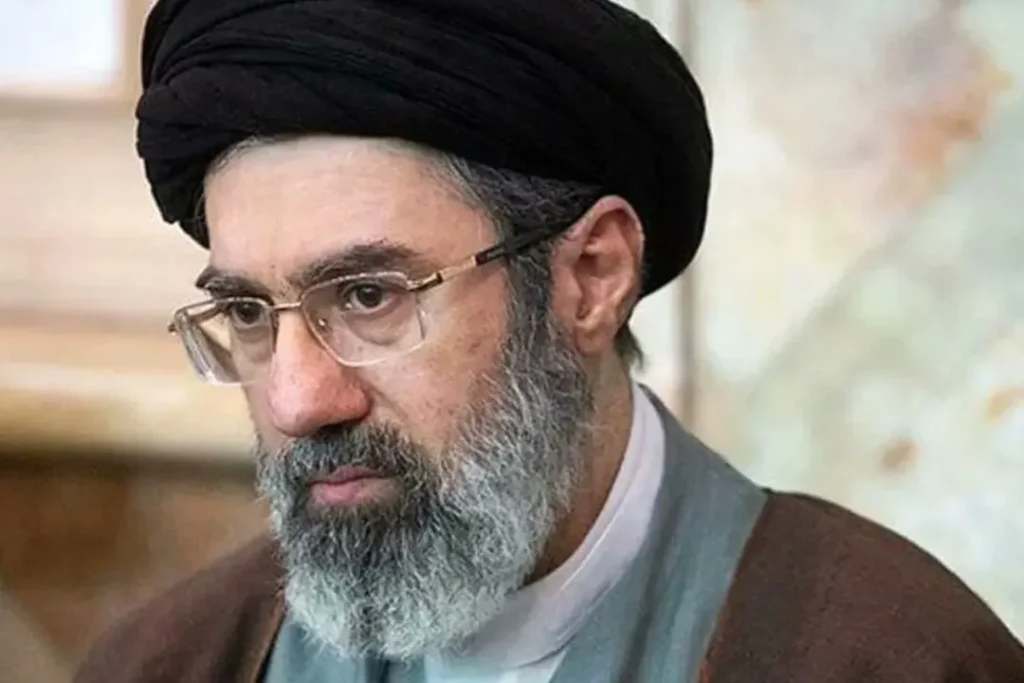
The son of the late Ali Khamenei, Mojtaba Khamenei has for years been viewed by insiders as a potential successor, despite never holding elected office or an officially appointed government post. The Israeli airstrike that killed his 86-year-old father at the outset of the conflict has now intensified scrutiny of his possible ascension.
Mojtaba Khamenei has not appeared publicly since the strike that targeted the supreme leader’s offices. His wife, Zahra Haddad Adel, whose family has longstanding ties to Iran’s clerical establishment, was also killed. Iranian state media have not disclosed his whereabouts, though analysts believe he remains alive and is likely in seclusion as U.S. and Israeli airstrikes continue.
Even before his father’s death, Mojtaba Khamenei’s name circulated among conservative clerics as a potential heir. The idea of a son succeeding his father in the Islamic Republic has drawn criticism from reformists and some conservatives, who warn it risks echoing the hereditary monarchy overthrown in the 1979 revolution.
Yet the narrative may be shifting. Hard-liners have portrayed Ali Khamenei and his daughter-in-law as martyrs in what they describe as a war against the United States and Israel. That framing could strengthen Mojtaba Khamenei’s standing among members of Iran’s 88-seat Assembly of Experts, the clerical body tasked with selecting the next supreme leader.
The stakes are immense. The next leader will assume command of Iran’s military forces during an active conflict and inherit authority over a stockpile of highly enriched uranium, which could potentially be used for a nuclear weapon if sanctioned by decree.
Born in 1969 in Mashhad, Mojtaba Khamenei grew up during the final years of Shah Mohammad Reza Pahlavi’s rule. His childhood coincided with his father’s political activism and periodic detention by the shah’s secret police.
After the 1979 Islamic Revolution, the family relocated to Tehran. Mojtaba later fought in the Iran-Iraq war as part of a Revolutionary Guard battalion whose members would go on to occupy senior intelligence and security roles.
When his father became supreme leader in 1989, Mojtaba Khamenei’s proximity to power deepened. Over time, he developed influence within his father’s office and cultivated alliances within the powerful Islamic Revolutionary Guard Corps, the paramilitary force that plays a central role in Iran’s military and economic life.
U.S. diplomatic cables published by WikiLeaks in the late 2000s described him as “the power behind the robes,” alleging he acted as a gatekeeper and political operator within the supreme leader’s circle. One cable suggested he was building his own base of influence, though it noted his limited theological credentials.
In 2019, the United States imposed sanctions on Mojtaba Khamenei during the administration of Donald Trump, accusing him of advancing his father’s regional and domestic agenda. U.S. officials have also alleged he maintained close ties with the Guard’s Quds Force and the Basij militia, which suppressed anti-government protests.
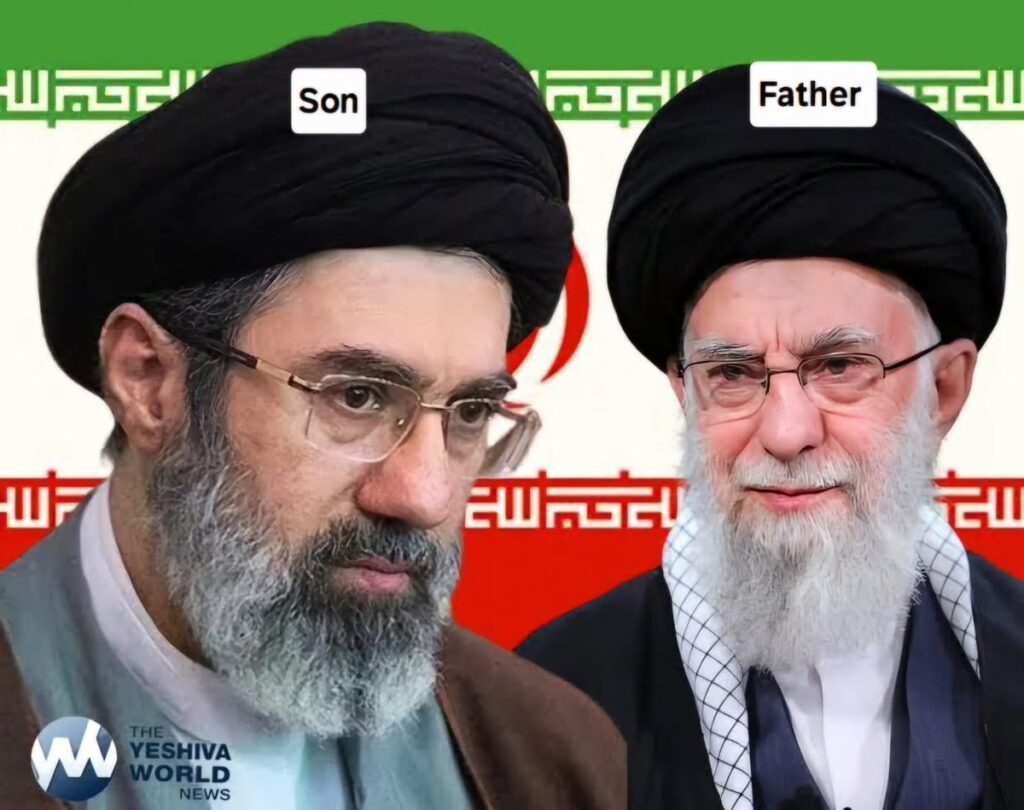
The supreme leader occupies the apex of Iran’s Shiite theocratic system, with final authority over the military, judiciary, state broadcasting and key policy decisions. Only one succession has occurred since the revolution: when Ruhollah Khomeini died in 1989 and Ali Khamenei assumed the role.
Following the recent killing, Iran moved swiftly to activate a constitutional mechanism for temporary leadership. A council composed of President Masoud Pezeshkian, Judiciary Chief Gholamhossein Mohseni Ejei and a cleric selected by the Guardian Council has taken on interim duties while the Assembly of Experts deliberates.
The transition unfolds against the backdrop of a 12-day war with Israel and ongoing U.S.-Israeli operations aimed at degrading Iran’s military infrastructure and nuclear capabilities. The Islamic Revolutionary Guard Corps — designated a terrorist organization by the United States in 2019 — remains a decisive actor, controlling ballistic missile forces and overseeing a network of allied militant groups across the Middle East.
Whether Mojtaba Khamenei ultimately secures the supreme leadership will depend on behind-the-scenes negotiations among senior clerics and power brokers within the Guard and the broader political establishment.
His critics argue that elevating him would blur the line between revolutionary theocracy and dynastic rule. Supporters contend his decades within the system and close ties to security institutions provide continuity at a moment of national crisis.
With Iran at war and its political future uncertain, the question of succession has become inseparable from the country’s broader struggle over identity, governance and regional power. The decision now rests with a clerical body whose deliberations are largely opaque — but whose choice will shape the trajectory of the Islamic Republic for years to come.
The Associated Press





