

MAIDUGURI, Nigeria (BN24) — Suspected fighters from the Islamic State West Africa Province launched a coordinated predawn assault on a military installation and a nearby camp for displaced civilians in northeastern Nigeria, leaving an undetermined number of soldiers and residents feared dead, security officials said Wednesday.
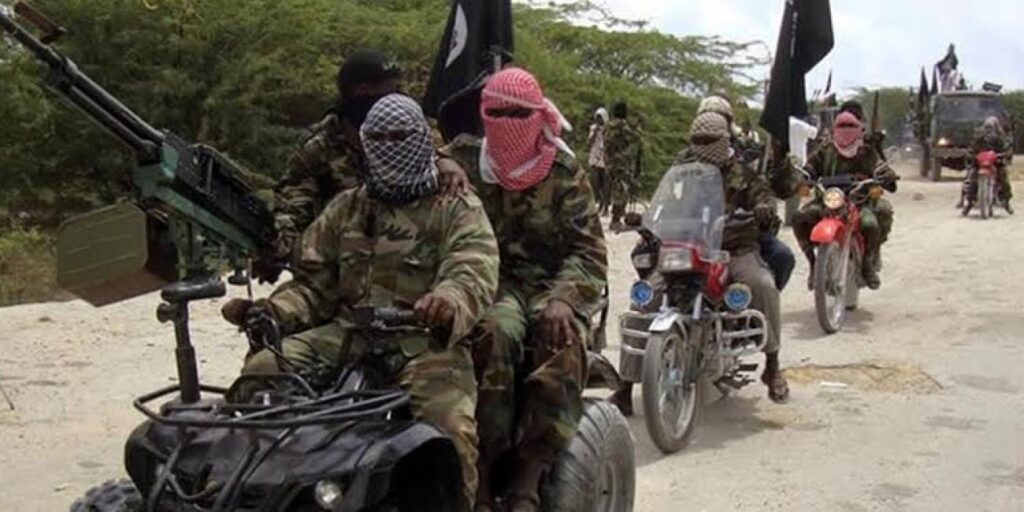
The attack targeted Ngoshe, a town in Gwoza Local Government Area of Borno state, a region that has endured more than a decade of insurgent violence. Military sources familiar with the incident told SaharaReporters that the assailants struck at about 4 a.m., operating in multiple groups and sustaining their offensive until first light.
According to accounts relayed to SaharaReporters by security personnel, the militants overran the 82 Division Task Force Battalion under the 26 Brigade. During the raid, they set fire to military structures, armored vehicles, and other equipment before advancing on a camp housing internally displaced persons located near the base.
One military official described the attack as highly organized, with fighters arriving in large numbers. The source indicated that the attackers torched buildings within the displacement camp and combed through homes in the surrounding community, claiming they were searching for soldiers who might have sought refuge among civilians.
The same source conveyed that an unspecified number of troops and civilians were killed in the violence, while others fled into nearby bushland to escape the onslaught. Casualty figures remain unclear, as recovery efforts were still underway and additional bodies were being discovered hours after the assault, the official said.
The attackers were also said to have seized ammunition and other military hardware. The scale of materiel losses could not immediately be verified.
The militant faction involved is widely known as ISWAP, an Islamic State-backed offshoot of Boko Haram, formally called Jamā’at Ahl as-Sunnah lid-Da’wah wa’l-Jihād. The group has intensified operations in parts of Borno in recent months, frequently targeting military outposts and convoys.
The Ngoshe assault follows a string of recent attacks in the region. A few days earlier, gunmen believed to be Boko Haram fighters struck a Forward Base at Banki junction along the Bama-Gwoza Road, resulting in the death of an Army major identified as Ibrahim Mairiga and several other soldiers. A senior source had told SaharaReporters that the bodies were being transported to the 7 Division Military Hospital in Maiduguri.
In February, insurgents attacked another military position in Jakana, Kaga Local Government Area, along the Maiduguri-Damaturu Road. Security sources cited by SaharaReporters at the time said armored vehicles were destroyed and ammunition taken during that assault.
Earlier still, on Jan. 26, 2025, seven military personnel, including a recently promoted lieutenant colonel, identified as Mohammed, were killed when their convoy was ambushed en route from Maiduguri to Damasak in Mobbar Local Government Area. Military sources told SaharaReporters that explosives and sustained gunfire were used in that ambush, and that several soldiers were wounded or declared missing.
Nigerian authorities have not publicly issued a comprehensive casualty count for the Ngoshe attack as of Wednesday evening. Efforts to reach defense officials for independent confirmation were not immediately successful.
Borno state, which borders Cameroon, Chad, and Niger, remains the epicenter of Nigeria’s long-running conflict with jihadist groups. Although the military has reclaimed significant territory from insurgents since the peak of Boko Haram’s territorial control in 2014 and 2015, militants continue to stage deadly raids on isolated bases and rural communities.
Security analysts say the pattern of coordinated early-morning assaults reflects evolving insurgent tactics designed to exploit gaps in surveillance and response. By targeting both military positions and displacement camps, the attackers may be aiming to undermine public confidence in state protection and to disrupt fragile stabilization efforts in areas previously declared secure.
Humanitarian organizations have repeatedly warned that camps for internally displaced persons in Borno face chronic security vulnerabilities. The destruction of shelters and infrastructure in Ngoshe could compound an already dire humanitarian situation, particularly if residents are forced to flee again.
The renewed spate of violence also raises questions about force deployment and resource allocation in remote communities. Military bases in rural corridors often serve as the primary line of defense for nearby civilians. When such installations are overrun, residents are left exposed to reprisals, lootings,g and further displacement.
Regional cooperation remains central to counterinsurgency efforts. Nigeria participates in the Multinational Joint Task Force alongside neighboring countries to combat ISWAP and other extremist factions operating across porous borders. However, the persistence of cross-border supply lines and recruitment networks continues to challenge security operations.
While official figures are pending, the psychological toll of repeated attacks is evident. Communities such as Ngoshe, Ban, ki and Jakana have endured cycles of destruction, rebuilding, and renewed violence. Each incident strains already limited medical and humanitarian resources, including facilities in Maiduguri that receive casualties from across the state.
For residents of Borno, the latest assault underscores the enduring volatility of a conflict that has displaced millions and claimed tens of thousands of lives over the past decade. As recovery teams continue to assess the damage in Ngoshe, questions linger over how insurgents were able to mount another large-scale operation despite ongoing military campaigns aimed at degrading their capabilities.
Authorities have yet to announce whether reinforcements have been deployed to the affected area or whether a broader review of base security will follow. Until casualty counts are finalized and an official briefing is issued, the full impact of the Ngoshe attack may not be known.
What remains clear is that northeastern Nigeria continues to confront a resilient insurgency, with civilians and security forces alike bearing the brunt of its violence.





